BK7 vs Fused Silica Lens | Optical Material Comparison Guide
- Share
- publisher
- Felix Glass
- Issue Time
- Feb 20,2026
Summary
Compare BK7 and fused silica lens materials for laser, imaging and precision optical systems. Learn performance, thermal stability and application differences
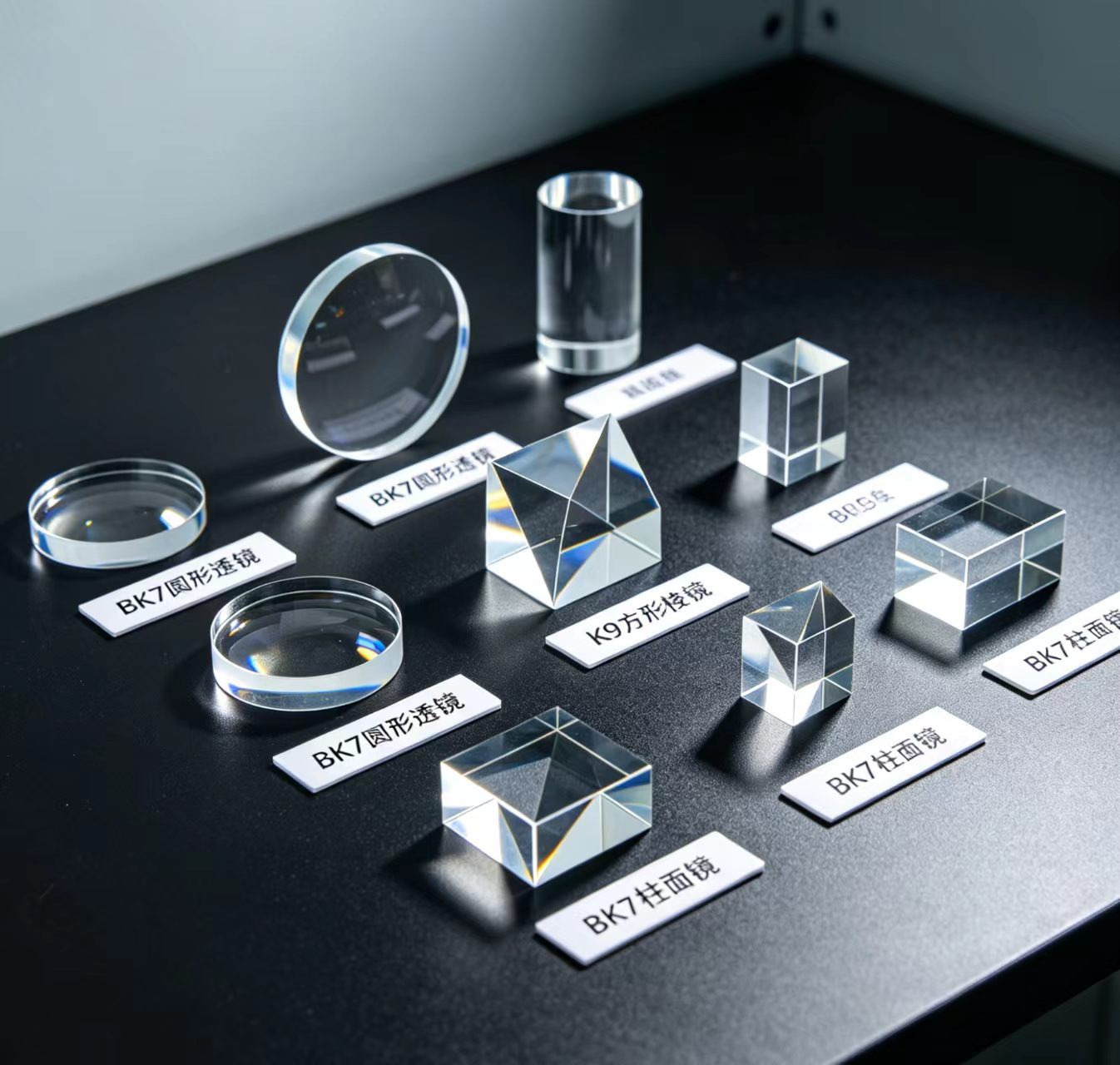
BK7 vs Fused Silica Lens | Optical Material Comparison Guide
Introduction
BK7 and fused silica are among the most widely used optical materials in industrial laser systems, imaging equipment and scientific instruments. Although both materials provide excellent optical performance, they are designed for different operating environments and wavelength requirements.
Choosing the right lens material can significantly impact transmission efficiency, thermal stability, system reliability and overall project cost.
This guide compares BK7 and fused silica to help engineers and OEM buyers select the most suitable optical material.
⸻
Material Overview
What is BK7?
BK7 (K9 optical glass) is a high-quality borosilicate optical glass commonly used in lenses, prisms and optical windows.
Advantages:
• Excellent optical clarity
• Cost-effective solution
• Easy to manufacture
• Suitable for visible and near-infrared applications
Typical Applications:
• Imaging systems
• Optical instruments
• Machine vision
• Standard laser optics
What is Fused Silica?
Fused silica is a high-purity synthetic quartz material with exceptional thermal and optical properties.
Advantages:
• Excellent UV transmission
• Low thermal expansion
• High laser damage resistance
• Superior thermal stability
Typical Applications:
• High-power laser systems
• Aerospace optics
• Semiconductor equipment
• Scientific instruments
⸻
BK7 vs Fused Silica Comparison Table
Property BK7 Fused Silica
Optical Quality Excellent Excellent
UV Transmission Moderate Excellent
Visible Transmission Excellent Excellent
Thermal Stability Good Outstanding
Thermal Expansion Higher Very Low
Laser Damage Threshol Standard High
Cost Lower Higher
Industrial Use General Optics Precision Optics
⸻
Key Differences
Thermal Stability
Fused silica offers significantly better thermal stability than BK7. Its extremely low thermal expansion coefficient helps maintain optical performance under temperature fluctuations.
BK7 performs well in standard industrial environments but may experience greater dimensional changes under high temperatures.
Laser Performance
For high-power laser applications, fused silica is often preferred due to its higher laser damage threshold and lower absorption.
BK7 remains an excellent choice for standard laser systems where extreme thermal conditions are not present.
Wavelength Performance
BK7 performs exceptionally well in visible and near-infrared wavelengths.
Fused silica provides broader transmission and is especially valuable in ultraviolet applications where BK7 transmission decreases.
Cost Efficiency
BK7 is generally more economical and is widely used in commercial optical systems.
Fused silica delivers higher performance but at a higher material and manufacturing cost.
⸻
Application Recommendations
Choose BK7 When:
• Cost efficiency is important
• Operating temperatures are moderate
• Visible light applications dominate
• Standard optical performance is sufficient
Typical Industries:
• Machine vision
• Optical instruments
• Consumer optics
• Industrial automation
Choose Fused Silica When:
• High laser power is involved
• Thermal stability is critical
• UV transmission is required
• Extreme environments are expected
Typical Industries:
• Aerospace
• Scientific research
• Semiconductor manufacturing
• High-energy laser systems
⸻
Engineering Selection Guide
For Industrial Optical Systems
Recommended Material:
BK7
Benefits:
• Lower manufacturing cost
• Excellent optical performance
• Reliable mass production
For High-Power Laser Systems
Recommended Material:
Fused Silica
Benefits:
• Superior thermal resistance
• Higher laser durability
• Long-term optical stability
⸻
OEM Manufacturing Options
Felix Glass provides custom optical components in both BK7 and fused silica materials.
Customization Services:
• Plano convex lenses
• Plano concave lenses
• Cylindrical lenses
• Optical windows
• Custom dimensions
• AR coating options
• Drawing-based manufacturing
⸻
Conclusion
BK7 and fused silica are both excellent optical materials, but they serve different purposes.
BK7 is the preferred solution for cost-effective optical systems requiring reliable performance in visible and near-infrared applications.
Fused silica is the better choice for high-power laser systems, UV optics and environments demanding exceptional thermal stability.
Selecting the correct material based on wavelength, thermal requirements and operating conditions can improve system performance while reducing long-term costs.
⸻
Request a Quote
Need help selecting the right optical material?
Send us:
• Optical drawings
• Wavelength requirements
• Lens specifications
• Application details
Our engineering team will provide technical recommendations and quotation support within 24 hours