CO₂ Laser vs Fiber Laser Optical Systems | Optical Material Selection Guide
- Share
- publisher
- FELIX GLASS
- Issue Time
- Apr 28,2026
Summary
Compare CO₂ laser and fiber laser optical systems in wavelength, materials, applications and cost. Guide for optical lens selection and industrial OEM systems.
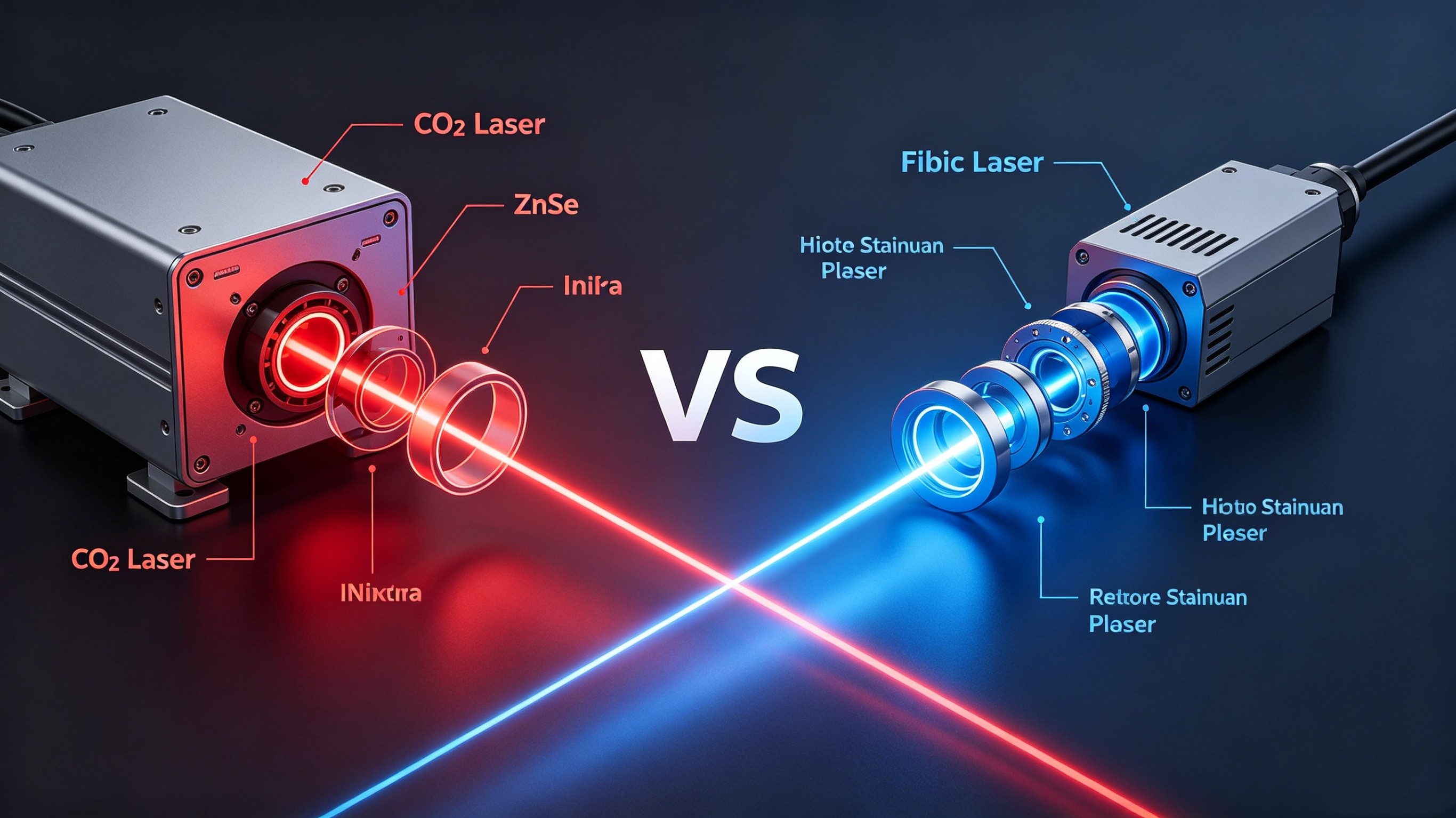
CO₂ lasers and fiber lasers are two of the most widely used laser technologies in industrial processing systems. Although both are used for cutting, welding and marking applications, they operate in completely different wavelength regions and require different optical materials.
Understanding the differences between these two systems is critical for selecting the correct optical components such as lenses, windows and protective optics.
⸻
1. What is a CO₂ Laser Optical System?
CO₂ laser systems operate in the far-infrared wavelength, typically at 10.6μm.
Key Optical Characteristics
• Infrared wavelength: 10.6μm
• Requires infrared-transmitting materials
• High absorption in organic materials
• Stable high-power cutting capability
Typical Optical Materials
• ZnSe (primary lens material)
• Infrared optical windows
• Coated IR mirrors
• Thermal-resistant optics
Main Applications
• Metal and non-metal cutting
• Wood, acrylic, plastic processing
• Industrial engraving systems
⸻
2. What is a Fiber Laser Optical System?
Fiber laser systems operate in the near-infrared region, typically around 1.06μm.
Key Optical Characteristics
• Near-infrared wavelength: 1.06μm
• High beam quality (small spot size)
• High electrical efficiency
• Strong precision marking capability
Typical Optical Materials
• Fused silica (quartz optics)
• BK7 optical glass
• High-precision dielectric coatings
• Protective quartz windows
Main Applications
• Metal marking
• Precision welding
• Electronics manufacturing
• Micro-processing systems
⸻
3. CO₂ Laser vs Fiber Laser Comparison Table
Property CO₂ Laser System Fiber Laser System
Wavelength 10.6μm 1.06μm
Optical Material ZnSe Fused Silica / Quartz
Energy Efficiency Medium High
Beam Quality Good Excellent
Cutting Material Range Non-metal + metal Mainly metal
Maintenance Cost Higher Lower
Precision Level Medium High
⸻
4. Key Optical Differences
4.1 Wavelength Determines Everything
The most important difference is wavelength:
• CO₂ laser → long-wave infrared
• Fiber laser → near-infrared
This directly determines what optical materials can be used.
⸻
4.2 Optical Material Selection
CO₂ Laser Optics
Requires infrared-transparent materials:
• ZnSe lenses
• Infrared windows
• High-damage threshold coatings
Fiber Laser Optics
Requires silica-based materials:
• Fused silica lenses
• Quartz windows
• Precision dielectric coatings
⸻
4.3 Optical System Structure Difference
CO₂ laser systems use external optical paths with mirrors and ZnSe lenses.
Fiber laser systems use fiber delivery, making the optical path more compact and stable.
⸻
4.4 Cost and Maintenance
• CO₂ systems → higher maintenance, more optical alignment
• Fiber systems → lower maintenance, sealed optical path
⸻
5. Application Selection Guide
Choose CO₂ Laser System if:
• Cutting non-metal materials
• Need deep thermal processing
• Working with large-format materials
• Cost-effective cutting is required
Choose Fiber Laser System if:
• Metal marking or welding
• High precision required
• Electronics manufacturing
• High-speed industrial processing
⸻
6. Optical Engineering Recommendation (Felix Glass)
Felix Glass provides full optical solutions for both CO₂ and fiber laser systems.
CO₂ Laser Optics
• ZnSe focusing lenses
• Infrared windows
• Laser protection windows
Fiber Laser Optics
• Fused silica lenses
• Quartz protective windows
• High-precision optical components
OEM Services
• Custom diameter and thickness
• AR coating optimization
• Drawing-based manufacturing
• Industrial batch production
⸻
7. Conclusion
CO₂ and fiber laser systems are fundamentally different optical architectures:
• CO₂ lasers rely on ZnSe infrared optics
• Fiber lasers rely on fused silica precision optics
Choosing the correct system depends on material type, precision requirements and production environment.
⸻
Request a Quote
Need help selecting optical components for your laser system?
Send us:
• Laser type (CO₂ or fiber)
• Wavelength requirement
• Drawing or system specification
• Quantity requirement
Our engineering team will provide professional optical selection and quotation within 24 hours.