Choose AG/AR/AF Coated Glass for Display Projects
- Share
- publisher
- Felix Glass
- Issue Time
- Mar 28,2026
Summary
Learn about AG, AR, AF coated glass functions, applications, and how to select the right coated glass for display projects to boost visual and using experience.
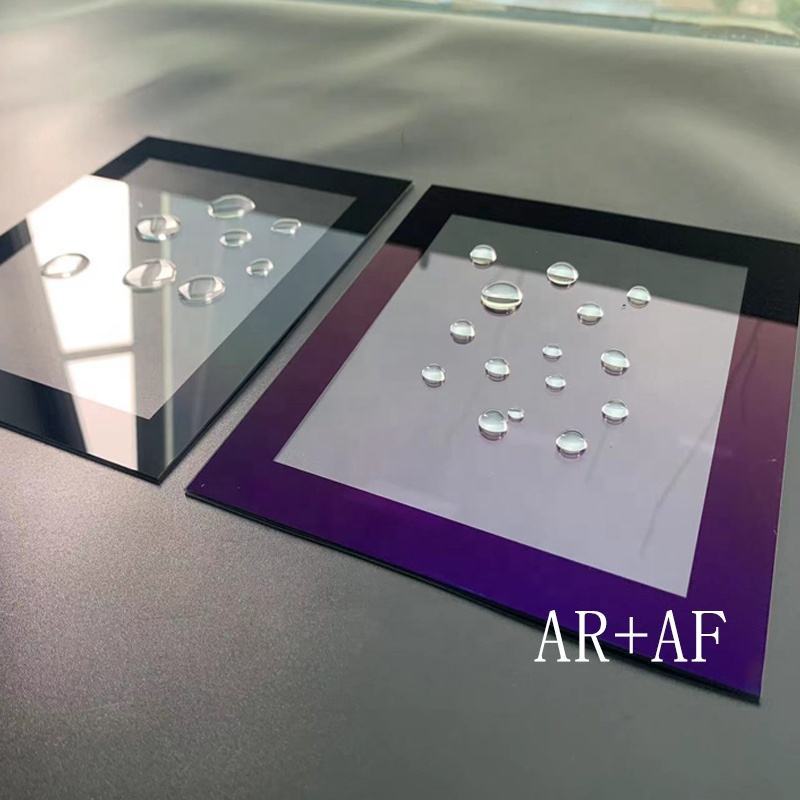
In display products such as automotive displays, industrial control screens, consumer electronics, and outdoor digital signage, coated glass is a key component that directly affects the visual effect and user experience of the display. AG, AR, AF are three common functional coatings, each with different roles, and choosing the right coated glass can greatly improve the performance of display products. This article will introduce the functions, applications and selection skills of AG/AR/AF coated glass in detail.
AG coated glass, namely Anti-Glare coated glass, its core function is to reduce glare and reflection. The AG coating forms a micro-rough structure on the glass surface, which can scatter the reflected light of sunlight and ambient light, avoiding the formation of reflective bright spots on the screen, so that the display content can be clearly seen even in a bright environment. At the same time, AG coating can reduce eye strain, suitable for displays that need to be viewed for a long time. It is widely used in outdoor displays, automotive central control screens, industrial control panels, public touch kiosks and other scenarios. When selecting AG coated glass, pay attention to the haze and gloss parameters, the haze is generally controlled at 5%-30%, adjust according to the use environment, the higher the haze, the better the anti-glare effect, but the clarity will be slightly affected, and the balance needs to be balanced according to needs.
AR coated glass, namely Anti-Reflective coated glass, mainly reduces surface reflection and improves light transmittance. Through multi-layer dielectric coating, AR coating can reduce the light reflection on the glass surface to less than 1%, greatly improve the light transmittance of the glass, making the display screen brighter, the color more vivid, and the contrast higher. Compared with ordinary glass, displays using AR coated glass have clearer images and lower power consumption, because they do not need to increase the screen brightness to compensate for reflection loss. AR coated glass is suitable for high-end indoor displays, VR/AR headsets, camera lenses, automotive high-end displays and other products that require high visual effects. When selecting, focus on the reflectance and light transmittance indicators, the lower the reflectance, the higher the light transmittance, the better the performance.
AF coated glass, namely Anti-Fingerprint coated glass, also known as oil-repellent and water-repellent coated glass. The AF coating forms a hydrophobic and oleophobic protective layer on the glass surface, which can effectively repel fingerprints, oil stains and water droplets, making the screen not easy to stick to dirt, and even if there are fingerprints, it can be easily wiped clean. At the same time, AF coating can improve the smoothness of the glass surface, enhance the touch feel, and is suitable for touch display screens. It is widely used in mobile phone screens, tablet displays, automotive touch screens, industrial touch panels and other products. When selecting AF coated glass, check the water contact angle indicator, the higher the contact angle (generally more than 110°), the better the anti-fingerprint effect.
In practical application scenarios, single-function coating often cannot meet the needs, and composite coated glass is more widely used. For example, outdoor displays and automotive displays need AG+AR+AF three-in-one composite coating: AG anti-glare adapts to bright environments, AR anti-reflection improves clarity, AF anti-fingerprint is easy to clean; indoor high-end displays can choose AR+AF composite coating, taking into account visual effects and easy cleaning; ordinary touch screens can choose AF+AG composite coating, balancing touch feel and anti-glare effect.
When selecting AG/AR/AF coated glass, in addition to the coating performance, we should also pay attention to the quality of the glass substrate and the firmness of the coating. Choose high-quality glass substrates with high flatness and good strength, and the coating should have strong adhesion, not easy to fall off, scratch-resistant and durable, to ensure long-term stable performance.
Felix Glass specializes in the production of AG/AR/AF single-function and composite coated glass, with advanced vacuum coating production line, precise control of coating parameters, and can customize coating schemes according to display project needs. We provide coated glass products with stable performance and reliable quality, suitable for various display scenarios, helping customers improve the quality and user experience of display products. When choosing coated glass for display projects, combine the use environment, visual requirements and touch needs, select the appropriate coating type and parameters, and choose a professional supplier to ensure product quality.