Display Cover Glass | Chemical Strengthening & AF Coating Guides

Display Cover Glass | Chemical Strengthening & AF Coating Guides

Summary

Engineering guides for touch panel glass: surface roughness control, flatness tolerance and polishing process requirements for capacitive touch screens.
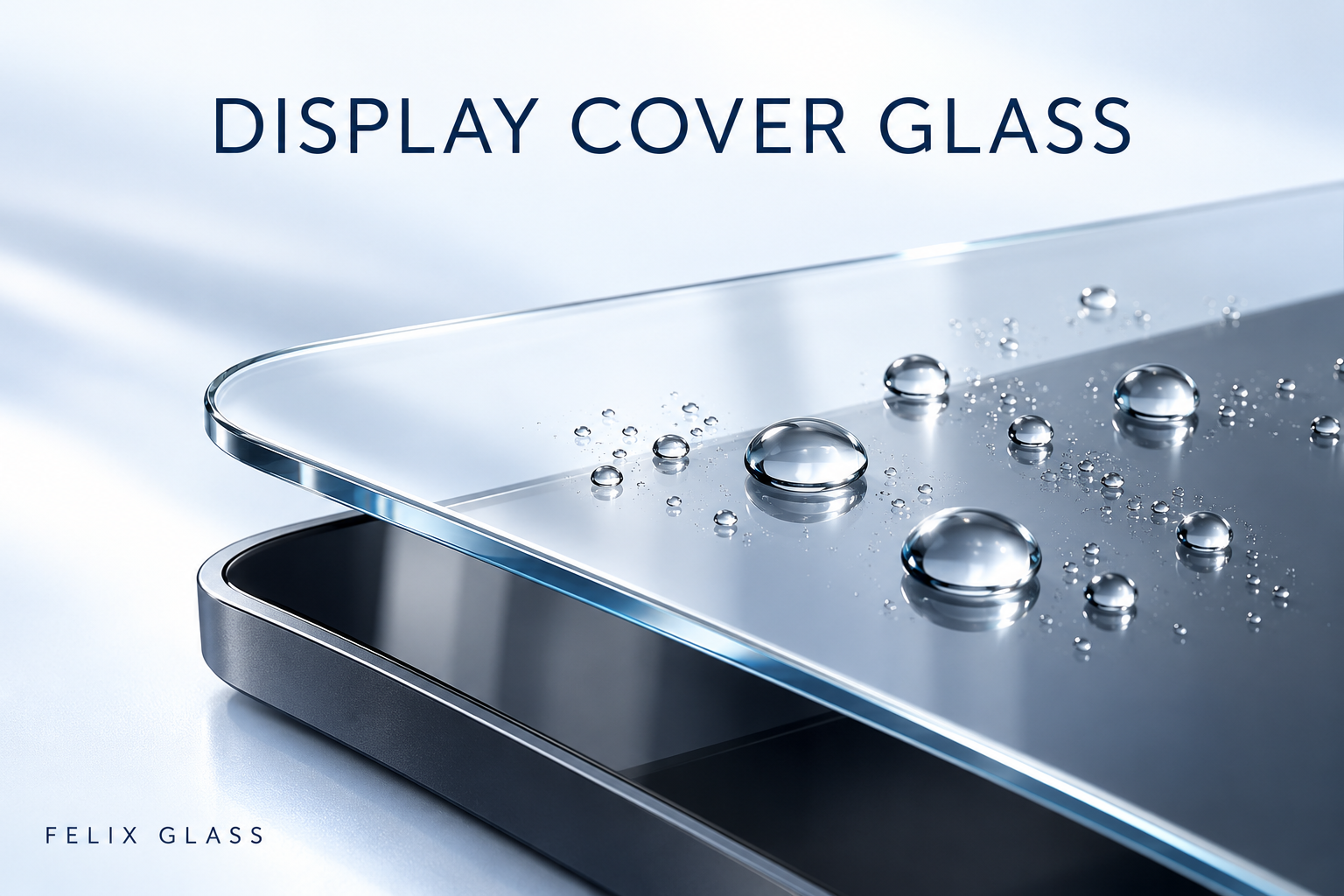
Display Cover Glass | Chemical Strengthening & AF Coating Guides

Display Cover Glass

Content for protective cover glass manufacturing, including ion chemical strengthening, AF coating technology and surface quality control for consumer electronic panels.

Technical Articles In This Category


Chemical Strengthening for Cover Glass

Overview

Chemical strengthening (ion exchange tempering) is the core process to boost scratch and drop resistance for thin display cover glass. Unlike thermal tempering, this method creates compressive stress without optical distortion, making it ideal for ultra-thin aluminosilicate glass used on touch panels, smart home controls and portable electronic screens. Felix Glass controls compressive stress (CS) and depth of layer (DOL) to meet strict drop-test standards for consumer electronics.

Core Ion Exchange Principle

  • Submerge glass into molten potassium nitrate (KNO₃) at 380–420°C; larger K⁺ ions replace smaller Na⁺ ions inside the glass surface layer.
  • Volume expansion from ion replacement forms a permanent compressive stress layer, which stops surface microcracks from expanding under impact.
  • Key two performance indicators: Surface Compressive Stress (CS, ≥700 MPa) and Depth of Layer (DOL, ≥20 μm for mobile-grade cover glass).

One-Step vs Two-Step Strengthening

  1. Single-Step Strengthening (Standard Process) Single KNO₃ salt bath for 4–12 hours. Suitable for soda-lime glass and low-cost industrial touch panels. Simple operation, lower cost, limited DOL thickness.
  2. Two-Step Ion Exchange (High-End Electronic Grade) First stage: Na⁺ ↔ Li⁺ exchange; second stage: K⁺ ↔ Na⁺ exchange. Produces deeper stress layers with higher break resistance, used for lithium aluminosilicate (LAS) ultra-thin cover glass for smartphones and rugged displays.

Material & Process Control Points

  • Substrate Selection
    • Aluminosilicate glass: Best ion-exchange performance, high CS & deep DOL, primary choice for consumer electronics cover glass.
    • Soda-lime glass: Lower cost, limited strengthening depth, only for low-load industrial panels.
  • Process Parameters
    • Temperature: Strictly keep within ±5°C; overheating causes stress relaxation and strength decline.
    • Salt purity: Control Na⁺ impurity in KNO₃ below 1% to avoid weakening ion exchange efficiency.
    • Pre-cleaning: Remove oil and dust before tempering; surface contamination leads to uneven strengthening and local weak points.

Common Defects & Avoidance

1. Uneven stress: Caused by inconsistent temperature or residual surface dirt; use full-immersion furnace and strict pre-cleaning workflow. 2. Edge chipping after strengthening: CNC edge polishing + 0.2mm chamfer before ion exchange; sharp edges crack easily under compressive stress. 3. Low drop resistance: Increase DOL by extending soaking time or adopt two-step strengthening for LAS glass substrates.


AF Anti-Fingerprint Coating Process Guide

Overview

AF anti-fingerprint coating is an oleophobic nano thin film applied on strengthened cover glass. It creates a lotus effect, repelling oil, sweat and fingerprints, keeping display surfaces clean with minimal wiping. The coating must maintain high light transmittance without reducing touch sensitivity, and pass thousands of steel wool abrasion cycles for long-term service life.

AF Coating Working Mechanism

  • PFPE fluorosilane molecules bond firmly to glass hydroxyl groups via silane chemical bonding, not just physical adhesion.
  • Outer fluorinated –CF₃ groups form ultra-low surface energy; water contact angle ≥115°, oil contact angle ≥100°, preventing oil from spreading into visible fingerprints.
  • Film thickness is only 10–30 nm; fully transparent with zero impact on display brightness and touch conductivity.

Two Main Production Processes

  1. Vacuum Thermal Evaporation (High-End Electronic Grade) Deposit fluorosilane material under high vacuum; ultra-uniform thin film, excellent adhesion and superior abrasion resistance. No overspray waste, ideal for smartphone, tablet and high-precision touch cover glass.
  2. Wet Spray Coating (Cost-Effective Industrial Grade) Spray diluted AF solution evenly on cleaned glass, then thermal cure at 160–180°C for 10–15 minutes. Lower equipment cost, high throughput for home appliance touch panels and industrial control displays.

Standard Process Flow & Surface Preparation

  • Full Workflow: CNC shaping → ultrasonic cleaning → plasma surface activation → AF coating deposition → thermal curing → contact angle inspection → abrasion testing.
  • Critical Pre-Treatment: Plasma Activation Remove organic residues and raise glass surface energy, generating more hydroxyl bonding sites. Without plasma treatment, AF coating peels easily after short abrasion cycles.

AF Coating Quality Inspection Standards

1. Initial performance: Water contact angle ≥115°; no visible haze, color shift or light transmittance loss. 2. Abrasion durability test: 0000# steel wool, 1000g load, 2000 back-and-forth cycles; post-test contact angle still above 100°, no coating peeling. 3. Chemical resistance: Resist daily sweat, alcohol and general cleaning agents without performance degradation.


Custom Display Cover Glass Fabrication

We produce chemically strengthened cover glass with strict CS/DOL control, plus durable AF anti-fingerprint coating for consumer electronics, smart home touch panels and industrial display windows.

Submit Your Cover Glass Specifications