Fused Silica vs Fused Quartz – Exact Differences in Raw Material, Purity & Application
- Share
- publisher
- Felix Glass
- Issue Time
- Feb 3,2026
Summary
Distinguish fused silica and fused quartz on raw material, purity and performance for semiconductor and optical system material selection.
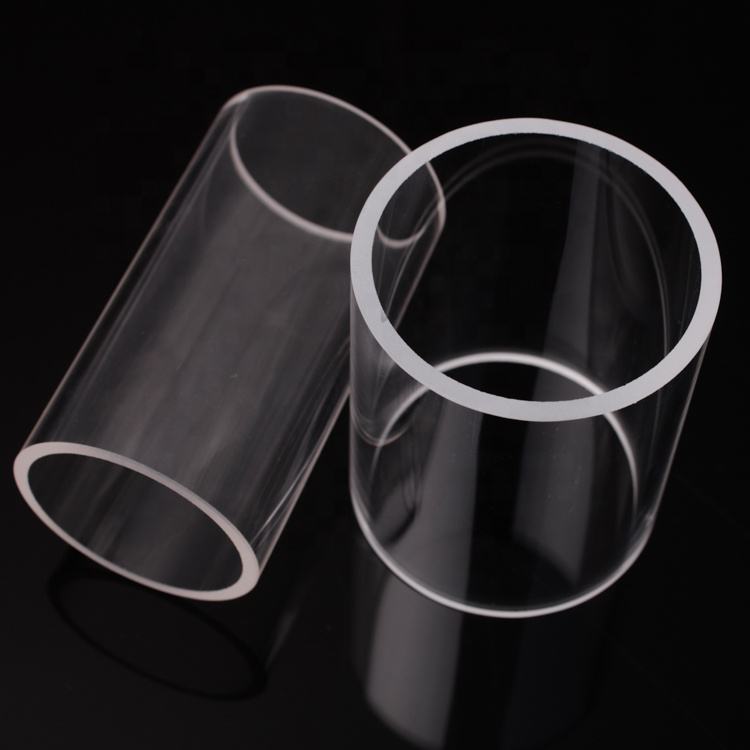
Fused Silica vs Fused Quartz – Exact Differences in Raw Material, Purity & Application
1. Introduction
Fused silica and fused quartz are two commonly seen materials in optical engineering, semiconductor manufacturing and high-temperature industries. They are often treated as identical products in daily communication. However, under strict industrial and technical definitions, the two differ greatly in raw material sources, production techniques, impurity content and applicable high-end scenarios. This article clearly illustrates their definitions, core parameters and professional application guidelines.
2. What Are Fused Silica & Fused Quartz
**Fused Quartz**
Also known as natural fused quartz glass. It is produced by melting natural quartz crystal or high-purity quartz sand under ultra-high temperature. Derived from natural mineral resources, it features stable basic performance and moderate purity level.
**Fused Silica**
Also referred to as synthetic fused silica. Adopting high-purity silicon compounds as raw materials, it is manufactured via chemical synthesis methods including CVD (Chemical Vapor Deposition) and liquid-phase synthesis. It is a fully man-made ultra-pure silica material.
3. Key Properties
| Parameter | Fused Quartz | Fused Silica |
|---|---|---|
| Raw Material | Natural quartz crystal / quartz sand | Synthetic high-purity silicon compound |
| SiO₂ Purity | ≥99.95% | ≥99.999% |
| OH Group Content | Relatively high | Ultra-low |
| Micro Defects | A small amount of natural tiny defects | Near zero micro-defects |
| Optical Uniformity | General | Excellent |
| Metal Impurities | Trace natural impurities | Ultra-low impurity level |
4. Manufacturing Process
**Fused Quartz Process**: Natural ore selection → Washing and calcination for impurity removal → High-temperature melting → Molding → Annealing → Finished product. The technology is mature and suitable for mass production.
**Fused Silica Process**: Chemical raw material preparation → Vapor deposition or liquid-phase synthesis → High-temperature forming → Precision annealing → Multiple rounds of high-standard inspection. It requires strict production environment and purity control, with complicated procedures and high manufacturing costs.
5. Core Advantages
Fused Quartz Advantages
- Reliable performance, abundant raw materials and obvious cost benefits
- Excellent high-temperature resistance to meet the demands of conventional industrial furnaces
- Widely applied to standard quartz tubes, rods and flat plates
Fused Silica Advantages
- Ultra-low OH groups and metal impurities with outstanding optical uniformity
- Free from spectral absorption, ideal for deep UV and high-precision optical systems
- Zero contamination risk, perfectly matching semiconductor lithography and epitaxy processes
6. Application Scenarios
Fused Quartz Main Applications
- Ordinary industrial high-temperature furnace tubes and heating components
- Corrosion-resistant labware for general chemical laboratories
- Conventional UV lamps and common optical accessories
Fused Silica Main Applications
- Semiconductor lithography lenses, mask substrates and EUV optical parts
- High-precision observation windows and detection components for aerospace industry
- High-end spectrometers and professional deep UV optical instruments
- Auxiliary parts for wafer epitaxy and ultra-clean production processes
7. Material Comparison & Selection Guide
Performance Gap
Fused quartz works well in most conventional industrial scenarios. Nevertheless, its inherent trace natural impurities and high OH content will cause light absorption and potential contamination risks in ultra-precision optical systems and advanced semiconductor processes. Synthetic fused silica solves these problems with ultra-high purity manufacturing technology.
Selection Rules
- Conventional high-temperature equipment and general laboratory use → Fused Quartz
- Precision optics, deep UV systems and advanced semiconductor processes → Fused Silica
Price Difference
Fused silica involves higher production difficulty and stricter quality standards, so its market price is significantly higher than regular fused quartz.
8. FAQ
**Q1: Are fused silica and fused quartz the same material?**
A1: They share similar basic composition, but differ in raw materials, purity and applicable high-end fields under strict industrial classification.
**Q2: Which one has higher purity?**
A2: Fused silica is synthetic ultra-high purity material, with much higher purity than fused quartz.
**Q3: Which material is suitable for semiconductor lithography?**
A3: Fused silica, thanks to its ultra-low impurities and superior optical uniformity.
**Q4: Why does fused quartz contain more defects?**
A4: It is made from natural quartz ore, which inevitably contains trace mineral impurities and tiny structural defects.
9. Conclusion
Fused quartz is a cost-effective option for conventional high-temperature equipment and common optical applications. As a high-end ultra-pure material, fused silica is specially developed for precision optics and advanced semiconductor manufacturing. Select the proper material based on requirements for purity, optical precision and project budget.
👉 Related Knowledge & Products: [Semiconductor Grade Quartz Explained](link) | [Optical Quartz Grades JGS1 JGS2 JGS3](link) | [Quartz Glass Tubes](link)
**Author**: Felix Glass Optical Engineering Team
**Reviewed By**: Senior Optical Material Engineer
**Last Updated**: June 2026
**References**: Synthetic Fused Silica Industrial Standard, Semiconductor Quartz Material Specification