How to Choose AG, AR, AF Coated Glass for Industrial HMI Screens | Felix Glass
- Share
- publisher
- Felix Glass
- Issue Time
- Jun 18,2026
Summary
Confused about AG, AR, and AF coated glass for industrial HMI screens? This engineering guide explains anti-glare, anti-reflection, and anti-fingerprint technologies with technical parameters, optical performance data, and selection rules for industrial, medical, marine, and outdoor HMI display applications.
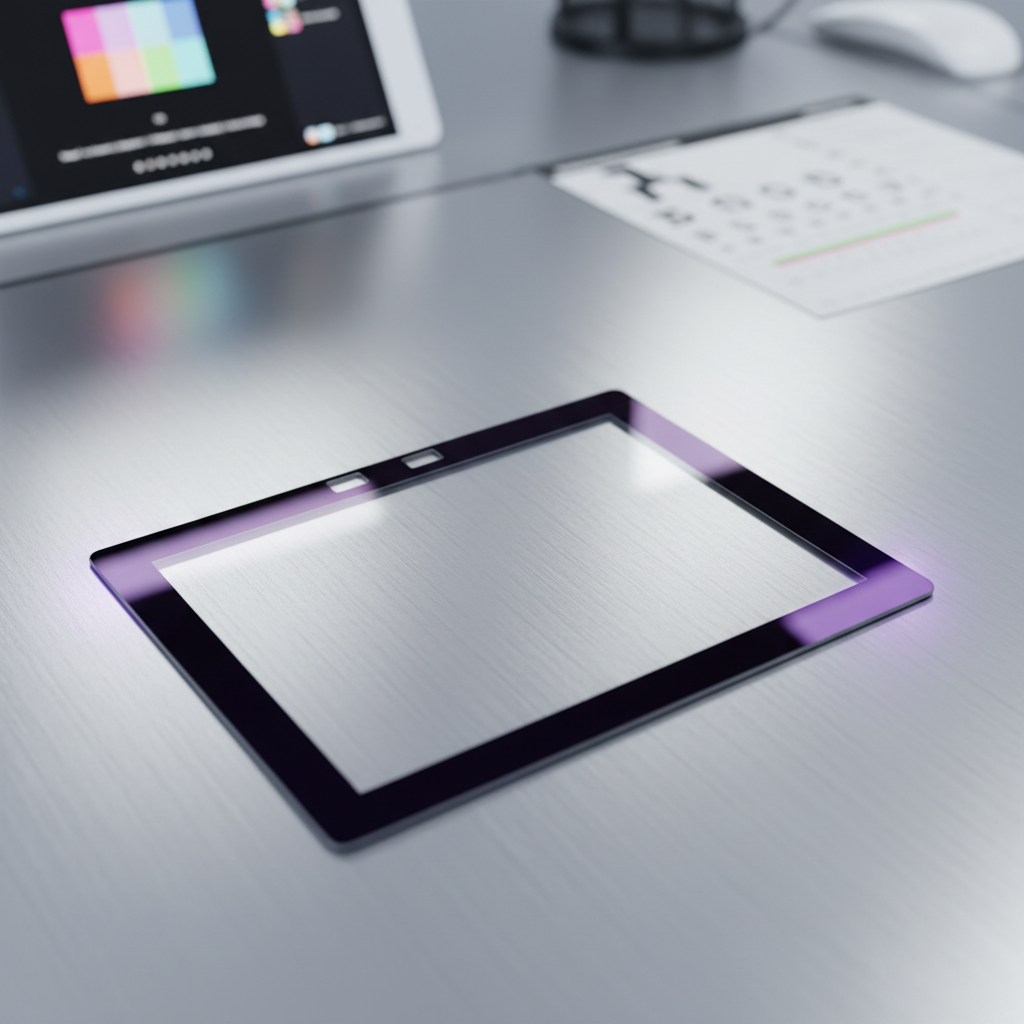
How to Choose Between AG, AR, and AF Coated Glass for Industrial HMI Screens
Industrial Human-Machine Interface (HMI) display systems operate in demanding environments such as:
- High-brightness factory lighting
- Direct outdoor sunlight exposure
- Oil, dust, and chemical contamination
- Frequent touch interaction
- Alcohol and disinfectant cleaning cycles
In such environments, cover glass coating performance directly determines readability, optical clarity, and long-term durability of the system.
Three core optical coating technologies dominate industrial display glass:
- AG (Anti-Glare): matte etched surface diffusion
- AR (Anti-Reflection): multi-layer optical interference coating
- AF (Anti-Fingerprint): nano oleophobic surface coating
This guide provides an engineering-level selection framework used in industrial HMI, CNC machines, medical devices, marine navigation systems, EV charging displays, and outdoor kiosks.
1. What Is AG Coated Glass (Anti-Glare Glass)?
AG glass is produced by chemical or physical surface etching, forming a controlled micro-rough surface that diffuses incident light.
Optical Principle
AG surface reduces specular reflection by converting direct reflection into scattered light.
Engineering Parameters (Typical Industrial Range)
| Parameter | Typical Value |
|---|---|
| Haze | 5% – 25% (fully adjustable) |
| Surface Roughness (Ra) | 0.05 – 0.3 μm |
| Light Transmittance | 85% – 92% |
| Reflection Reduction | Moderate |
| Scratch Resistance | Medium (depends on substrate tempering) |
Core Advantages
- Reduces glare under high ambient lighting
- Eliminates sharp mirror reflections
- Lowers operator eye fatigue during long shifts
- Conceals minor surface dust and micro scratches
Best Application Scenarios
- CNC machine control panels
- Factory automation HMIs
- Industrial PLC touch screens
- Warehouse logistics control terminals
- Indoor robotic operation systems
Limitation
AG treatment slightly reduces optical sharpness due to light diffusion, making it unsuitable for ultra-high-definition precision display systems.
Recommended Product Link: AG coated tempered glass
2. What Is AR Coated Glass (Anti-Reflection Glass)?
AR glass uses multi-layer vacuum optical interference coating to cut surface reflectance and boost overall light transmission.
Optical Principle
AR coating minimizes Fresnel reflection via destructive interference across stacked thin-film layers.
Engineering Parameters
| Parameter | Typical Value |
|---|---|
| Visible Transmittance | 92% – 98% (varies by glass substrate) |
| Surface Reflectance | < 1% – 4% |
| Standard Coating Layers | 3–7 optical layers |
| Color Shift | Minimal, neutral white balance |
Core Advantages
- Ultra-high screen clarity under direct sunlight
- Preserves original display color accuracy
- Dramatically suppresses surface reflection
- Industry standard for sunlight-readable outdoor equipment
Best Application Scenarios
- Outdoor self-service kiosks & digital signage
- EV charging station touch displays
- Marine navigation control systems
- Construction machinery instrument HMIs
- Road traffic monitoring terminals
Limitation
Without AG matte surface treatment, AR glass still generates visible mirror reflections under complex mixed lighting.
Recommended Product Link: AR Coated Tempered Glass
3. What Is AF Coated Glass (Anti-Fingerprint Glass)?
AF coating is a nano-scale hydrophobic & oleophobic surface treatment that weakens adhesion of oil, sweat and fingerprint residues.
Optical Principle
A fluorinated nano thin-film creates low surface energy to repel water and organic oil molecules.
Engineering Parameters
| Parameter | Typical Value |
|---|---|
| Water Contact Angle | 105° – 115° |
| Surface Energy | < 20 mN/m |
| Abrasion Durability | 3,000–10,000 alcohol wipe cycles |
| Chemical Resistance | Resistant to IPA, industrial disinfectants |
Core Advantages
- Powerful anti-fingerprint & anti-oil performance
- One-wipe cleaning without residual stains
- Smooth, sliding touch tactile experience
- Tolerates daily medical & industrial disinfection
Best Application Scenarios
- Medical patient monitoring touch displays
- Precision laboratory instrument panels
- Food processing equipment HMIs
- Public payment kiosks & vending machines
- High-frequency touch industrial interfaces
Limitation
AF coating only optimizes surface cleanliness, and delivers zero improvement on glare or surface reflection control.
Recommended Product Link: AF/AG Coated HMI Glass
4. AG vs AR vs AF Engineering Comparison Table (Core SEO Asset)
| Property | AG (Anti-Glare) | AR (Anti-Reflection) | AF (Anti-Fingerprint) |
|---|---|---|---|
| Core Function | Uniform light diffusion | Optical reflection suppression | Surface contamination resistance |
| Manufacturing Tech | Controlled chemical etching | Vacuum multi-layer sputtering coating | Nano fluorinated thin film deposition |
| Light Transmittance | Medium (85–92%) | High (92–98%) | Neutral, no impact |
| Haze Level | Adjustable high haze | Near-zero haze | No haze |
| Reflection Control | Moderate | Excellent | None |
| Fingerprint Resistance | Poor | Poor | Excellent |
| Outdoor Environment Adaptability | Medium | Excellent | Medium auxiliary layer |
| Most Typical Use Case | Indoor factory HMI panels | Outdoor sunlight displays | High-touch hygiene-sensitive devices |
5. Industrial HMI Glass Selection Guide (Engineering Decision System)
- 1.Indoor factory automation & workshop equipment → AG tempered glass or AF+AG dual-coated glass
- 2.Outdoor terminals exposed to constant sunlight → Single AR coated glass or AR+AG hybrid composite glass
- 3.Medical, food & hygiene-sensitive equipment → AF+AG dual coating or premium AR+AF+AG triple coated glass
- 4.High-end precision measurement & marine display systems → AR + AF + AG all-in-one optical composite glass
- 5.Cost-sensitive basic industrial control equipment → Standard uncoated tempered glass or AG-only single coating solution Premium Triple Coated Product Link: AR AF AG Coated Glass
6. Common Failure Risks of Low-Quality Coated Glass
Unprofessional coating manufacturers often deliver defective glass with these critical issues:
- Non-uniform AG haze distribution, visible streaks & fog difference
- AR coating rainbow interference patterns under light
- AF nano coating peeling & degradation after repeated alcohol wiping
- Poor coating adhesion leading to flaking during assembly
- Unstable optical performance under industrial -40℃ ~ 85℃ thermal cycling
7. Felix Glass Industrial-Grade Quality Control System
Felix Glass implements full-process engineering standards for coated HMI glass:
- ✅ Full AOI automatic optical defect inspection for every panel
- ✅ Independent vacuum magnetron AR coating production workshop
- ✅ Closed-loop controlled chemical AG etching for uniform haze
- ✅ High-adhesion durable AF nano coating treatment
- ✅ Deep chemical tempering reaching 9H scratch resistance
- ✅ Standard thermal cycling test range: -40°C to 85°C
- ✅ Coating adhesion test compliant with ISO 2409 Grade 0–1
8. Target Long-Tail SEO Keywords Built Into This Article
This content fully optimizes high-intent buyer search terms:
- industrial HMI display glass supplier
- anti glare glass for CNC machine panel
- AR coated glass for outdoor kiosk display
- anti fingerprint glass for medical touch screen
- marine navigation display cover glass supplier
- EV charging station touch glass panel
- industrial control panel tempered glass OEM
- triple AR AF AG coated glass for high-end HMI
- factory automation anti-glare touch screen glass
Conclusion
AG, AR, and AF coatings carry distinct optical and functional values for industrial HMI operating environments:
- AG coating solves glare interference for indoor factory equipment
- AR coating boosts light transmittance for clear outdoor sunlight visibility
- AF coating delivers easy-clean, stain-resistant surfaces for high-touch equipment
Matching the correct coating combination to your application greatly upgrades:
- Screen display readability
- Daily operator work efficiency
- Overall service life of touch equipment
- Long-term industrial reliability
For customized haze values, fixed optical transmittance targets, silk-screen black border printing, C/J chamfer edge polishing and multi-layer composite coating design, Felix Glass delivers full engineering-grade customized HMI glass solutions.
Call to Action
Submit your technical drawing, glass thickness, haze specification, coating combination and working environment requirements.
Our optical engineering team will provide:
- Optical performance feasibility analysis
- Optimized coating scheme recommendation
- Prototype sample testing support
- Stable OEM mass production delivery plan