IR Material Selection Guide
- Share
- publisher
- Felix Optical Glass Co., Limited
- Issue Time
- Nov 2,2026
Summary
Complete IR material selection guide for thermal domes, laser windows, EO/IR gimbals, subsea sensors. Match wavelength, pressure, coating, environment and budget for your RFQ.

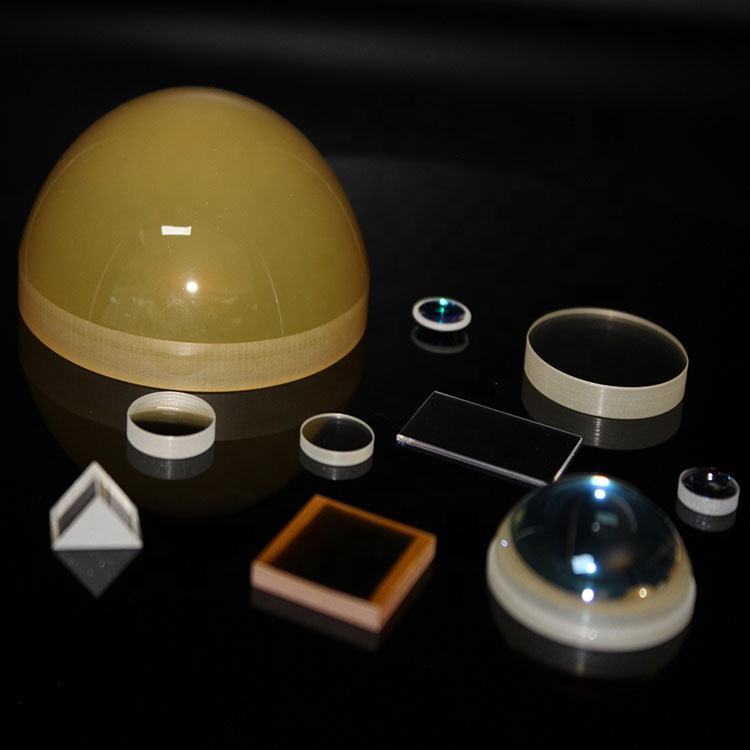
For IR Domes, Protective Windows, Laser Windows & Thermal Lenses This master selection guide summarizes all core infrared optical substrates: ZnS, ZnSe, Ge, Si, Sapphire, Fused Silica. It helps system engineers filter material by working wavelength, pressure, abrasion, temperature, coating requirement and budget before issuing RFQ drawings. The biggest root cause of project failure is grade mismatch, not just material name. Always specify grade inside your RFQ. “ZnS” alone is not enough; you must state FLIR Grade or HIP Multispectral Grade. “ZnSe” alone is ambiguous; IR grade or Laser grade must be clearly marked. Missing grade specification is the top cause of delayed samples and wrong parts. Material grade, wavelength, drawing, clear aperture, surface quality, coating type, working environment and quantity.
Infrared Optical Material Selection Guide
Decision Checklist Before You Choose Material
Material Quick Reference Matrix
Material
Primary Application
HIP Multispectral ZnS
Visible + IR common-aperture gimbal dome
FLIR Grade ZnS
Budget LWIR thermal dome
ZnSe (Laser Grade)
10.6μm CO₂ laser window / lens
ZnSe (IR Grade)
LWIR thermal imaging optics
Germanium
8–14μm LWIR thermal objective lens
Silicon
Mid-IR, high-temperature window
Sapphire
Deep subsea dome, high abrasion window
Fused Silica
UV laser, UV curing, instrument window
Critical Rule: Material Name ≠ Grade
FAQ
What should I include in my RFQ for IR optics?
Related Comparison Articles