Optical Coatings | AR / HR Coatings & AG Surface Treatments
- Share
- publisher
- Felix Glass Co., Limited
- Issue Time
- Oct 21,2026
Summary
All thin-film coating technical content, including anti-reflection coatings for infrared windows, high-reflection laser coatings and anti-glare surface processing for display glass.
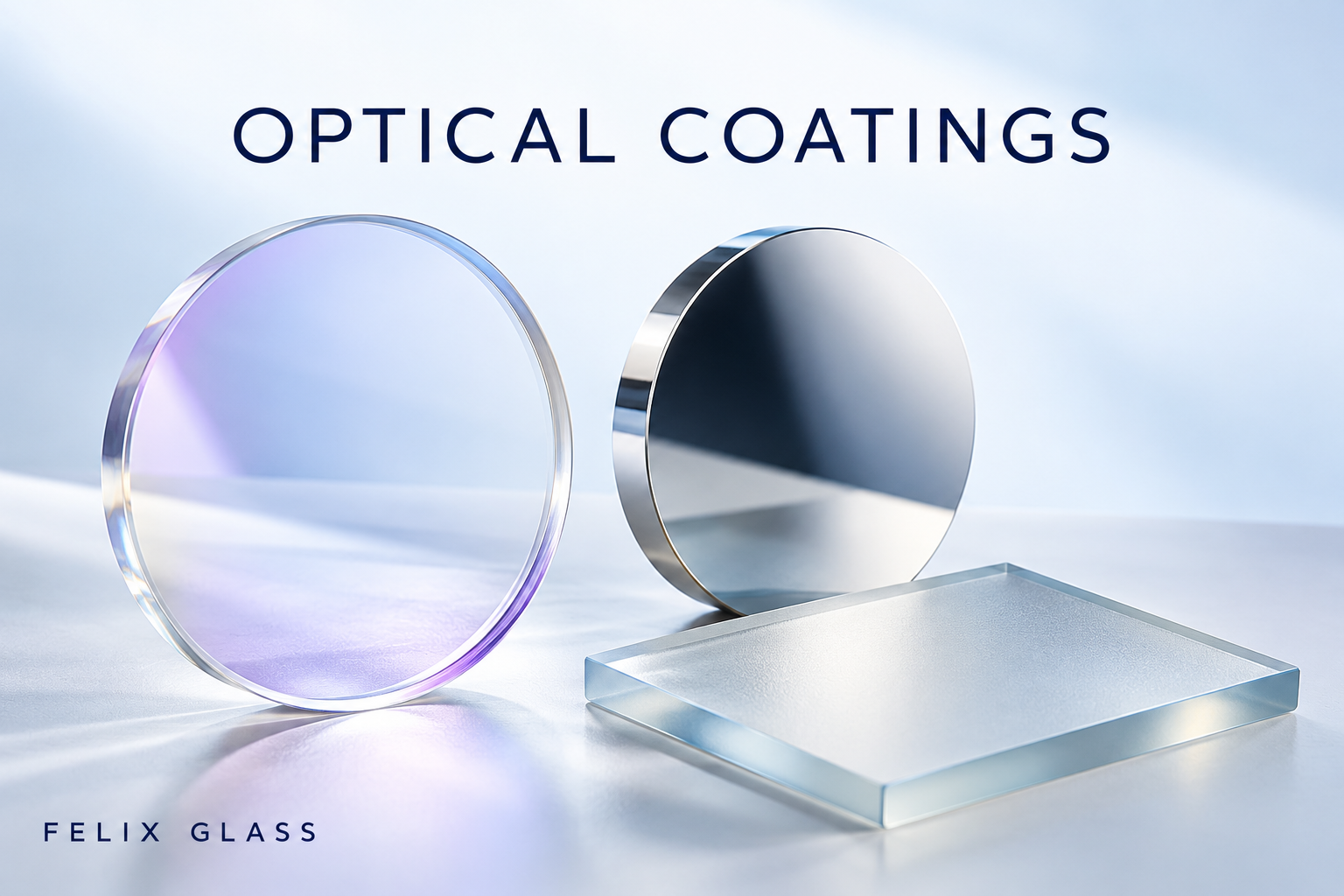
All thin-film coating technical content, including anti-reflection coatings for infrared windows, high-reflection laser coatings and anti-glare surface processing for display glass. Optical thin-film coatings are critical to optimize light transmission, reduce surface reflection and improve component reliability. Infrared AR coatings are widely applied on ZnSe, ZnS, sapphire and fused silica windows for CO₂ laser and thermal imaging systems, while AG anti-glare surface treatments are engineered for cover glass in display, touch panel and optical viewing assemblies. Felix Glass provides custom AR, HR and AG processing, with wavelength-targeted coating design, environmental testing and batch production for industrial and defense EO/IR optics. 1. Uneven etching causes mottling or cloudy patches; strict bath concentration, temperature and immersion time control are required.
2. High haze reduces glare but lowers display contrast; always define haze percentage on your drawing according to end-use environment.
3. AG surface is more prone to stain adhesion; optional AF anti-fingerprint over-coating is widely added for touchscreen applications. Use AR coating when your priority is maximum light transmission for laser, IR imaging and optical signal transmission. Choose AG surface treatment when you need to suppress glare for visible display viewing panels, where transmission loss and slight haze are acceptable trade-offs. Related categories: Optical Windows, Display Cover Glass We deliver precision AR, HR thin-film coatings and AG anti-glare etching for optical windows, display cover glass and IR substrates, with full performance testing and wavelength customization.Optical Coatings
Technical Articles In This Category
Anti-Reflection (AR) Coatings for Infrared Windows & Anti-Glare (AG) Surface Treatments for Display Glass
Overview
Part 1: Anti-Reflection (AR) Coatings for Infrared Windows
AR Coating Design & Application Notes
Part 2: Anti-Glare (AG) Surface Treatments for Display Glass
AG Processing Pitfalls & Quality Control
How to Select Between AR and AG Treatments
Browse More Topics
Custom Optical Coating Service