Optical Dome Materials Guide - Sapphire, ZnS, Ge | Felix Glass
- Share
- publisher
- Felix Glass
- Issue Time
- Sep 7,2026
Summary
Compare key optical dome materials including Sapphire, ZnSe and ZnS. Check transmission range, mechanical properties and application requirements for IR, LiDAR and underwater projects.
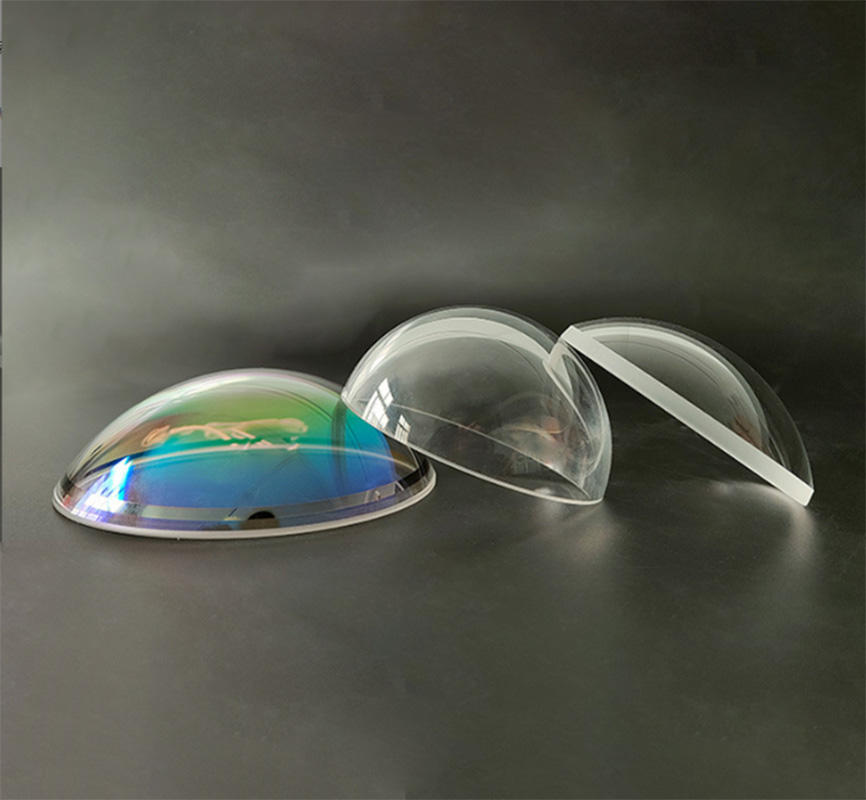

Optical dome materials, compared
Select the optimal dome material by transmission band, hardness and mission environment — from sapphire missile-seeker domes to multispectral ZnS covers. Felix Glass fabricates custom domes and windows from your drawing, blank or specification.
Three families, eleven dome materials
Grouped by what they are built for — hard ceramics for armor-grade protection, fluorides for UV work, and infrared materials for thermal imaging.
Hard ceramic domes
Armor-grade hardness, rain-erosion and thermal-shock resistance for seeker domes, aerospace and high-pressure windows.
Infrared domes & windows
Thermal-imaging domes across MWIR and LWIR, from multispectral CVD ZnS to molded chalcogenide glass.
UV & fluoride domes
Deep-UV to mid-IR transmission with chemical resistance for spectroscopy, UV imaging and protective covers.
Transmission ranges at a glance
Bars show each material's useful transmission band on a logarithmic wavelength axis. Amber bands mark the 3–5 µm and 8–12 µm atmospheric windows.
Reading: the further a bar reaches right, the deeper into the infrared the material transmits. Germanium transmits to 23 µm — the widest LWIR reach in this set. Silicon shows strong absorption near 9 µm, which limits 8–12 µm use. ZnS is multispectral CVD grade (visible to LWIR). Typical values per Felix Glass datasheets and published manufacturer data.
Recommended optical dome materials
Select the optimal optical material based on transmission range, mechanical properties and application requirements.
| Material | Transmission | Hardness | Main Advantages | Typical Applications |
|---|---|---|---|---|
| SapphireAl₂O₃ crystal | 0.15–5.5 µm | Mohs 9 | Extremely high hardness, scratch resistance, high temperature | High-temperature windows, underwater, aerospace |
| AlONAluminum oxynitride | 0.2–5 µm | Knoop 1800 | Transparent-armor grade, extreme hardness | Defense optical windows, protective domes |
| SpinelMgAl₂O₄ | 0.2–5 µm | Mohs 8 | High impact resistance, multi-spectral capability | Aerospace, missile seeker domes, defense windows |
| ZirconiaZrO₂ | 0.3–5 µm | Mohs 8.5 | Hard, tough, corrosion resistant | Industrial windows, harsh environments |
| MgF₂Magnesium fluoride | 0.2–7 µm | Knoop 415 | Excellent UV performance, chemical resistance | UV optical systems, spectroscopy |
| CaF₂Calcium fluoride | 0.2–8 µm | Knoop 160 | Excellent UV–IR transmission, low dispersion | UV imaging, spectroscopy, IR windows |
| ZnSMultispectral CVD | 0.37–14 µm | Knoop 160 | Wide spectral transmission, stronger mechanical properties | Military IR systems, thermal imaging |
| Germanium (Ge)Single crystal | 1.8–23 µm | Knoop 780 | High refractive index, excellent LWIR performance | Thermal cameras, infrared imaging systems |
| Silicon (Si)Monocrystalline | 1.2–7 µm | Knoop 1150 | Lightweight, high thermal conductivity | IR sensors, laser systems |
| Chalcogenide GlassIR glass | 1–12 µm | — | Moldable IR material, lightweight | Thermal imaging, compact IR optics |
| IRG26Chalcogenide glass | 1–14 µm | — | High IR transmission, low transition temperature | Uncooled IR camera optics |
Pick a dome material, send us the spec
Typical values shown for orientation. Final parameters are quoted against your drawing. Image naming follows the Felix Glass convention: felix-glass-<material>-dome.jpg.
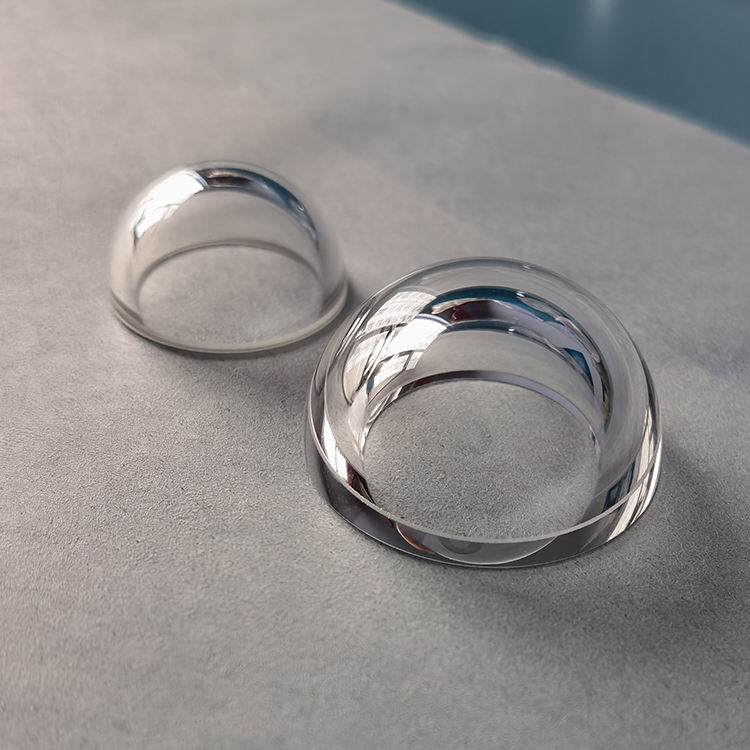
Sapphire Hard ceramic
0.15–5.5 µmThe benchmark dome material — extreme hardness, scratch and chemical resistance, retains strength at high temperature.
First choice for missile seeker domes, underwater viewports and high-pressure windows.
Request this material
AlON Hard ceramic
0.2–5 µmTransparent-armor grade polycrystalline ceramic combining armor strength with optical clarity.
Selected for defense windows and protective domes where impact is the threat.
Request this material
Spinel Hard ceramic
0.2–5 µmMulti-spectral capability with high impact resistance — visible through mid-IR in one dome.
Proven for aerospace and missile seeker domes that must survive extreme shock.
Request this material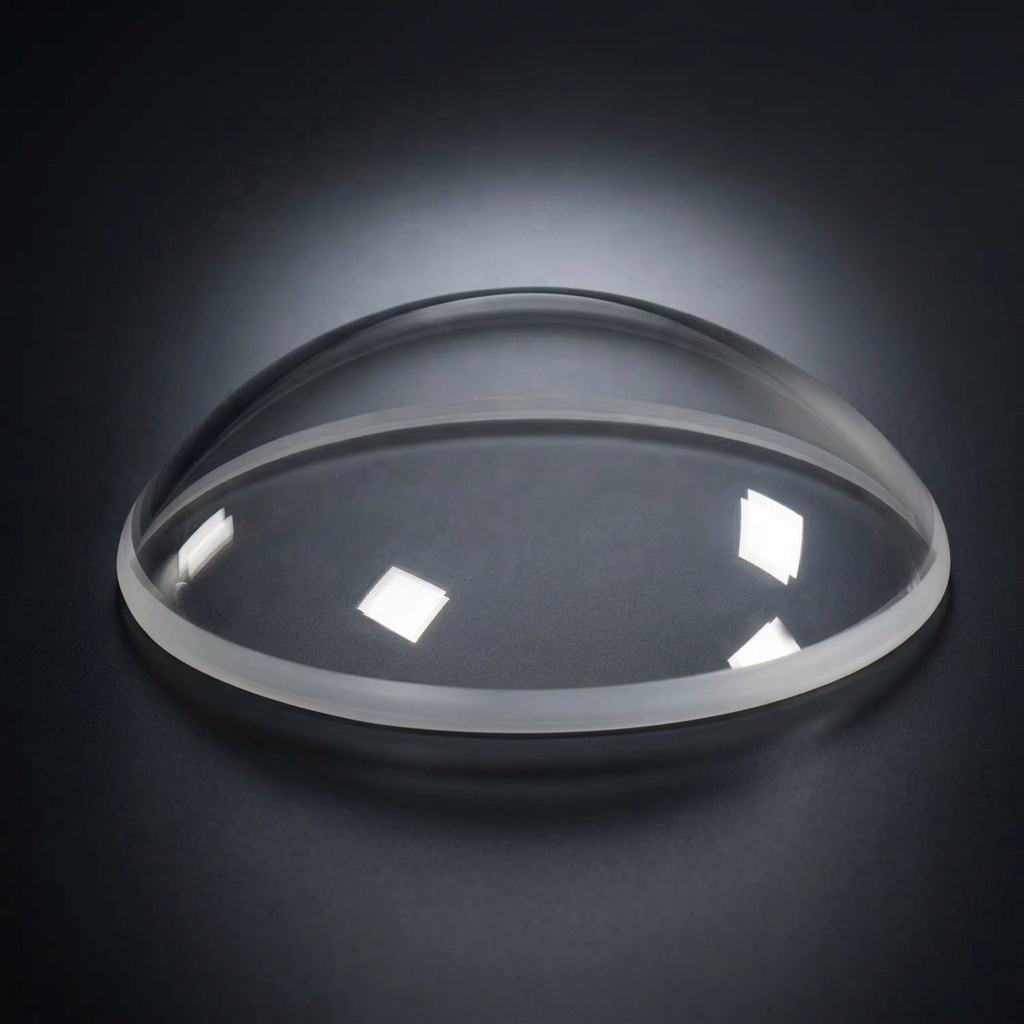
Zirconia (ZrO₂) Hard ceramic
0.3–5 µmCubic zirconia with high hardness, fracture toughness and corrosion resistance.
A tough choice for industrial windows and chemically aggressive environments.
Request this materialMgF₂ UV / fluoride
0.2–7 µmExcellent deep-UV transmission with good chemical resistance and moderate hardness.
Standard choice for UV optical systems and spectroscopy covers.
Request this material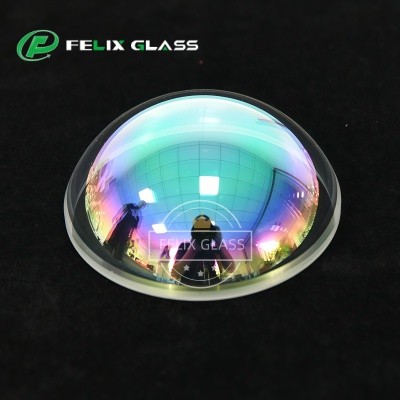
CaF₂ UV / fluoride
0.2–8 µmBroad UV to mid-IR transmission with low dispersion for precision optical systems.
Widely used in UV imaging, spectroscopy and IR windows.
Request this material
ZnS (Multispectral) IR window
0.37–14 µmWater-clear CVD ZnS with visible to LWIR transmission and strong resistance to rain erosion.
The multispectral workhorse for military IR systems and airborne domes.
Request this material
Germanium (Ge) IR window
1.8–23 µmHighest refractive index and best LWIR transmission of common window materials, out to 23 µm.
Transmission is temperature sensitive; preferred for 8–14 µm thermal imaging.
Request this material
Silicon (Si) IR window
1.2–7 µmLightweight with very high thermal conductivity — excellent thermal behavior for IR systems.
Oxygen-related absorption near 9 µm limits 8–12 µm use.
Request this material
Chalcogenide Glass IR glass
1–12 µmMoldable infrared glass that is lightweight and cost-effective for compact thermal imaging.
The economical choice for high-volume IR optics.
Request this material
IRG26 IR glass
1–14 µmHigh-transmission chalcogenide with a low transition temperature for precision molding.
Used in uncooled IR camera optics and aspheric dome components.
Request this materialFour questions, one right dome material
Start from the operating band and the mechanical environment. If you are unsure, send the requirement and our engineers will specify the material.
From blank or drawing to finished dome
Every dome runs through the full process chain under controlled inspection at each stage.
CNC machining
Rough shaping of the dome blank to drawing envelope, with center thickness and edge allowances.
Grinding
Loose-abrasive or diamond-wheel generation of inner and outer spherical radii to tolerance.
Polishing
Optical polishing of both surfaces to specified surface accuracy and scratch-dig grade.
Coating
AR / protective / environmental coatings applied and verified per your specification.
Tell us the dome material and the spec
Send your drawing, target wavelength band and quantity. Our engineers review the requirement and reply with a quotation within 24 hours.
- Helpful details: material, wavelength, OD / center thickness, coating and quantity
- You can attach a drawing, datasheet or sketch with your request
- Prototype and production orders both welcome