Optical Filters | Bandpass & Spectral Filter Coating Guides
- Share
- publisher
- Felix Glass Co., Limited
- Issue Time
- Oct 21,2026
Summary
Practical guides for spectral optical filters, bandpass coating design, environmental durability testing and wavelength selection for machine vision and infrared sensing.
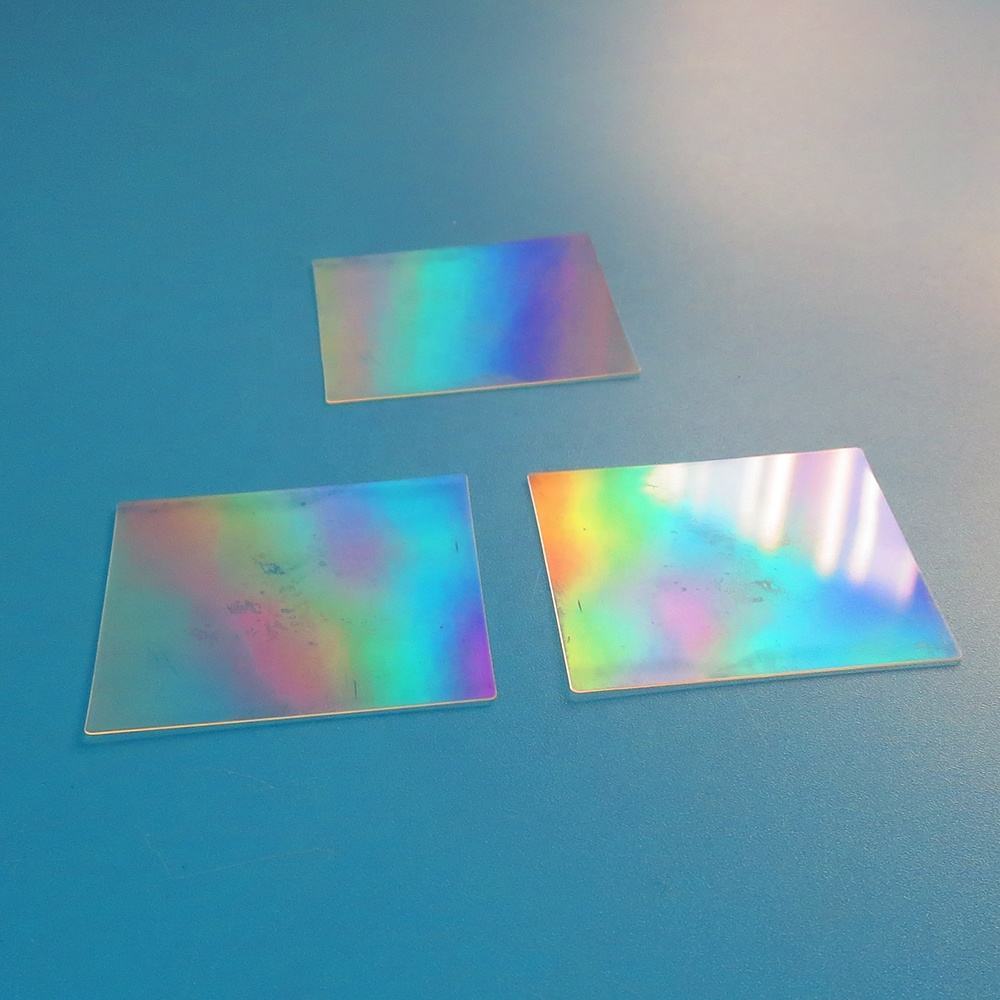
Find technical content on thin-film spectral filters, bandpass coating specifications, surface quality and long-term stability under high-temperature operating conditions. Infrared bandpass filters rely on dielectric multilayer thin-film coatings to transmit a narrow IR waveband while blocking out-of-band stray light. They are core components for thermal imaging, machine vision, gas detection and multi-spectral sensing. Felix Glass customizes bandpass coatings for NIR, MWIR and LWIR wavebands on sapphire, silicon, germanium, ZnS and ZnSe substrates. Without thermal compensation, narrowband IR filters will suffer obvious CWL blue shift when working above 70°C, resulting in signal attenuation. Always specify spectral testing at actual operating temperature for high-temperature systems. Thin-film filter coatings easily delaminate, develop haze or suffer wavelength drift under high temperature, high humidity and thermal shock. Environmental qualification verifies long-term spectral stability and coating adhesion before mass production, following ISO 9211 and MIL-STD-810G standards. High-temperature operation causes thin-film layer expansion and moisture infiltration, leading to wavelength drift. Two reliable solutions:
1. Use magnetron-sputtered dense coatings to reduce water absorption;
2. Add a protective top coat (SiO₂ or DLC) to seal the multilayer stack, locking spectral performance over years of field use. When submitting filter drawings, clearly separate optical specs (CWL, bandwidth, blocking OD) and environmental test requirements. List full test conditions, cycle counts and maximum allowable wavelength shift to avoid performance inconsistency after delivery. Related categories: Optical Coatings, Optical Windows We design narrowband & broadband IR bandpass filters with full environmental qualification for thermal imaging and multi-spectral instruments.Optical Filters
Technical Articles In This Category
Infrared Bandpass Filter Coating Specifications
Overview
Core Optical Parameters
Coating Technology & Substrate Matching
Common Design Pitfall
Spectral Filter Environmental Durability Test
Overview
Standard Test Items & Acceptance Criteria
Long-Term Thermal Stability Control
RFQ Specification Tip
Browse More Topics
Custom Optical Filter Coating Service