Sapphire Window Manufacturing Process | Full Production Flow Guide
- Share
- publisher
- Felix Glass
- Issue Time
- Apr 25,2026
Summary
Full guide to sapphire window production process, including cutting, grinding, polishing, stress relief and quality inspection for industrial optical components.
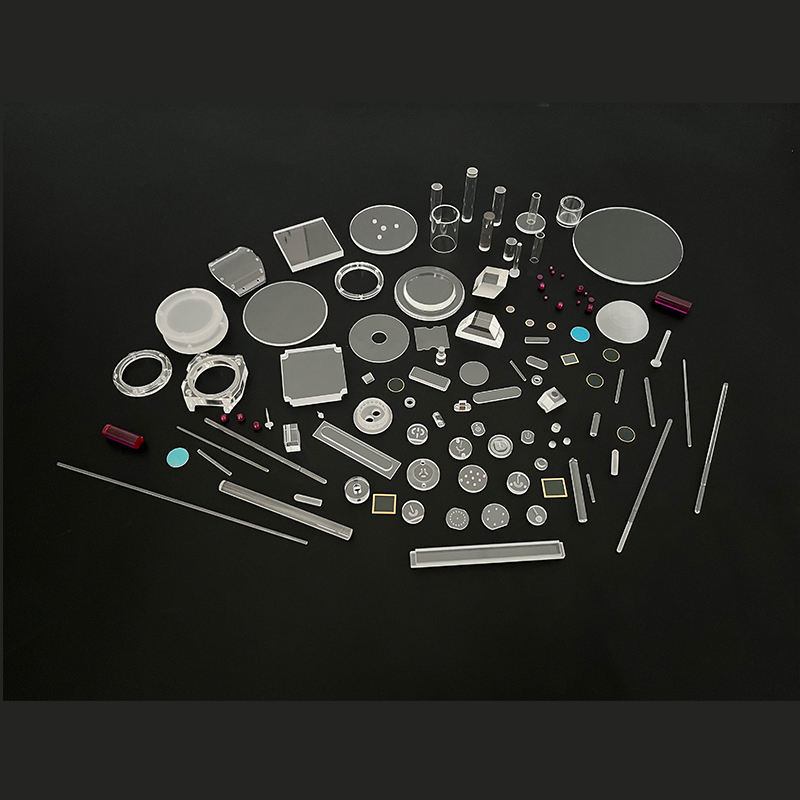
Sapphire Window Manufacturing Process – Full Production Flow Guide
1. Introduction
Sapphire windows are the most widely used optical components in industrial sapphire applications. The final optical performance, flatness, structural stability and service life of sapphire windows depend entirely on standardized manufacturing and precision processing procedures. This article presents the complete industrial production workflow of sapphire windows, covering raw material selection, cutting, grinding, polishing, stress relief and finished quality inspection.
2. What Is Sapphire Window Manufacturing
Sapphire window manufacturing refers to the full-process precision machining of qualified single-crystal sapphire ingots. Through directional cutting, multi-stage grinding, ultra-precision optical polishing, stress relief heat treatment and strict quality testing, raw crystal materials are processed into flat, high-transmittance, defect-free optical windows suitable for laser, medical, aerospace and industrial detection equipment.
3. Full Production Steps
- Raw Material Selection: Select high-purity single-crystal sapphire ingots strictly according to optical grade requirements, excluding defective materials with inclusions, bubbles or dislocations.
- Orientation Cutting: Cut sapphire ingots along the optimal crystal direction to ensure uniform optical and mechanical performance of each blank.
- Rough Grinding: Remove cutting traces, balance overall thickness and preliminarily flatten blank surfaces.
- Fine Grinding: Further improve surface flatness, parallelism and dimensional accuracy to prepare for optical polishing.
- Ultra-Precision Polishing: Achieve mirror-level optical surface finish, eliminate micro roughness and ensure maximum spectral transmittance.
- Stress Relief Heat Treatment: Remove internal residual stress generated during cutting and grinding to prevent future cracking and deformation.
- Full Performance Inspection: Test dimensional tolerance, flatness, parallelism, internal defects and spectral transmittance one by one.
- Dust-Free Cleaning & Sealed Packaging: Complete ultrasonic cleaning and vacuum sealing to avoid dust contamination before delivery.
4. Core Process Control Points
- Crystal-oriented cutting is strictly implemented to guarantee consistent optical isotropy.
- Multi-stage progressive grinding ensures ultra-high flatness and parallelism for precise equipment assembly.
- Ultra-precision polishing directly determines light transmittance, imaging quality and laser damage resistance.
- Complete stress relief treatment improves thermal shock resistance and long-term structural stability.
5. Core Advantages of Standard Process
- Uniform thickness and excellent flatness, supporting high-precision assembly and optical alignment.
- Mirror-level surface finish delivers stable, high spectral transmittance across UV, visible and IR bands.
- Fully released internal stress greatly reduces cracking risk under temperature changes and mechanical load.
- Strict standardized processing ensures consistent batch quality and reliable mass supply.
6. Application Scenarios
- Industrial high-temperature and pressure detection viewing windows
- Laser equipment protective windows and optical isolation windows
- Medical device endoscope windows and precision detection optics
- Aerospace, defense and UAV observation optical windows
7. Process Comparison
Sapphire windows processed by simplified low-cost procedures often retain residual stress, surface scratches and poor flatness. These defects cause light scattering, low transmittance and easy cracking, making them unsuitable for precision optical and high-end industrial equipment. Standard full-process manufacturing guarantees stable optical performance and structural safety for long-term professional applications.
8. FAQ
Q1: What are the most critical steps in sapphire window production?
A1: Directional crystal cutting, multi-stage fine grinding and ultra-precision optical polishing are the three core determining steps.
Q2: Why is stress relief treatment necessary?
A2: It eliminates residual processing stress and effectively prevents component cracking during temperature cycling and installation.
Q3: Does polishing quality affect sapphire optical performance?
A3: Yes. High-precision mirror polishing is essential to achieve high light transmittance and eliminate light scattering.
Q4: What items are inspected for finished sapphire windows?
A4: Dimensional tolerance, surface flatness, parallelism, surface finish, internal defects and spectral transmittance.
9. Conclusion
Every step in sapphire window manufacturing directly affects final optical quality and structural reliability. Standardized full-process production and strict quality control are essential to produce high-performance sapphire windows for laser, medical, aerospace and precision industrial applications.
👉 Related Knowledge & Products:
- Link: ZnS vs ZnSe: Complete Infrared Optical Material Selection Guide
- Link: Sapphire Optical Grades & Spectral Transmittance
- Link: High-Purity Sapphire for Semiconductor & Aerospace
Link: Sapphire IR Optics