Sapphire vs Quartz Glass – Full Comparison on Hardness, Temperature & Optics
- Share
- publisher
- Felix Glass
- Issue Time
- Jun 8,2026
Summary
Sapphire and quartz glass are key optical materials. We compare their mechanics, heat resistance, optics, cost and uses for your correct selection.
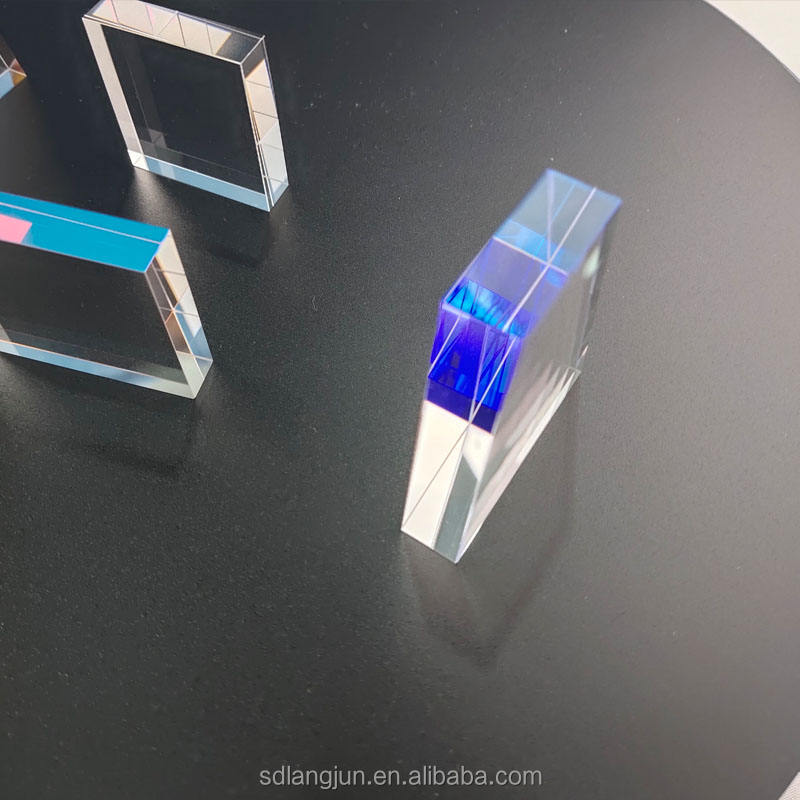
Sapphire and quartz glass are two mainstream high-performance optical materials. Many buyers confuse their features and make improper selection. This article conducts a full comparison on material nature, mechanical performance, temperature resistance, optical characteristics, cost and application fields, to help you complete accurate material matching according to working conditions.
2. What Are Sapphire & Quartz Glass
Sapphire Crystal: Synthetic single-crystal Al₂O₃, high hardness, ultra-high temperature resistance, wide-spectrum transmission from near UV to mid-infrared.
Quartz Glass: Amorphous fused silica (SiO₂), excellent deep UV transmittance, good thermal shock resistance, moderate cost, widely used in semiconductor and UV equipment.
3. Key Properties Comparison
| Comparison Item | Sapphire Crystal | Quartz Glass |
|---|---|---|
| Material Type | Single crystal | Amorphous glass |
| Mohs Hardness | 9 | 7 |
| Max Continuous Temperature | 1600°C | 1100°C |
| Deep UV Transmittance (<200nm) | Poor | Excellent |
| Mid-Infrared Transmittance | Excellent | Good |
| Thermal Shock Resistance | Good | Outstanding |
| Wear Resistance | Excellent | General |
| Overall Cost | Higher | Moderate |
4. Manufacturing Process
Sapphire: High-temperature crystal growth → cutting → multi-stage precision polishing. Long production cycle and high technical threshold.
Quartz Glass: Raw material purification → 1700~2000°C melting → forming → annealing. Mature process and large-scale production.
5. Core Advantages
Sapphire Advantages
- Far higher hardness and wear resistance
- Higher long-term working temperature
- Better mechanical load capacity and pressure resistance
- Stable performance in mid-infrared band
Quartz Glass Advantages
- Superior deep ultraviolet transmission performance
- Better thermal shock resistance for frequent temperature changes
- Lower procurement cost and sufficient supply
- Mature processing for tubular and special-shaped parts
6. Application Scenarios
Choose Sapphire For
- Aerospace, military UAV domes and protective windows
- Laser equipment, high-pressure and wear-resistant working conditions
- Medical devices, long-term outdoor monitoring equipment
- High-temperature occasions above 1100°C
Choose Quartz Glass For
- Semiconductor diffusion furnaces, wafer processing
- Deep UV sterilization, UV curing and deep UV optical instruments
- Laboratory high-temperature utensils and conventional industrial furnace tubes
7. Selection Guide
- Priority on hardness, wear resistance, high temperature above 1100°C, mid-infrared → Sapphire
- Priority on deep UV transmission, cost control, frequent cold & hot alternation → Quartz Glass
8. FAQ
Q1: Which one is harder, sapphire or quartz glass?
A1: Sapphire is much harder, Mohs 9 versus Mohs 7 of quartz glass.
Q2: Which material resists higher temperature?
A2: Sapphire can work continuously up to 1600°C, higher than quartz glass.
Q3: Which is better for deep UV equipment?
A3: Quartz glass has excellent deep UV transmittance, so it is the better choice.
Q4: Which costs more?
A4: Sapphire crystal has higher production difficulty and higher overall cost.
9. Conclusion
Sapphire and quartz glass have their own dominant fields. Clarify the core demands of temperature, optical band, mechanical load and budget first, then select the most suitable material.
👉 Related Knowledge & Products: What Is Sapphire Crystal? | What Is Quartz Glass? | Sapphire Windows
Author: Felix Glass Optical Engineering Team
Reviewed By: Senior Optical Material Engineer
Last Updated: June 2026
References: ISO 12123 Optical Glass Standards, Industrial Optical Material Selection Manual