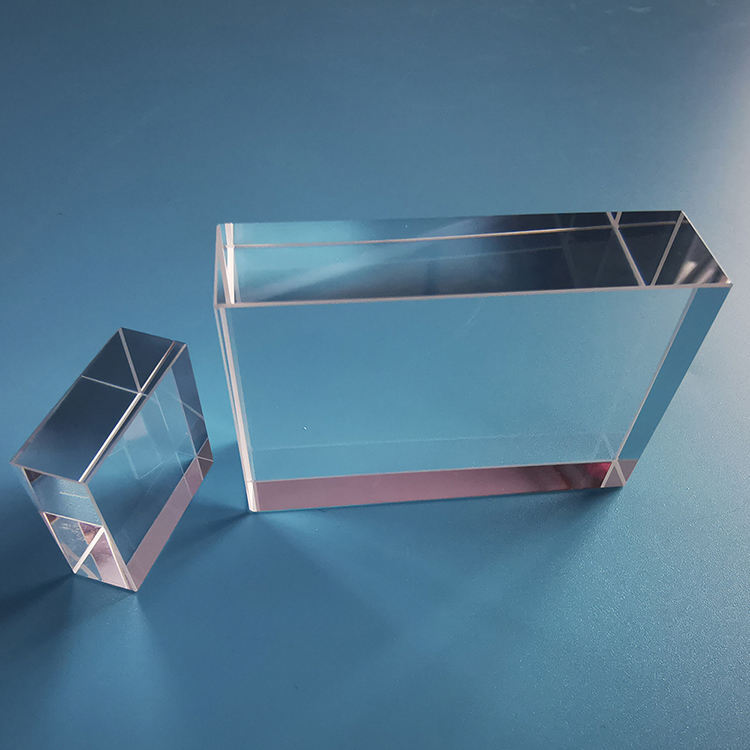
Single Crystal vs Polycrystalline Sapphire – Performance, Difference & Selection Guide

Single Crystal vs Polycrystalline Sapphire – Performance, Difference & Selection Guide

Summary

Learn the core differences between single crystal and polycrystalline sapphire in crystal structure, optical performance, machining accuracy and cost. Get professional selection advice for optical components and industrial structural parts.

Single Crystal vs Polycrystalline Sapphire – Performance, Difference & Selection Guide

Single Crystal vs Polycrystalline Sapphire – Performance, Difference & Selection Guide 1. Introduction Industrial sapphire is divided into single crystal and polycrystalline types according to internal crystal structure. Although both take Al₂O₃ as the main component, they differ greatly in optical uniformity, transmittance, internal defects and service life. This article explains their essential differences, performance features and applicable industries. 2. What Are Single & Polycrystalline Sapphire **Single Crystal Sapphire**: Complete continuous crystal structure grown by professional crystal pulling technology. Uniform internal texture, no crystal grain boundaries, stable optical and mechanical performance. **Polycrystalline Sapphire**: Composed of numerous tiny crystal grains. Grain boundaries exist inside, low cost, mainly used for non-optical structural parts. 3. Key Properties

arameterSingle Crystal SapphirePolycrystalline Sapphire
Internal StructureComplete single crystal, no grain boundaryMultiple crystal grains with boundaries
Optical UniformityExcellentPoor, light scattering occurs
Light TransmittanceHigh and stableRelatively low
Internal DefectsUltra-low defectsMore tiny gaps & defects
Processing PrecisionSupport ultra-precision polishingLimited polishing accuracy
Unit PriceHigherEconomical

4. Manufacturing Process **Single Crystal**: Strict high-temperature crystal growth under stable environment → orientation cutting → ultra-precision polishing. High requirement on equipment and technology. **Polycrystalline**: Powder sintering forming → simple grinding. Short cycle, suitable for mass production of ordinary parts. 5. Core Advantages Single Crystal Sapphire - Uniform light transmission, no scattering, ideal for precision optical systems - Higher structural compactness, better strength and longer service life - Support high-precision surface processing for laser and imaging equipment Polycrystalline Sapphire - Low production cost and cost-effective for general industrial use - Good high-temperature resistance and heat preservation performance - Easy to process into various special-shaped structural parts 6. Application Scenarios Single Crystal Sapphire Applications - Optical windows, lenses and domes for aerospace & defense - Laser protective windows, medical endoscope optical parts - Precision detection instruments and semiconductor optical components Polycrystalline Sapphire Applications - Ordinary industrial high-temperature heat-resistant parts - Heat preservation components, mechanical wear-resistant accessories without optical requirements - Low-precision protective covers and structural fixtures

7. Selection Rules - Optical transmission, imaging, laser, high-end precision equipment → Single Crystal Sapphire - Pure structural support, heat resistance, wear resistance without optical demands → Polycrystalline Sapphire 8. FAQ Q1: What is the essential difference between single crystal and polycrystalline sapphire?** A1: The internal crystal structure is different. Polycrystalline has grain boundaries while single crystal is a complete crystal. Q2: Which one has better optical performance?** A2: Single crystal sapphire has higher transmittance and better uniformity. Q3: Which is cheaper?** A3: Polycrystalline sapphire has lower cost. Q4: Can polycrystalline sapphire be used for optical lenses?** A4: No. Internal grain boundaries will cause light scattering and affect imaging effect. 9. Conclusion Single crystal and polycrystalline sapphire are positioned for different demands. Focus on optical performance and choose single crystal; focus on structural function and cost, choose polycrystalline. 👉 Related Knowledge & Products: [What Is Sapphire Crystal?](link) | [Sapphire Optical Grades & Transmittance](link) | [Sapphire Structural Parts](link) Author: Felix Glass Optical Engineering Team Reviewed By: Senior Optical Material Engineer Last Updated: June 2026 References: Synthetic Sapphire Growth Standard, Industrial Crystal Material Specification