Why 9H Hardness Matters for Industrial Touch Screen Cover Glass
- Share
- publisher
- Felix Glass
- Issue Time
- Jun 30,2026
Summary
Learn the critical value of 9H hardness tempered HMI glass. Understand pencil hardness test standards, industrial scratch risks, tempering technology, and how 9H glass extends service life for factory, medical, outdoor touch equipment.
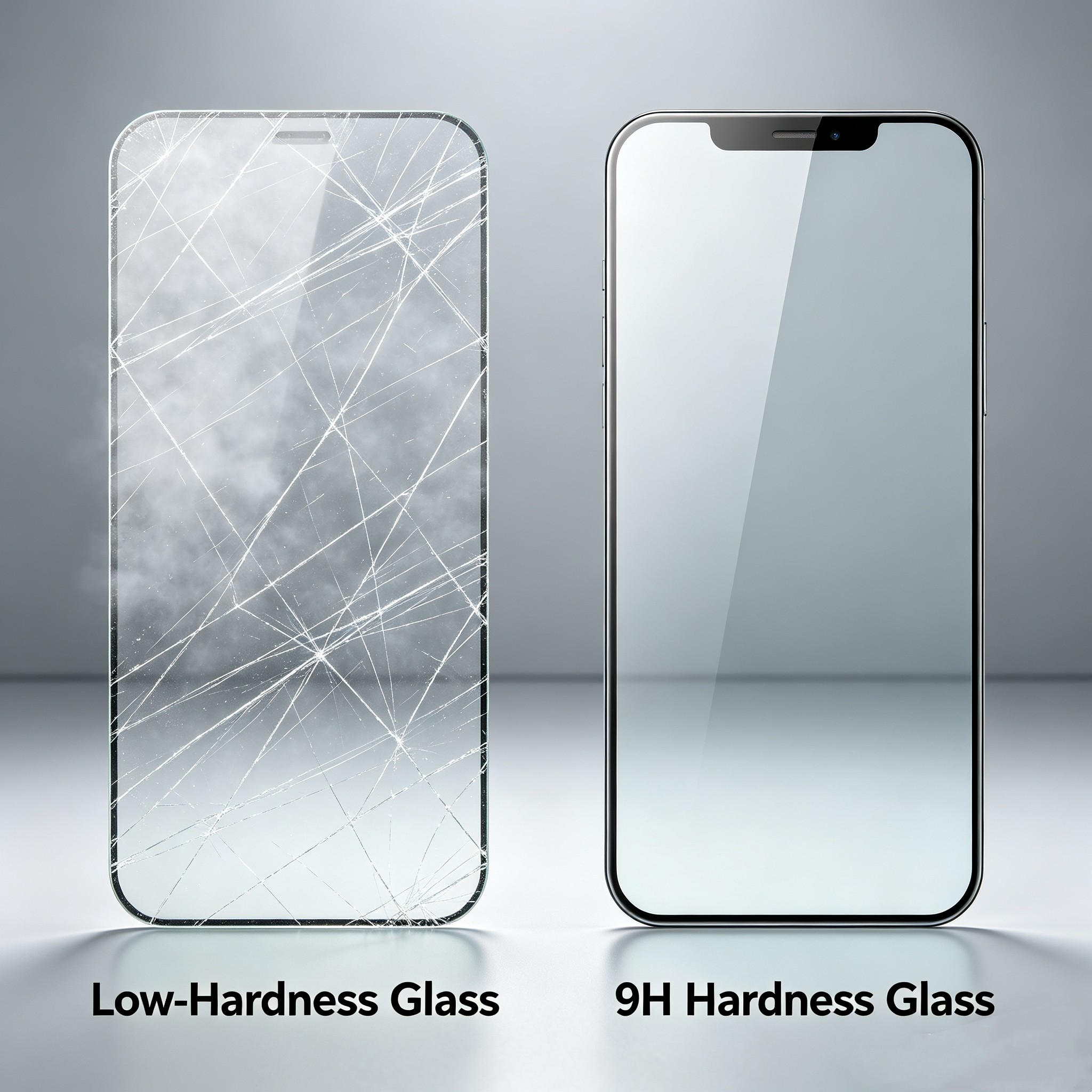
Why 9H Hardness Matters for Industrial Touch Screen Cover Glass
Industrial touch screen cover glass faces constant abrasive threats in daily operation: metal tool scrapes, metal dust, sand particles, frequent finger sliding, and repeated cleaning wipes. Scratches on the glass surface will blur display images, damage optical coatings, and shorten the service cycle of your HMI equipment.
Pencil hardness is the universal standard to judge glass scratch resistance in the display industry. 9H is the highest pencil hardness grade for mass-produced tempered cover glass. Many equipment OEMs overlook hardness indicators and select low-hardness glass, leading to high after-sales failure rates.
This engineering guide explains the pencil hardness grading system, how chemical tempering achieves 9H hardness, industrial scratch hazards solved by 9H glass, and comparison between low-hardness & 9H industrial touch glass.
1. What Is Pencil Hardness Standard & What Does 9H Mean?
Industry Test Standard
All hardness tests follow ASTM D3363 pencil scratch test standard, using standardized graphite pencils with fixed pressure and angle to scratch glass surfaces.
Hardness Grade Hierarchy (Soft → Hard)
6B < 5B < ... < HB < F < H < 2H < 3H < ... < 9H
- Low-end soda lime physical tempered glass: 3H–6H
- Ordinary chemical tempered glass: 7H–8H
- Deep ion-exchange chemical tempered aluminosilicate glass: 9H (top industrial grade)
Core Test Parameters for 9H Hardness
| Test Item | Standard 9H Hardness Requirement |
|---|---|
| Test Pencil | Mitsubishi UNI 9H graphite pencil |
| Applied Pressure | 750g vertical load |
| Scratch Stroke | 10 repeated back-and-forth scratches |
| Pass Standard | No visible permanent scratch marks under 10x magnifier |
| Compressive Stress (CS) | ≥700MPa ion exchange stress |
| Depth of Layer (DOL) | ≥45μm ion exchange layer |
Optical & Mechanical Logic of 9H Hardness
9H hardness is realized via deep chemical tempering: high-temperature ion exchange replaces small sodium ions inside glass with large potassium ions, forming a dense compressed stress layer on the glass surface. This compact surface layer prevents hard particles from cutting into the glass substrate, delivering superior anti-scratch performance.
2. Common Scratch Hazards In Industrial HMI Working Environments
All these risks will quickly damage glass below 7H hardness, while 9H glass can resist long-term abrasion:
1.Factory workshop metal dust & iron filings
- CNC, welding, stamping workshops produce tiny hard metal particles that easily scratch low-hardness glass during wiping.
- 2.Metal tool accidental scraping
- Maintenance wrenches, screwdrivers, metal fixture edges frequently contact touch screens in industrial sites.
- 3.Sand & outdoor dust abrasion
- Outdoor kiosks, construction machinery HMIs expose to silica sand, which has higher hardness than ordinary glass.
- 4.Repeated daily cleaning cycles
- Industrial alcohol wipes, rough cloth scrubbing wear down soft glass surface and peel off AF/AR coatings.
- 5.Long-term high-frequency finger touch
- Thousands of daily touch operations accumulate micro abrasions to form foggy hazy surfaces over time.
3. 9H Hardness Glass vs Low-Hardness Tempered Glass Comparison Table (Core SEO Asset)
| Performance Index | 9H Deep Chemical Tempered Glass (Aluminosilicate) | Ordinary 3H–6H Physical Tempered Soda Lime Glass |
|---|---|---|
| Pencil Hardness Grade | 9H (Top industrial standard) | 3H–6H |
| Compressive Stress CS | 700–900MPa | 200–400MPa |
| Ion Exchange Depth DOL | 45–90μm | 0μm (no ion exchange layer) |
| Resistance to Metal Dust Scratches | Excellent, no permanent marks | Poor, obvious scratches after short use |
| AF/AR Coating Adhesion | Ultra-high, stable after long abrasion | Low, coating peels easily under friction |
| Outdoor Sand Resistance | Long-term stable performance | Rapid surface fogging & scratch damage |
| Service Life In Factory Environment | 5–8 years stable operation | 1–2 years with obvious surface wear |
| Suitable Application Scenarios | Medical, outdoor, automation, marine, heavy machinery HMI | Indoor low-frequency touch simple control panels |
| Cost Level | Medium-high industrial premium grade | Low-cost entry-level glass |
4. Core Advantages of Equipping HMI With 9H Hardness Cover Glass
- 1.Eliminate screen scratch after-sales failures
- 9H surface resists most hard contaminants and tool collisions, drastically cutting equipment return rates caused by scratched glass.
- 2.Protect expensive optical functional coatings (AR/AG/AF)
- Scratches on glass substrate will tear off nano coating layers; dense 9H stress layer locks coatings firmly on the surface.
- 3.Keep long-term clear display effect
- No accumulated micro-scratches to form diffuse fog, maintaining original screen transmittance and anti-glare performance for years.
- 4.Adapt to all harsh industrial working conditions
- Compatible with indoor workshop, outdoor sunlight, medical disinfection, marine salt spray, construction machinery vibration environments.
- 5.Reduce equipment maintenance cost
- Extend the replacement cycle of touch cover glass, saving after-sales labor and spare part expenses for equipment manufacturers.
Best Application Scenarios for 9H Hardness Touch Glass
- Heavy-duty CNC machine & robot factory HMIs
- Outdoor self-service kiosks, EV charging touch displays
- Medical diagnostic monitoring touch screens with daily disinfection
- Marine vessel control navigation panels
- Construction engineering machinery instrument terminals
- Laboratory precision test equipment touch interfaces
Limitation of Non-9H Glass
Physical tempered soda lime glass without ion exchange cannot reach 9H hardness. Even with AF anti-fingerprint coating, the soft base substrate will scratch easily, and the coating will wear away rapidly under industrial friction.
Recommended Product Link: Tempered Glass for HMI Panels
5. How Felix Glass Achieves Stable 9H Hardness For All Custom HMI Glass
We adopt full-process deep chemical tempering workflow to guarantee consistent 9H hardness across every glass batch:
- ✅ High-purity aluminosilicate glass substrate as standard base material for 9H grade products
- ✅ Constant-temperature molten potassium salt ion exchange furnace with 6–10h tempering cycle
- ✅ Real-time stress tester inspection after tempering to filter unqualified low-CS glass
- ✅ Post-tempering edge polishing & coating processing without damaging surface stress layer
- ✅ Random sampling 9H pencil scratch test for every production batch before shipment
- ✅ Complete hardness test report provided with bulk order shipments
6. Embedded High-Intent Long-Tail SEO Keywords
This article targets buyer-focused industrial search terms:
- 9H hardness tempered glass for industrial HMI touch screen
- anti scratch aluminosilicate cover glass for CNC machine
- chemical tempering 9H glass for outdoor kiosk display
- pencil hardness test standard for industrial touch glass
- scratch resistant medical touch screen glass supplier
- high hardness tempered HMI glass for heavy machinery
- long service life anti-abrasion display cover glass OEM
Conclusion
9H pencil hardness is not an optional upgrade but a necessary engineering standard for industrial touch screen cover glass exposed to abrasive industrial environments. Low-hardness physical tempered glass will generate irreversible scratches, destroy optical coatings and degrade display effect within a short operation period.
Deep chemical tempered 9H aluminosilicate glass from Felix Glass delivers reliable anti-scratch, long-life performance for all high-demand industrial, medical, marine and outdoor HMI equipment. When customizing touch cover glass, prioritize 9H hardness substrate to reduce your long-term after-sales risks.
For custom 9H hardness tempered glass with C/J chamfer, AG/AR/AF composite coating and silk screen printing, send your technical drawings to our engineering team for tailored solutions and sample testing.
Call to Action
Submit your equipment working environment, glass thickness, edge chamfer and coating requirements. We provide free 9H hardness test samples, full mechanical performance data and factory bulk quotation within 24 hours.