ZnSe Infrared Lens Guide: 8‑14μm LWIR Thermal Imaging Optics
- Share
- publisher
- Felix Glass
- Issue Time
- Aug 8,2026
Summary
Professional ZnSe infrared lens technical guide for 8‑14μm LWIR thermal imaging. Covers material comparison table, coating types, engineering pain points, applications & custom manufacturing standards for IR system designers and procurement.

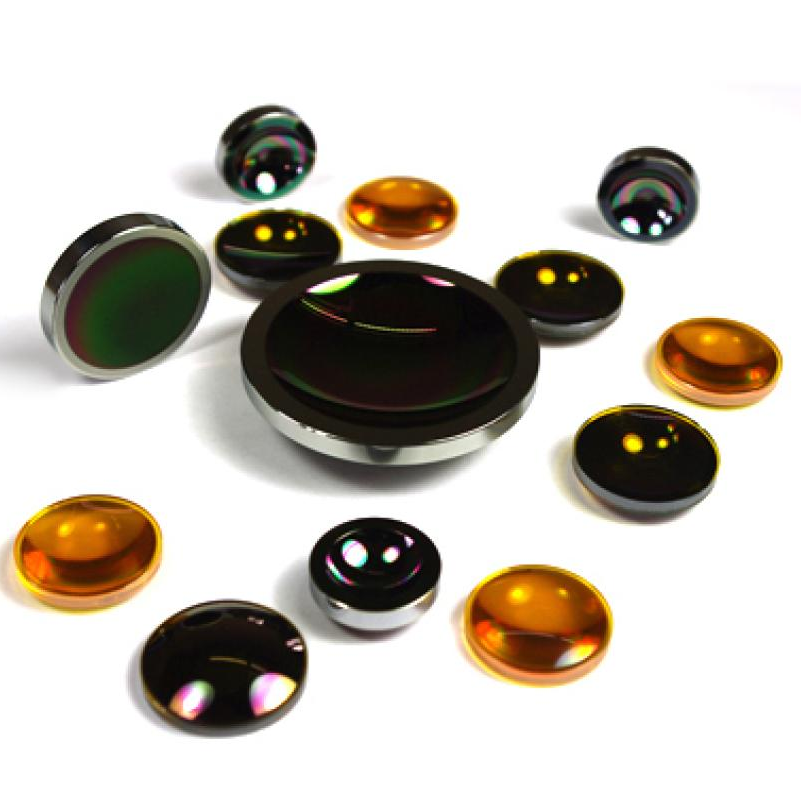
Technical Guide | For IR System Engineers & Optical Procurement
Long‑wave infrared (LWIR) thermal imaging operating within the 8–14μm atmospheric window is the most widely used detection band for industrial temperature monitoring, night vision surveillance, UAV thermal payloads, and non‑contact infrared measurement systems. Among all infrared optical materials, Zinc Selenide (ZnSe) stands out as the most reliable and cost‑effective solution for high‑performance LWIR optical lenses.
Unlike sapphire, common optical glass, or germanium optics, ZnSe features extremely low infrared absorption, uniform spectral response, and excellent machinability for complex lens curvature and broadband coating. For system designers and optical buyers, understanding ZnSe lens material characteristics, coating limits, application advantages, and custom manufacturing standards is critical to avoiding thermal imaging distortion, low transmittance, and inconsistent field performance.
Why ZnSe Is the Best Material for 8–14μm LWIR Thermal Systems
Most infrared system failures are not caused by sensors, but by low‑quality optical lenses with poor infrared penetration or uneven surface finish.
| Material | Working Band | LWIR Transmittance | Thermal Absorption | Coating Suitability | Typical Use Case |
|---|---|---|---|---|---|
| ZnSe | 0.6‑18μm | Excellent (8‑14μm) | Very Low | Broadband AR coating ideal | LWIR thermal camera lenses |
| Germanium(Ge) | 2‑14μm | Good | High at elevated temp | Good | MWIR optics, thermal windows |
| ZnS | 0.4‑14μm | Moderate | Medium | Fair | IR windows, domes |
ZnSe offers unique infrared advantages that no other visible or IR material can match:
1. Ultra‑high LWIR Transmittance
ZnSe delivers stable high transmission across the entire 8–14μm long‑wave infrared band, with almost no absorption valley. This ensures the thermal camera receives complete infrared radiation data without signal loss, delivering accurate temperature readings and clear thermal contrast.
2. Low Intrinsic Absorption & Uniform Optical Performance
Compared with ZnS and Germanium, ZnSe has much lower material absorption in LWIR range. It avoids thermal lens heating effect during long working hours, preventing image drift and thermal deviation in continuous surveillance equipment.
3. Excellent Coating Compatibility
ZnSe substrates perfectly support multi‑layer broadband infrared anti‑reflection coatings. Proper IR AR coating can increase transmittance above 97% and reduce surface reflection noise, greatly improving thermal imaging clarity.
4. Stable Temperature Adaptability
ZnSe lenses maintain stable optical performance in extreme working environments, including high‑temperature industrial workshops, outdoor sunlight exposure, and continuous 24‑hour field operation.
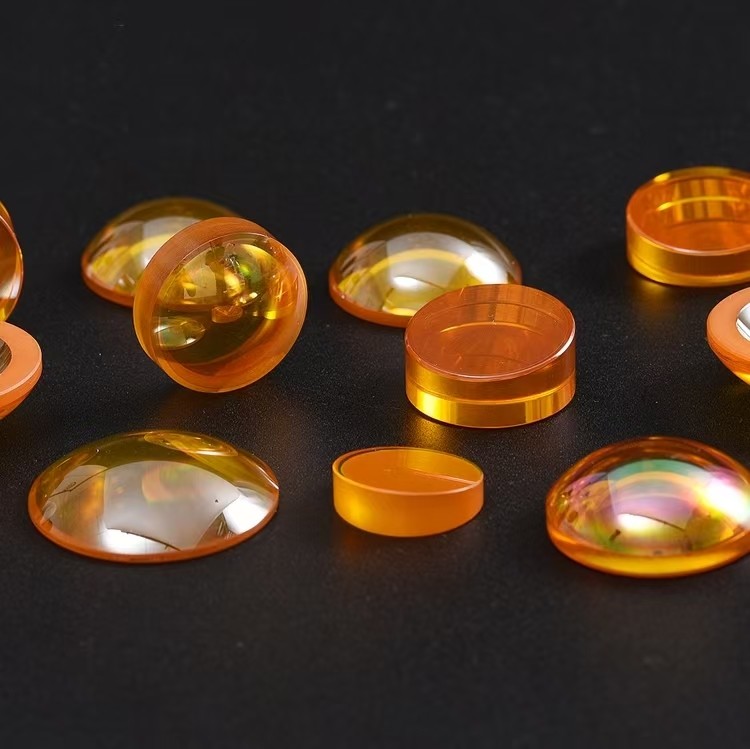
Common Challenges in ZnSe Lens Selection (Engineers’ Most Frequent Pain Points)
Through years of custom optical manufacturing, Felix Glass summarizes the most common problems customers encounter when purchasing custom ZnSe infrared lenses:
- Low‑cost unpolished ZnSe leads to uneven infrared transmission and blurred thermal edges
- Poor coating adhesion causes peeling after temperature cycling
- Uncontrolled surface scratch‑dig affects infrared imaging uniformity
- Inaccurate curvature tolerance causes focal length deviation
- Non‑customized coating band leads to low signal‑to‑noise ratio
These issues often result in unstable thermal detection accuracy and high after‑sales replacement costs.
Professional ZnSe Coating Solution Guide
Coating is the core that determines final infrared system performance. Different scenarios require different IR coating strategies.
1. Broadband IR AR Coating (7–14μm)
Best for: general industrial thermal cameras, outdoor monitoring, continuous temperature inspection
Highest transmittance across full LWIR band. Balanced performance for all environmental conditions. Most popular and cost‑effective option.
2. Narrow‑Band Custom IR Coating
Best for: precise industrial detection, professional thermal measurement instruments
Optimized for specific wavelength bands. Higher signal purity and lower noise.
3. Double‑Sided Anti‑Reflection Treatment
Professional‑grade thermal systems require double‑sided coating to eliminate double‑reflection interference and achieve maximum infrared penetration.
Industrial & Military‑Grade ZnSe Lens Applications
ZnSe infrared lenses are widely adopted in high‑precision infrared optical systems worldwide:
- Industrial online thermal inspection equipment
- Non‑contact high‑precision temperature measurement devices
- UAV airborne thermal imaging payloads
- Outdoor 24/7 night vision surveillance systems
- Security thermal detection cameras
- Automotive infrared night vision systems
- Military EOIR infrared observation systems
In all LWIR‑based optical devices, ZnSe lenses serve as the core front‑end optical window that directly determines imaging quality.
Custom ZnSe Lens Manufacturing & Quality Standard
Felix Glass provides full‑process custom ZnSe infrared lens manufacturing, from raw material selection, ultra‑precision CNC grinding, high‑precision polishing, cleaning, coating, spectral testing, to final dimensional inspection.
We support full customization:
- Custom diameter, thickness, focal length
- Convex, concave, plano‑convex, double‑convex lens shapes
- Strict scratch‑dig surface quality control
- Custom single‑band / broadband IR coating
- High‑precision curvature tolerance
- OEM prototype and mass production
Every finished ZnSe lens undergoes:
- Infrared spectral transmittance testing
- Surface defect microscopic inspection
- Dimensional tolerance calibration
- Coating adhesion and durability testing
Checklist: Parameters for ZnSe Lens Quotation
| Parameter Item | Specification Input |
|---|---|
| Working Wavelength Range | e.g.8‑14μm |
| Lens Dimension | Diameter / Thickness |
| Optical Parameters | Focal length / R of curvature |
| Surface Quality | Scratch‑Dig value |
| Coating Requirement | Broadband / Narrow‑band AR |
| Operating Environment | Temp, humidity, shock condition |
| Order Volume | Prototype / Batch / Mass order |
Final Summary
ZnSe infrared lenses remain the dominant optical solution for modern 8–14μm LWIR thermal imaging systems due to their superior infrared transmittance, low absorption, excellent coating compatibility, and stable environmental adaptability.
Choosing high‑quality custom ZnSe optical components effectively improves thermal imaging accuracy, reduces system noise, and extends equipment service life.
Need Custom ZnSe Infrared Lens Support?
Felix Glass professional IR optical team provides optical simulation, drawing optimization, prototype testing and long‑term mass production support.
Request Technical Quotation