Summary
"Aerospace optics case study of multi-band sapphire window replacement for airborne EO/IR surveillance pods. Solved thermal shock drift and low transmittance issues for defense and aerospace optical integrators
Summary
"Aerospace optics case study of multi-band sapphire window replacement for airborne EO/IR surveillance pods. Solved thermal shock drift and low transmittance issues for defense and aerospace optical integrators
When an airborne EO/IR surveillance pod integrator faced recurring thermal shock drift and insufficient multi-band transmittance, the legacy protective window became the single point of failure that limited mission readiness.
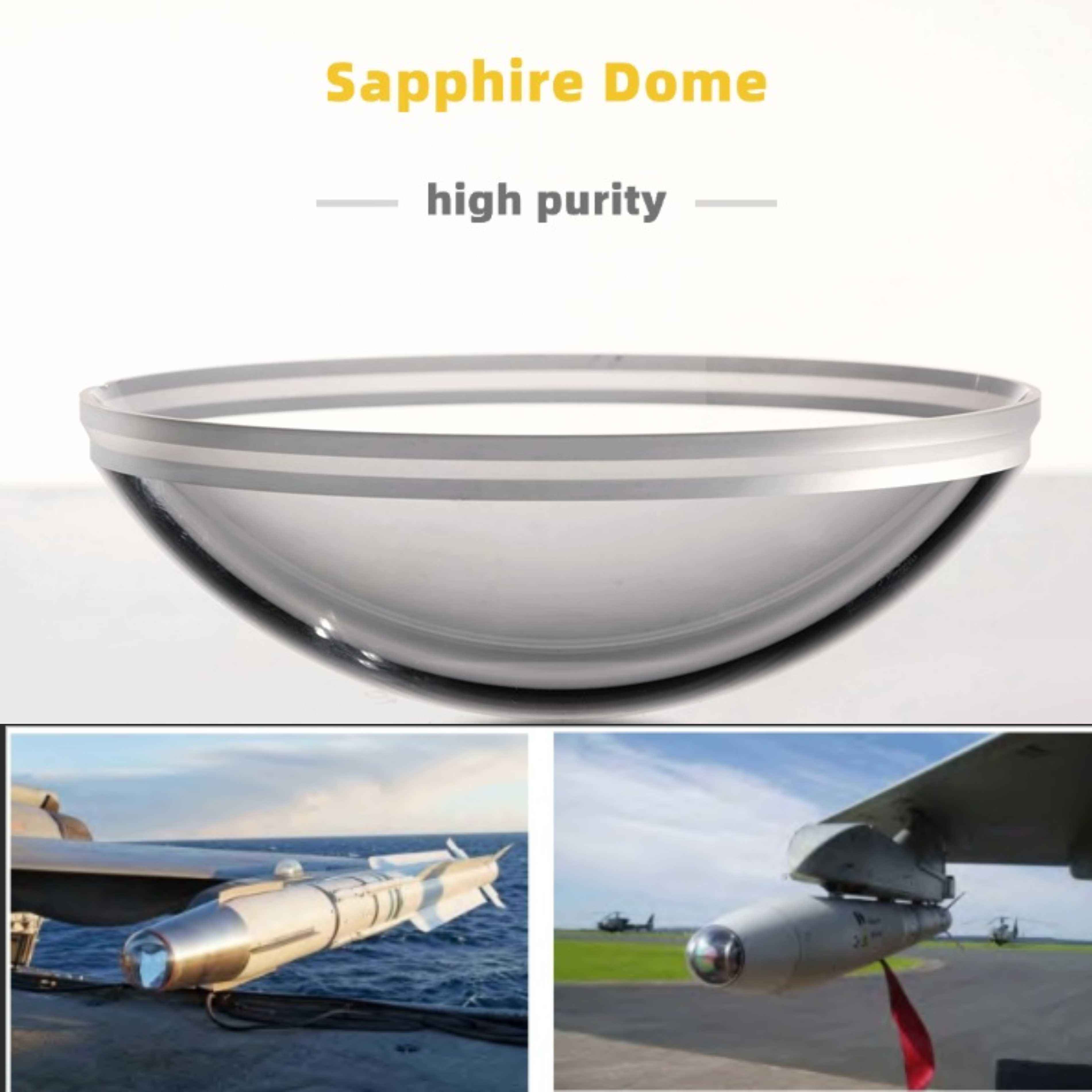
A US-based defense optical integrator supplying EO/IR surveillance pods for airborne intelligence platforms encountered two critical failures with their existing protective window assembly. First, rapid altitude and temperature changes caused thermal shock drift that shifted the optical axis during mission-critical imaging windows. Second, the original multi-layer coated glass window delivered insufficient transmittance across the required 0.4–12 µm spectral band, degrading both visible-spectrum target identification and long-wave infrared thermal detection.
Rapid temperature swings from ground level to cruising altitude induced optical axis shift exceeding 15 µrad, pushing the system beyond its boresight retention tolerance.
LWIR transmittance fell below 82% at 8–12 µm due to coating degradation under repeated thermal cycling, reducing target detection range by approximately 18%.
Rain erosion and sand particle impact at high airspeeds progressively pitted the outer window surface, creating scatter centers that degraded the modulation transfer function over successive sorties.
The optical upgrade centered on a purpose-engineered mono-crystalline sapphire protective window designed to address all three failure modes simultaneously. Sapphire was selected for its exceptional combination of broad spectral transmission, high thermal conductivity, and mechanical hardness unmatched by conventional optical glasses.
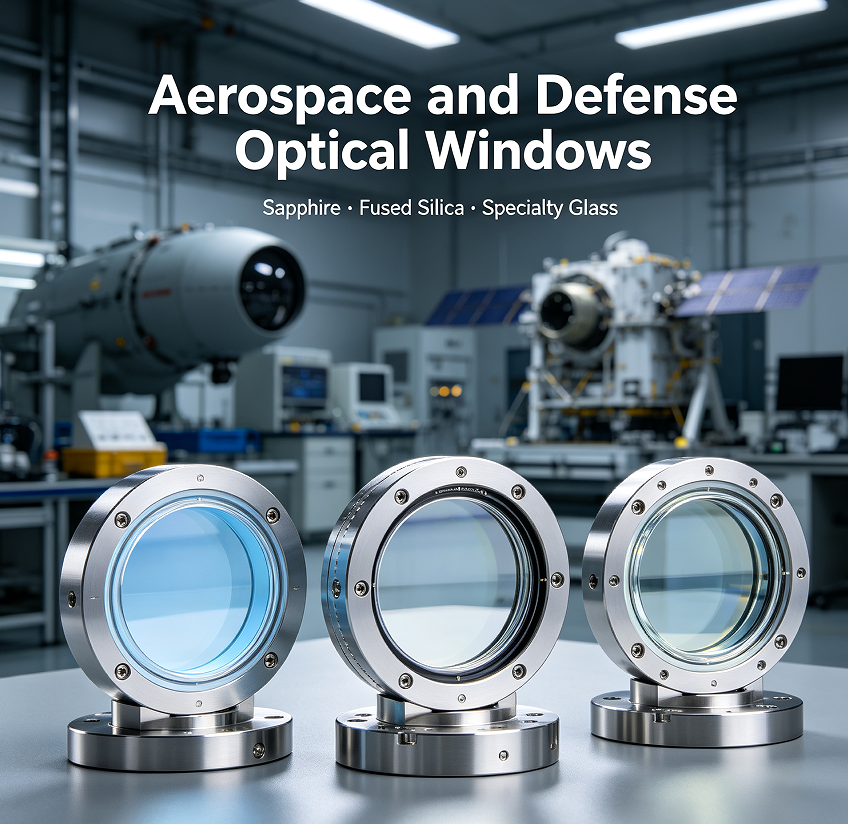
C-axis oriented sapphire substrate with dual-side broadband AR coating achieving ≥ 88% average transmittance from 0.4 µm through 12 µm, with peak LWIR transmittance exceeding 92%.
Sapphire's thermal conductivity of 35 W/m·K at room temperature enables rapid thermal equilibration across the aperture, keeping optical axis drift under 5 µrad across the full operational temperature envelope.
Mohs 9 hardness delivers rain erosion and sand impact resistance far exceeding that of multi-layer coated BK7 or fused silica windows, preserving surface quality and MTF over hundreds of flight hours.
Measured across 0.4–12 µm compared with the legacy coated-glass window assembly.
Stable optical axis retention across the full -54°C to +71°C operational temperature range.
Window replacement cycles extended from approximately 200 flight hours to over 600 hours before measurable MTF degradation.
At 8–12 µm, restoring full thermal detection range for target acquisition and classification at standoff distances.
Whether you are addressing thermal drift, transmittance gaps, or surface durability in an existing airborne surveillance platform, our engineering team can assess your window specification and propose a drop-in sapphire upgrade path.