Summary
Felix Glass customer success story: Ultra-thin sapphire eyepiece protective glass OEM project for German AR/VR equipment manufacturer, matched broadband AR coating, strict dimensional tolerance and long-term serial production supply.
Summary
Felix Glass customer success story: Ultra-thin sapphire eyepiece protective glass OEM project for German AR/VR equipment manufacturer, matched broadband AR coating, strict dimensional tolerance and long-term serial production supply.
Traffic Source: Organic Google Search
A reputable German enterprise specializing in consumer-grade and industrial AR/VR head-mounted displays encountered persistent product performance limitations. The original tempered glass eyepiece cover was prone to surface scratching and unwanted light reflection artifacts, degrading end-user visual experience and shortening the service lifespan of wearable devices.
The defined component requirement: ultra-thin single crystal sapphire eyepiece protective glass with low birefringence, customized broadband anti-reflection coating, plus strict thickness and contour tolerance to match precision headset assembly.
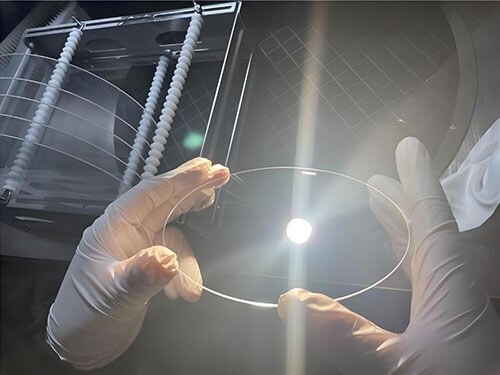
Compact AR/VR optical systems impose stringent demands on surface quality, polarization performance and dimensional accuracy of front protective covers.
Micro scratches accumulated during daily handling impaired imaging clarity and reduced product service life.
Ghost reflections interfered with virtual image presentation and compromised immersive viewing experience.
High birefringence materials caused uneven light transmission for polarized AR optical paths.
Inconsistent thickness and outline geometry disrupted seamless assembly inside slim headset housings.
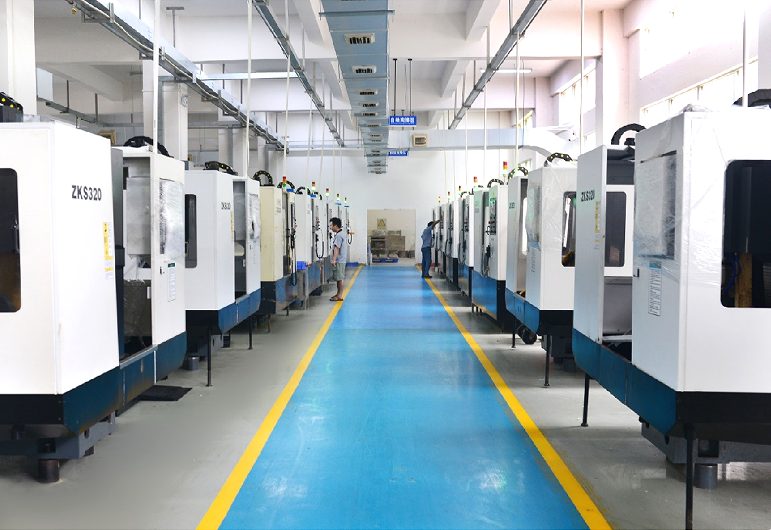
Multiple transparent substrate materials were evaluated for wearable AR/VR eyepiece cover operating requirements.
Comparative wear and optical testing confirmed single crystal sapphire delivers superior anti-scratch performance with optimized low birefringence, perfectly matching long-duration consumer and industrial AR/VR headset operating requirements.
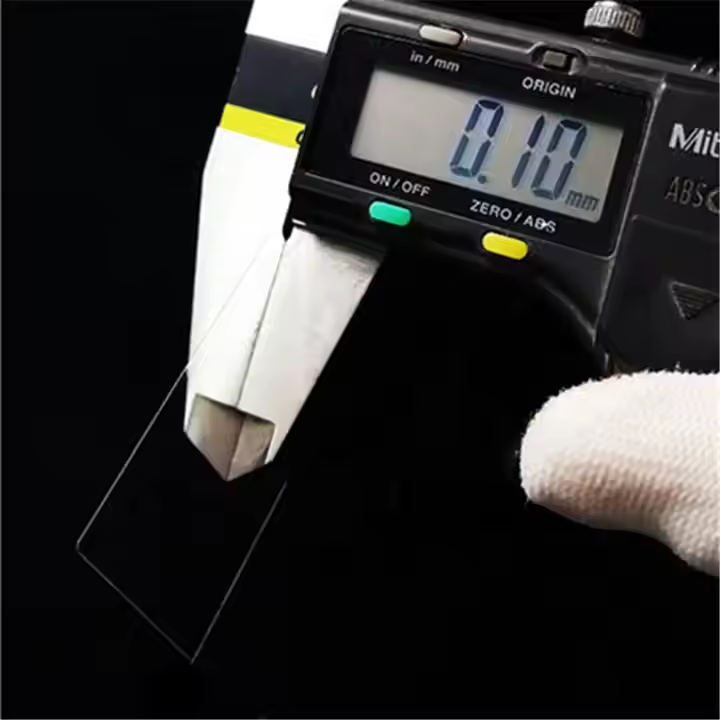
All ultra-thin sapphire protective covers were engineered for slim AR/VR head-mounted optical assembly constraints.
High-hardness sapphire raw material delivering industry-leading scratch resistance for wearable devices.
Crystal orientation controlled processing to minimize polarization distortion for AR optical paths.
Wide-spectrum anti-reflection coating optimized to eliminate ghost reflections inside AR displays.
Strict thickness tolerance matching slim mechanical housing requirements of lightweight headsets.
CNC contour shaping for seamless, gap-free integration with the headset internal structure.
Surface defect, dimension and spectral testing to guarantee consistent batch-to-batch performance.
Optical validation and OEM development followed standardized wearable display engineering workflow:
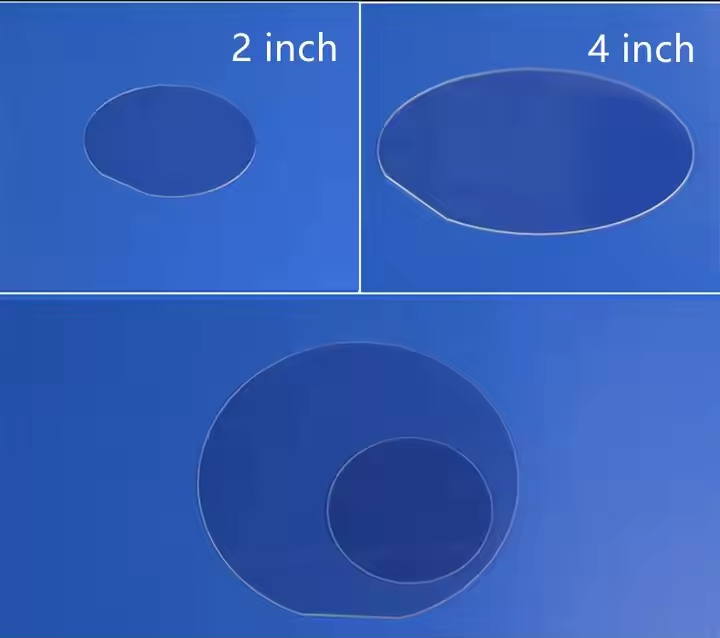
After prototype validation, the customer launched formal bulk orders for new generation AR devices. Initial monthly order volume reaches 35,000 pcs. We maintain stable monthly serial production supply and support iterative upgrade of the second and third-generation headset models.
Disclaimer: Results achieved in this specific AR/VR headset project. Actual visual performance depends on crystal orientation, coating spectrum, assembly structure, brightness level and daily usage environment.
Precise dimension control, stable coating consistency, professional technical support for optical optimization.
Wearable AR and VR devices demand balanced optical performance and mechanical durability for front eyepiece covers. Single crystal sapphire delivers exceptional scratch resistance while maintaining controllable low birefringence, effectively reducing long-term product failure caused by surface abrasion.
When designing high-end headset optical systems, coordinate crystal orientation, ultra-thin machining and broadband AR coating together to balance visual quality, assembly tolerance and service lifespan.
More Customer Projects:
Multi-Material CNC Machined Optical Components Project
Medical Diagnostic Sapphire Touch Cover Case
Aerospace EO/IR Sapphire Protective Window Case