Q1: Can the AG and AR process be realized on a cover glass ?
- Share
- Issue Time
- Jul 6,2025
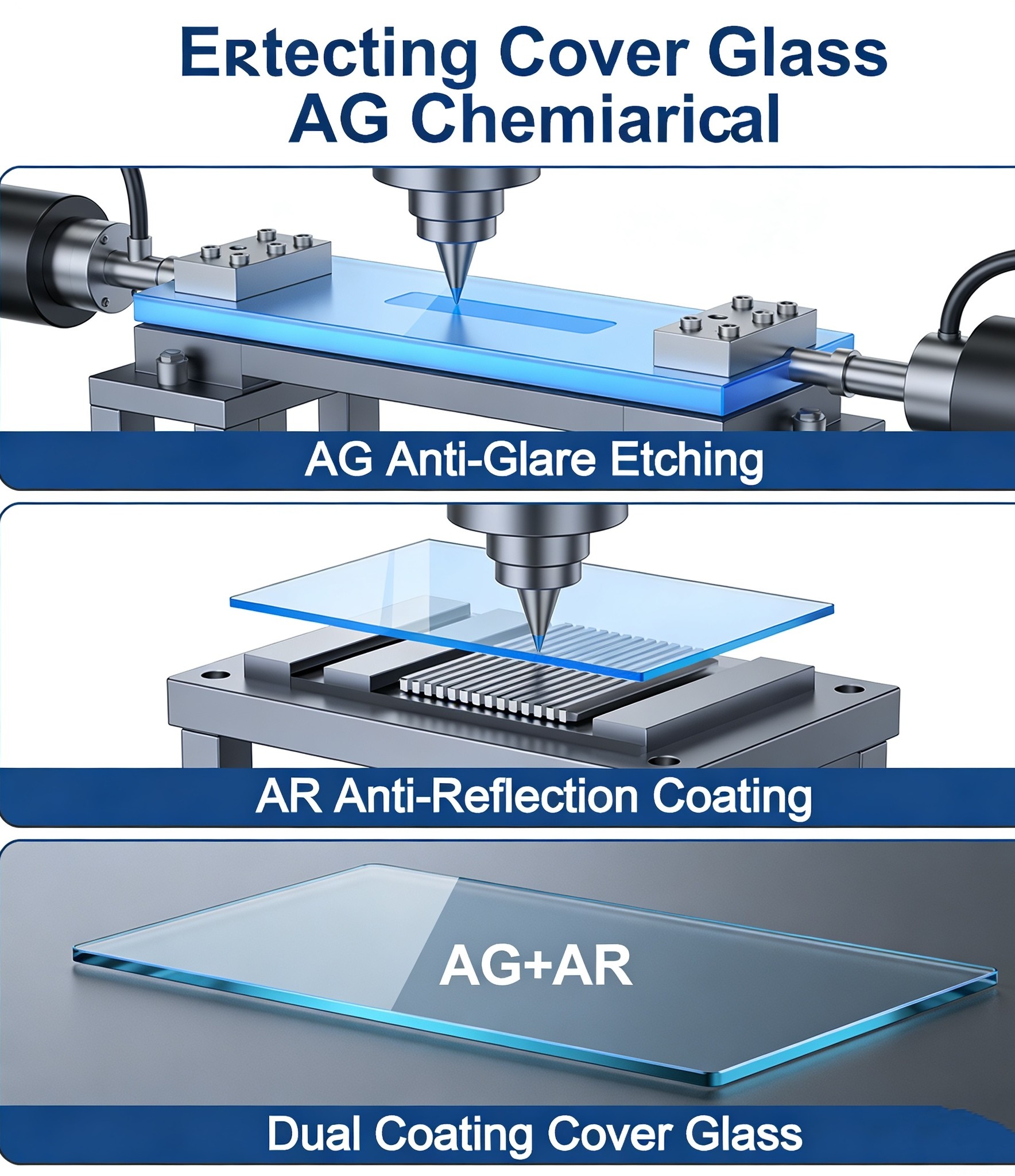
Question: Can the AG and AR process be realized on a cover glass ?
Answer:
Absolutely Yes. AG (Anti-Glare) and AR (Anti-Reflection) processes can be perfectly and stably combined on a single piece of cover glass, which is a mature, mass-proven technology widely used in high-end display, automotive, industrial and consumer electronics fields. This dual-coating solution integrates the core advantages of both processes, solving the pain points of single-process glass and achieving a comprehensive upgrade of display performance.
1. Core Functions of AG and AR Processes
First, it is necessary to clarify the respective functions of AG and AR processes, which are complementary and non-conflicting:
- AG (Anti-Glare) Process: Also known as anti-glare treatment, it forms a uniform micro-rough structure on the glass surface through chemical etching or physical spraying, which converts specular reflection into diffuse reflection, effectively eliminating glare, reducing ambient light reflection, and improving the visibility of the screen in strong light environments.
- AR (Anti-Reflection) Process: Also known as anti-reflection coating, it deposits a multi-layer dielectric film (such as SiO₂, TiO₂) on the glass surface through vacuum magnetron sputtering, which uses the principle of optical interference to reduce the reflectivity of the glass surface from 8% (ordinary glass) to less than 1%, greatly improving light transmittance and display contrast.
2. Compatibility and Process Implementation of AG+AR Dual Coating
AG and AR processes are completely compatible, and the mature process flow is as follows:
1. Glass Substrate Pre-Treatment: Select high-transparency chemically strengthened glass as the substrate, complete cutting, edge polishing, cleaning and other processes to ensure the flatness and cleanliness of the glass surface.
2. AG Etching Process: First, perform chemical etching on one side of the glass to form a uniform AG anti-glare surface, and then complete cleaning and drying to ensure no residual etching solution.
3. AR Coating Process: Deposit a multi-layer AR anti-reflection coating on the AG-etched surface (or the opposite smooth surface, according to customer needs) through vacuum magnetron sputtering. The AR coating can perfectly adapt to the micro-rough structure of the AG surface, ensuring the uniformity and performance of the coating.
4. Post-Processing & Inspection: Complete AF (Anti-Fingerprint) coating (optional), appearance inspection, light transmittance test, reflectivity test, haze test and other quality inspections to ensure that the product meets the performance standards.
3. Core Advantages of AG+AR Dual Coating Cover Glass
Compared with single AG or single AR glass, the dual-coating solution has irreplaceable comprehensive advantages:
- Eliminate Glare and Improve Transmittance Simultaneously: AG eliminates the glare caused by ambient light, and AR reduces the reflectivity of the glass surface, achieving a "no reflection, no glare" display effect, which is especially suitable for outdoor display, automotive central control and other strong light environments.
- Improve Display Contrast and Clarity: AR coating increases light transmittance by more than 97%, and AG coating eliminates specular reflection, making the screen content clearer, more vivid and higher in contrast, greatly improving the user's visual experience.
- Wide Application Scenarios: It is widely used in high-end smart phones, tablet computers, automotive displays, industrial control screens, outdoor advertising machines, medical display equipment and other fields, meeting the dual needs of anti-glare and high transmittance.
- Compatible with Other Functional Coatings: AG+AR dual coating can be combined with AF (anti-fingerprint), anti-UV, anti-blue light and other functional coatings to achieve a one-stop solution of multiple functions.
4. Key Performance Indicators of AG+AR Dual Coating Glass
The standard performance parameters of mature AG+AR dual coating cover glass are as follows:
Performance Index Standard Value Function Description
Light Transmittance ≥ 97% AR coating significantly improves light transmittance, making the screen brighter
Surface Reflectivity ≤ 1% AR coating reduces specular reflection, eliminating screen reflection
Haze 5%-20% (customizable) AG coating controls diffuse reflection, eliminating glare
Pencil Hardness ≥ 7H High hardness of AR coating, ensuring scratch resistance
Coating Adhesion Pass 100-grid test Stable combination of AG and AR coatings, no falling off
5. Our Process Advantages and Customization Capabilities
As a professional optical glass manufacturer, we have mature AG+AR dual coating process technology, with the following core advantages:
- Mature Mass Production Process: The fully automated production line ensures the stability and consistency of each batch of products, with a yield rate of over 99%.
- Customizable Performance Parameters: Support customized haze (AG), reflectivity (AR), light transmittance and other parameters according to customer application scenarios, to meet personalized needs.
- Multi-Functional Coating Integration: Provide AG+AR+AF triple coating, anti-UV, anti-blue light and other integrated solutions, one-stop meeting customer needs.
- Strict Quality Control: Each product undergoes 100% appearance inspection, light transmittance test, reflectivity test and durability test, and is equipped with a complete test report.
- Rich Industry Experience: Our AG+AR dual coating cover glass has been widely used in automotive, consumer electronics, industrial control and other fields, serving many well-known brands at home and abroad, with reliable quality and perfect after-sales service.