What materials do you use for optical glass domes?
- Share
- Issue Time
- May 2,2026
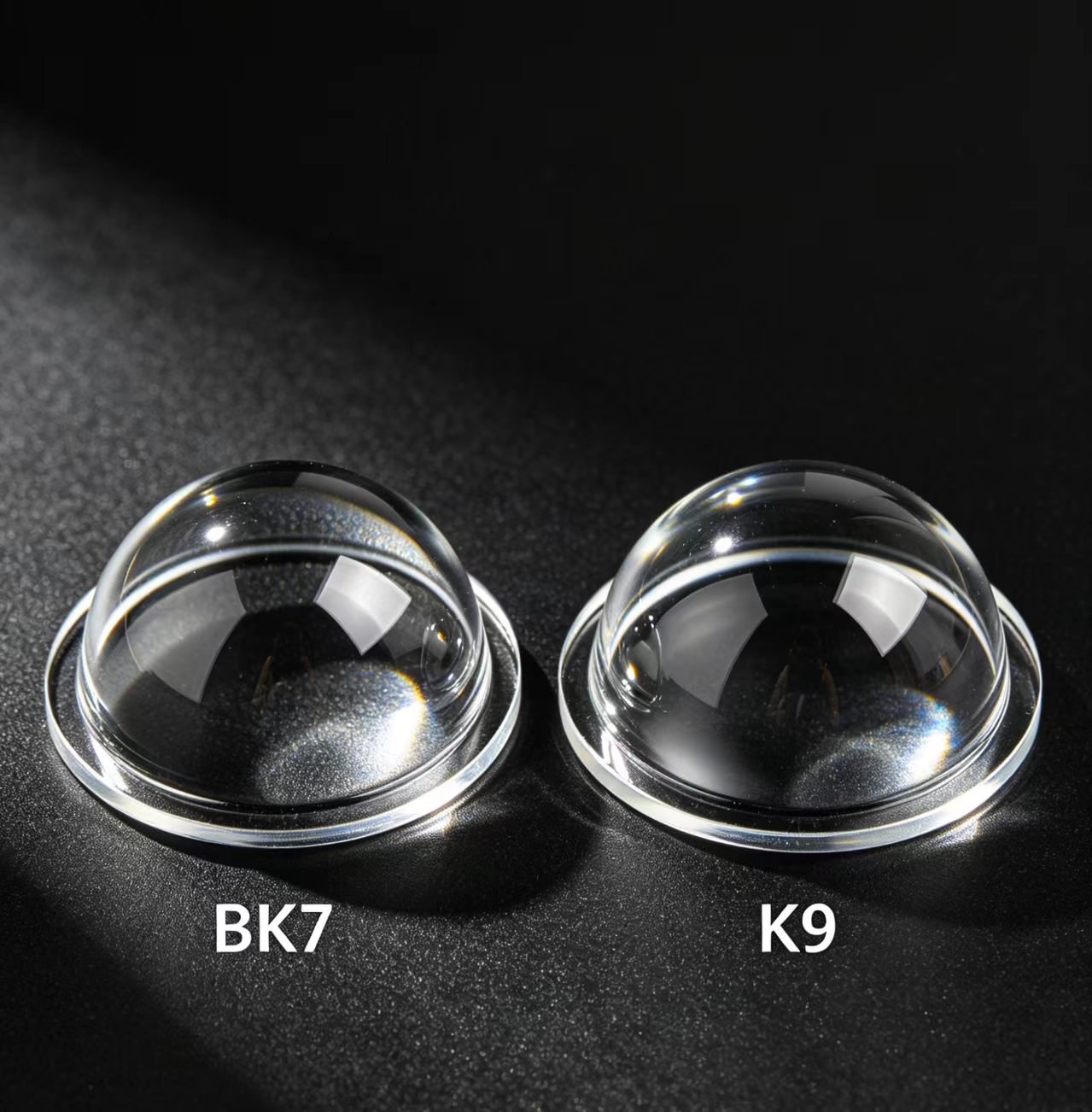
At Felix Glass, we manufacture optical glass domes using three primary high-performance materials, each chosen for its unique optical and mechanical properties:
1. **BK7 / K9 Optical Glass**
This is our most widely used material for standard optical glass domes. BK7/K9 offers exceptional visible light transmission (over 91% across the visible spectrum), low thermal expansion, and excellent homogeneity. It is ideal for applications such as surveillance cameras, general industrial vision systems, and consumer optics where cost-effectiveness and reliable performance are key. We offer BK7/K9 domes in various grades, including fine annealed options to minimize stress-induced birefringence.
2. **Synthetic Sapphire**
Sapphire optical domes are the premium choice for demanding environments. With a Mohs hardness of 9, sapphire is nearly scratch-proof and offers superior resistance to high temperatures, chemicals, and abrasion. It provides excellent transmission from the UV to the IR spectrum, making it perfect for aerospace sensors, underwater cameras, high-temperature industrial systems, and medical equipment where durability is critical.
3. **Fused Silica (Quartz)**
Fused silica domes are selected for applications requiring superior UV transmission or extreme thermal stability. They exhibit very low thermal expansion, making them resistant to thermal shock, and offer excellent transmission down to deep UV wavelengths. This material is commonly used in UV imaging systems, high-power laser applications, and high-temperature industrial monitoring equipment.
We don’t just supply materials—our engineering team will help you select the optimal material based on your specific wavelength requirements, operating environment, durability needs, and budget to ensure your optical glass dome performs reliably over its entire lifecycle.