What is the difference between optical dome and ordinary glass?
- Share
- Issue Time
- May 2,2026
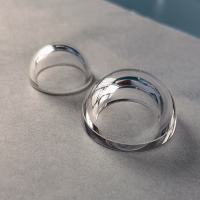
There are essential differences in raw material composition, production process, optical performance and application scenarios between professional optical domes and ordinary glass.
Ordinary glass mostly adopts common soda-lime raw materials, containing a large number of internal impurities, bubbles, stripes and uneven material density. Its light transmittance is low, optical distortion is serious, dimensional tolerance is loose, and it cannot bear precise optical matching and thin-film coating process, only suitable for building doors, windows and simple isolation protection, absolutely unable to meet the requirements of precision imaging and photoelectric sensing equipment.
In contrast, Felix Glass optical domes use high-purity optical grade raw materials with strict material sorting and fine annealing treatment to eliminate internal stress. After ultra-precision grinding and high-precision surface polishing, the surface reaches high scratch-dig grade with ultra-smooth roughness, achieving ultra-high light transmittance, excellent optical uniformity and extremely low imaging distortion. Meanwhile, optical domes have stable physical and chemical properties, strong temperature shock resistance and corrosion resistance, and can perfectly match various professional optical coatings such as AR, IR and DLC.
For high-end surveillance cameras, underwater detection systems, aerospace photoelectric pods and industrial machine vision equipment, only professional optical domes can ensure long-term stable and clear optical performance, while ordinary glass will cause image deformation, light scattering and equipment failure in a short time.