How do I choose the right optical material for my application?
- Share
- Issue Time
- Jun 4,2026
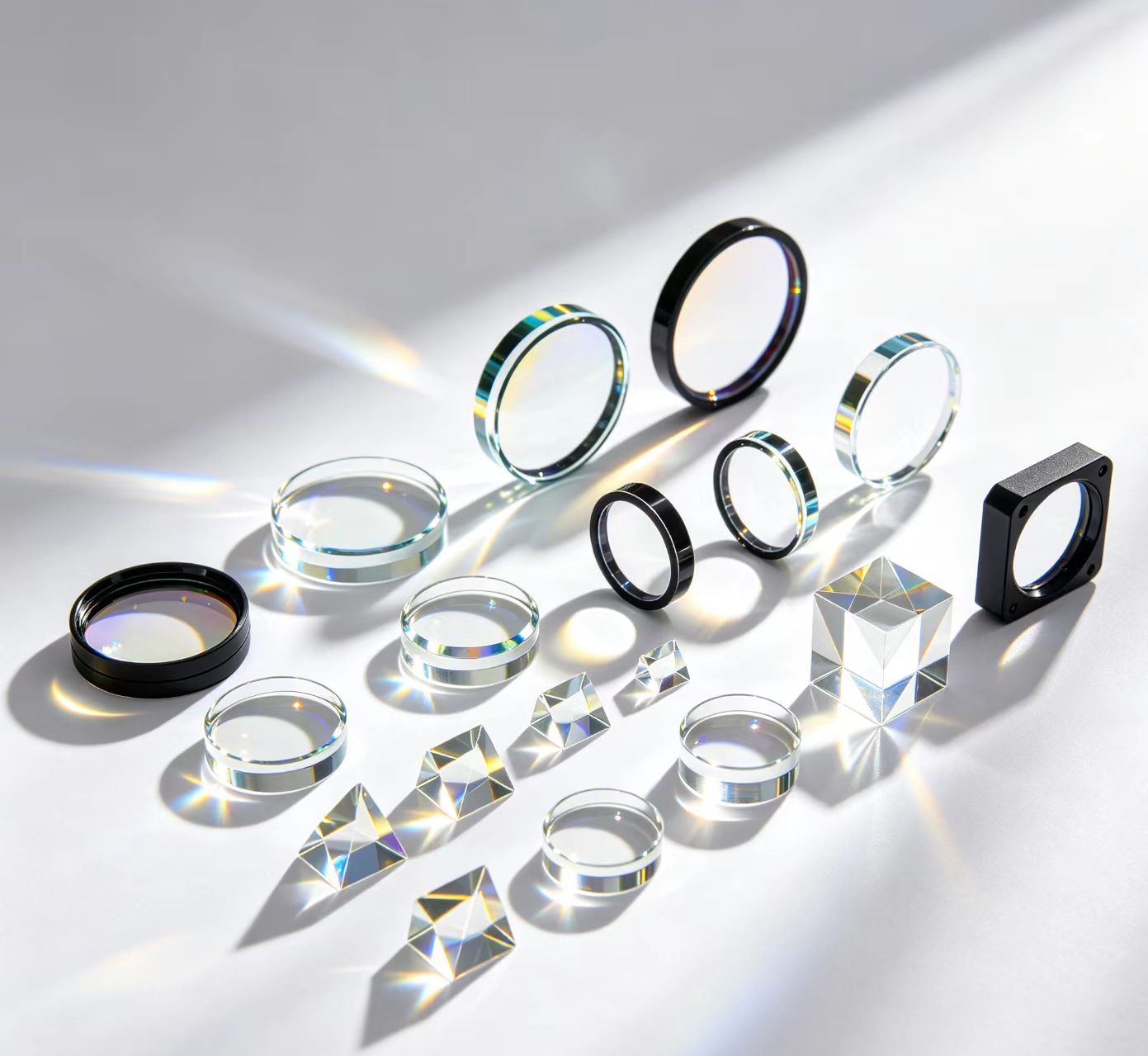
Optical material selection depends on wavelength range, thermal resistance, and application environment. BK7 is commonly used for visible optics, fused silica performs well in UV and high-temperature environments, sapphire offers extreme hardness and durability, while ZnSe and ZnS are ideal for infrared applications. Proper selection ensures optimal transmission and system performance.
Professional optical material selection is a critical foundation for achieving ideal optical transmission efficiency, stable thermal performance, and long-term reliable system operation, which mainly depends on three core factors: working wavelength range, thermal resistance capability, and actual application environment. Different optical substrates feature unique spectral transmittance, mechanical strength, temperature resistance, and chemical stability, making customized material selection essential to match various optical system requirements and maximize overall equipment performance. BK7 optical glass is the most widely used standard optical material for visible light optical systems. Featuring excellent visible spectral transmittance, uniform optical performance, low bubble and impurity rate, and stable processing adaptability, BK7 glass is ideal for conventional visible optical lenses, optical windows, prisms, and general industrial optical components. With cost-effective performance and mature processing technology, BK7 remains the preferred material for standard visible-light optical applications. Fused silica, also known as quartz glass, delivers outstanding performance for ultraviolet (UV) applications and high-temperature working environments. It possesses excellent UV transmittance, extremely low thermal expansion coefficient, and superior high-temperature resistance. Fused silica optical components can maintain stable optical and structural performance under high heat, intense UV radiation, and rapid temperature changes, making them the optimal choice for UV optical instruments, laser systems, and high-temperature industrial optical equipment. Sapphire optical material stands out for its extreme surface hardness, exceptional scratch resistance, and outstanding mechanical durability. Compared with ordinary optical glass, sapphire features stronger pressure resistance, impact resistance, and chemical corrosion resistance. It performs stably in severe environments such as high pressure, strong friction, and long-term outdoor exposure, widely applied in high-end aerospace, surveillance, and precision protective optical systems. For infrared optical systems requiring long-wave infrared transmission, ZnSe (Zinc Selenide) and ZnS (Zinc Sulfide) are the most professional and reliable infrared optical materials. Both materials provide excellent infrared spectral transmittance with low optical absorption and uniform infrared imaging performance. They are extensively utilized in infrared imaging devices, thermal detection systems, laser infrared equipment, and military night vision optical components. Accurate and reasonable optical material selection ensures optimized light transmission, minimized optical loss, stable thermal resistance, and consistent long-term system performance, helping customers achieve higher precision, better stability, and longer service life for customized optical projects
Professional optical material selection is a critical foundation for achieving ideal optical transmission efficiency, stable thermal performance, and long-term reliable system operation, which mainly depends on three core factors: working wavelength range, thermal resistance capability, and actual application environment. Different optical substrates feature unique spectral transmittance, mechanical strength, temperature resistance, and chemical stability, making customized material selection essential to match various optical system requirements and maximize overall equipment performance. BK7 optical glass is the most widely used standard optical material for visible light optical systems. Featuring excellent visible spectral transmittance, uniform optical performance, low bubble and impurity rate, and stable processing adaptability, BK7 glass is ideal for conventional visible optical lenses, optical windows, prisms, and general industrial optical components. With cost-effective performance and mature processing technology, BK7 remains the preferred material for standard visible-light optical applications. Fused silica, also known as quartz glass, delivers outstanding performance for ultraviolet (UV) applications and high-temperature working environments. It possesses excellent UV transmittance, extremely low thermal expansion coefficient, and superior high-temperature resistance. Fused silica optical components can maintain stable optical and structural performance under high heat, intense UV radiation, and rapid temperature changes, making them the optimal choice for UV optical instruments, laser systems, and high-temperature industrial optical equipment. Sapphire optical material stands out for its extreme surface hardness, exceptional scratch resistance, and outstanding mechanical durability. Compared with ordinary optical glass, sapphire features stronger pressure resistance, impact resistance, and chemical corrosion resistance. It performs stably in severe environments such as high pressure, strong friction, and long-term outdoor exposure, widely applied in high-end aerospace, surveillance, and precision protective optical systems. For infrared optical systems requiring long-wave infrared transmission, ZnSe (Zinc Selenide) and ZnS (Zinc Sulfide) are the most professional and reliable infrared optical materials. Both materials provide excellent infrared spectral transmittance with low optical absorption and uniform infrared imaging performance. They are extensively utilized in infrared imaging devices, thermal detection systems, laser infrared equipment, and military night vision optical components. Accurate and reasonable optical material selection ensures optimized light transmission, minimized optical loss, stable thermal resistance, and consistent long-term system performance, helping customers achieve higher precision, better stability, and longer service life for customized optical projects