Q7: How to select & process customized quartz glass?
- Share
- Issue Time
- Jun 9,2026
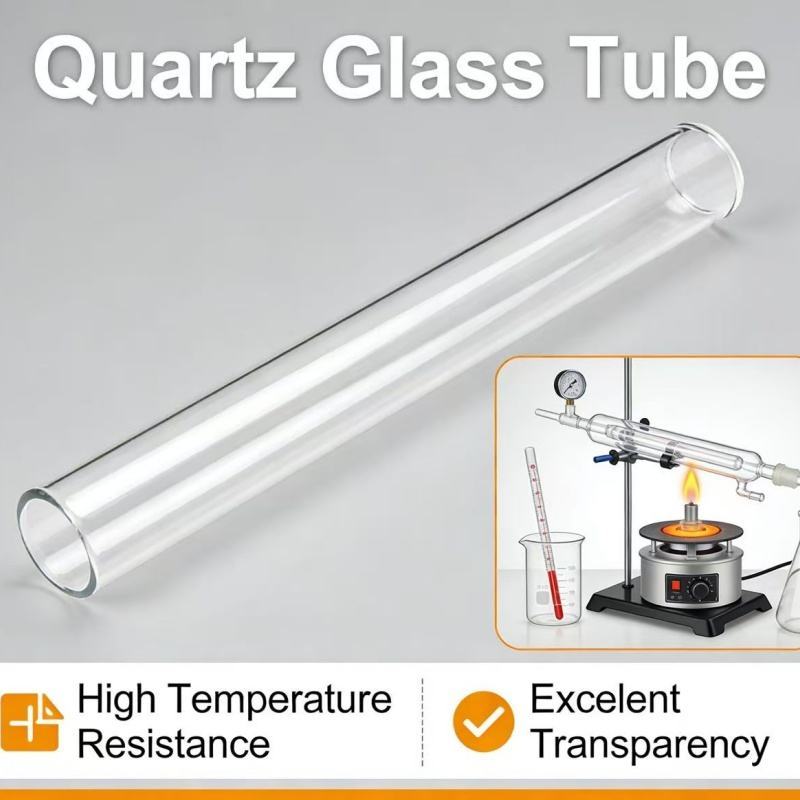
How to select the suitable quartz glass grade for projects?
The core of selection is to combine the working spectral band and actual working environment. If your project focuses on deep ultraviolet transmission such as UV lithography and ultraviolet detection, JGS1 is the preferred option. For conventional visible light and near-ultraviolet optical equipment, JGS2 can fully meet the requirements. If the equipment works in the infrared band, JGS3 with optimized infrared performance is the best choice. For semiconductor production lines with ultra-high purity requirements, synthetic fused silica is a must. We suggest providing detailed working conditions, spectral parameters and usage environment, and our technical team will recommend the most cost-effective solution.
What are the key points for quartz glass machining?
Quartz glass has high hardness and brittleness, so the processing requirements are much stricter than ordinary glass. Cutting and grinding must adopt professional diamond tools. For semiconductor-grade high-precision optical parts, CMP chemical mechanical polishing is used to achieve sub-nanometer surface roughness. After machining, annealing treatment is indispensable to release internal stress and prevent cracking during later use. For ultra-high purity products used in semiconductors, the whole processing process needs to be completed in a dust-free clean room to avoid surface contamination. Meanwhile, we support customized processing according to customer drawings, samples and special technical indicators.