Q2: What is the difference between BK7 and fused silica?
- Share
- Issue Time
- Jun 30,2026
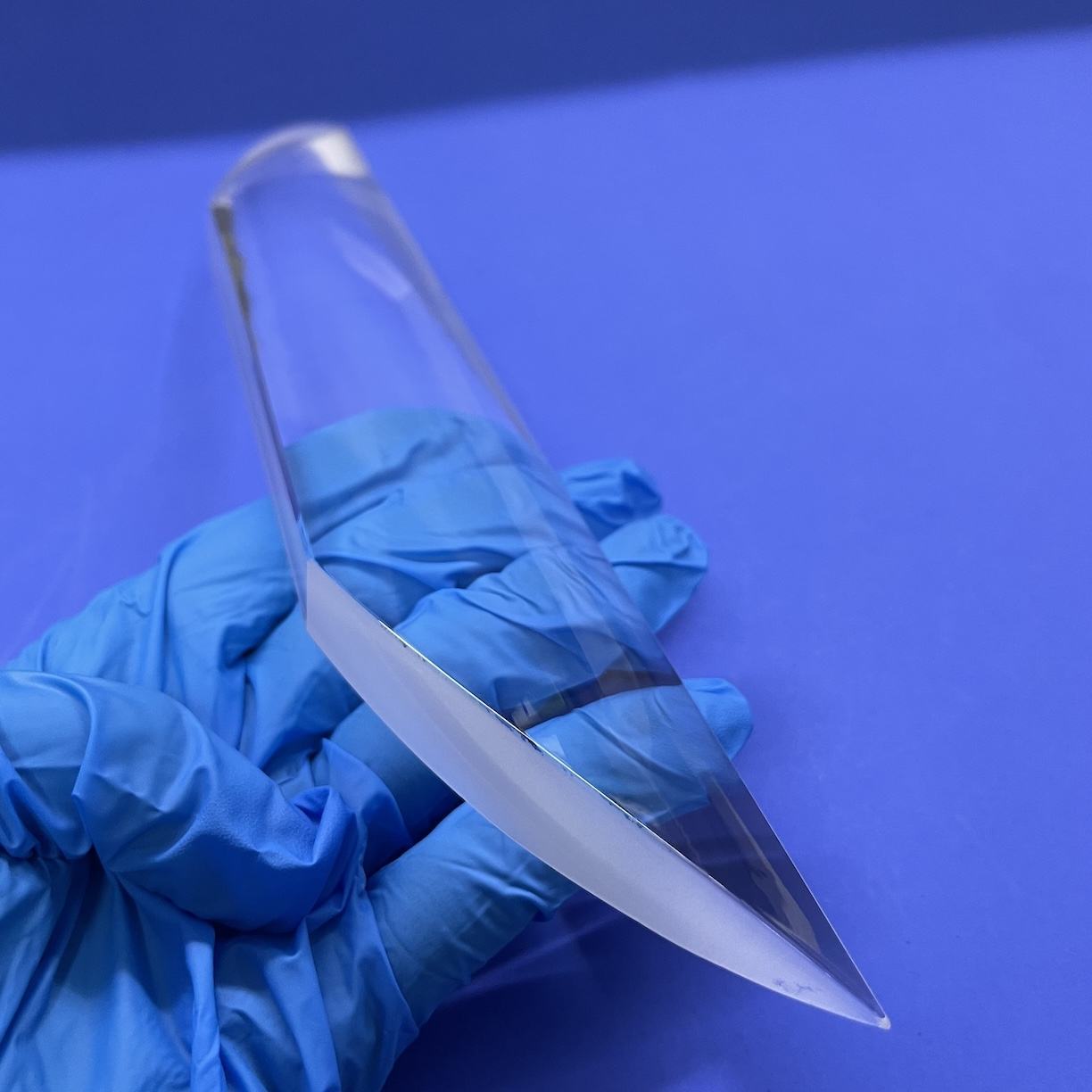
A: BK7 and fused silica (fused quartz) are two most widely used optical substrate materials, but they differ greatly in spectral transmission, thermal property, chemical resistance and applicable working scenarios. Felix Glass supplies both materials for custom optical components.
BK7 is a borosilicate crown optical glass. It has excellent optical homogeneity in visible light spectrum, low bubble and striae level, easy to machine and cost competitive. BK7 works perfectly for optical components used under visible wavelength, such as common optical lenses, visible-band optical windows and display protective glass working at normal room temperature. Its limitation is poor UV transmission: BK7 will strongly absorb ultraviolet light below ~350nm, so it cannot be used for UV optical systems. BK7 also has relatively higher thermal expansion coefficient compared with fused silica, so it is not suitable for rapid temperature cycling or high-temperature environments.
Fused silica, also known as fused quartz, is made from pure silicon dioxide. Its biggest advantage is outstanding transmission in deep UV band, so it is the primary choice for ultraviolet optical instruments and UV sensing windows. Meanwhile, fused silica features ultra-low thermal expansion coefficient. It can withstand dramatic temperature change and high temperature working condition without thermal deformation or cracking. It also has superior chemical resistance against acid and most corrosive substances.
The trade-off of fused silica is higher raw material price and more difficult polishing & machining than BK7. So it is more expensive. To sum up: choose BK7 if your optical system works in visible light at normal temperature and you need cost-effective optical glass. Choose fused silica if your application involves UV wavelength, high temperature or rapid thermal cycling. Our optical engineers will help you pick the right substrate after checking your working wavelength and environmental parameters.
Check our BK7 optical windows and fused silica optical windows pages for material specifications and application cases.