Felix Glass Expands Custom Optical Dome Solutions for ADAS and Machine Vision
- Share
- From
- Felix Glass Official
- publisher
- Felix Glass
- Issue Time
- Dec 12,2025
Summary
Felix Glass expands custom borosilicate & sapphire optical domes for ADAS, machine vision and surveillance cameras. Drawing-based design, AR coatings and custom inspection available.
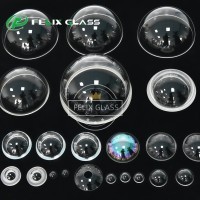
Company News · Custom Optical Domes The expanded program supports drawing-based borosilicate and sapphire domes engineered around optical field of view, sensor position, environmental exposure and mechanical integration. Dongguan Felix Glass Co., Ltd., a custom precision optical components manufacturer, has expanded its optical dome program for automotive sensing development, industrial machine vision and surveillance camera applications. Unlike a flat protective window, a dome surrounds the optical axis with a curved interface. Dome radius, wall uniformity, concentricity, sensor location and coating all influence image quality, reflection behavior and usable field of view. Felix Glass therefore reviews the dome together with the customer's optical and mechanical system requirements. The program includes borosilicate and sapphire options, customized geometry, optical polishing, edge and flange configurations, application-matched anti-reflection coatings and agreed inspection documentation. Final performance is confirmed against the approved drawing and project acceptance criteria. System-Level Engineering A credible dome specification connects optical geometry, material, coating and installation rather than relying on a single transmission number. The entrance pupil and sensor location relative to the dome center can affect refraction, image distortion and field-dependent performance. Outer and inner radii, wall thickness, aperture and concentricity are reviewed as a connected geometry rather than isolated dimensions. Material and AR coating are selected around the operating wavelength, angle range, sensor sensitivity and target reflection or transmission. Temperature, moisture, abrasion, vibration, sealing, adhesive and housing loads influence material and interface recommendations. Performance clarification: “Up to 99.8% transmission” is not used as a universal finished-dome claim. Achieved transmission depends on wavelength, material grade, thickness, surface quality, coating, angle of incidence and measurement method. Material Selection A practical option for visible-light camera protection where thermal stability, optical clarity and cost balance are important. Exact glass grade and environmental suitability are confirmed for the application. Selected where high surface hardness, abrasion resistance, mechanical strength or more demanding outdoor exposure justifies the material and processing cost. Selection note: Material names alone do not establish impact rating, thermal-shock capability or regulatory compliance. Required test standards, sample size, pass/fail limits and third-party needs should be stated in the RFQ. Specification Checklist Providing the following information reduces clarification cycles and helps align the quotation with actual system acceptance. Application Development Optical protection for camera and sensing development platforms where wide field of view, optical consistency and compact integration are important. Domes for robotic inspection, automated production, warehouse vision and cameras exposed to dust, contact or cleaning cycles. Custom covers for fixed, pan-tilt and wide-angle imaging systems used indoors or in outdoor enclosures. Protective optical interfaces for mobile robots, unmanned equipment and multi-sensor perception modules. Material and coating evaluation for wind, rain, dust, UV exposure, cleaning and temperature changes. Drawing-based domes adapted to the customer's aperture, flange, seal, adhesive, housing and assembly method. Configuration Architecture Changing one layer can influence the rest of the assembly. Felix Glass reviews these interfaces together before approving the manufacturing route. Project Workflow The process route is defined by material, geometry, tolerance, coating, test scope and quantity. Application, CAD, drawing, sensor location and acceptance criteria. Geometry, tolerance, material, tooling and inspection feasibility. Blank preparation and geometry generation under the selected route. Optical surface finishing, edge or flange processing and cleaning. Application-specific coating when included in the approved specification. Agreed dimensional, cosmetic, optical and documentation checks. Quality Evidence Instead of stating that every dome automatically passes every automotive or environmental test, Felix Glass defines the required method, sample quantity and pass/fail criteria with the buyer. Testing may be performed as in-process inspection, finished-part verification or a separately quoted qualification program. Buyer Workflow Internal Resources Review full custom dome engineering and OEM project support. Explore hard, abrasion-resistant sapphire dome solutions. See dome options developed for infrared imaging systems. Technical FAQ No. Dome radii, wall thickness and the camera entrance-pupil position can affect refraction and image quality. The optical layout should be reviewed for the intended field of view. It depends on abrasion, impact risk, temperature, cleaning, required life and budget. Borosilicate may suit many conventional visible-camera systems; sapphire is considered for harder wear and more demanding protection. A universal 99.8% finished-dome claim would be misleading. Transmission must be defined by wavelength, coated surfaces, incidence angle, material, thickness, clear aperture and test method. Felix Glass evaluates a measurable target from the RFQ. Yes, subject to technical review. Please specify the operating band, target reflectance or transmission, angle range, environment and coated surfaces. Applicable tests can be evaluated when the standard, fixture, sample quantity, cycle and pass/fail criteria are supplied. Testing and third-party certification are quoted according to the agreed scope. Prototype and sample-approval programs can be discussed before repeat production. MOQ and lead time depend on material, size, geometry, tooling, coating and inspection requirements. Flange geometry, edge profiles and mechanical interface features can be evaluated from the 2D and 3D files. Sealing and assembly loads should be included in the design review. Engineering RFQ Attach the drawing and describe the camera, sensor, field of view, material, wavelength, environment and validation requirements.Felix Glass Expands Custom Optical Dome Solutions for ADAS, Machine Vision and Surveillance Systems
Optical Protection Without Treating the Dome as “Just a Cover”

Four Design Factors That Determine Dome Performance
Sensor Position
Concentric Geometry
Spectral Requirement
Environment & Mount
Borosilicate or Sapphire: Match the Material to the Risk
Borosilicate Optical Dome
Sapphire Optical Dome
What Makes an Optical Dome RFQ Quotable
Dome geometry
Outer/inner diameter, outer/inner radius, wall thickness, dome height, angular coverage, clear aperture and flange details.
Optical system
Camera or sensor type, lens entrance-pupil position, field of view, operating distance and permissible image distortion.
Spectral band
Operating wavelength or range, target transmission/reflection, angle of incidence and polarization where relevant.
Optical tolerances
Surface quality, surface form, concentricity, wedge, wall uniformity, clear aperture and cosmetic zones.
Coating
AR band, reflectance or transmission target, coated surfaces, environmental durability and cleaning requirements.
Mechanical interface
Housing, sealing groove, adhesive zone, flange, edge treatment, allowable load and assembly datum.
Environment
Temperature range, humidity, salt fog, sand/dust, abrasion, impact, vibration, pressure or immersion conditions.
Commercial scope
Prototype quantity, annual demand, delivery location, target date, documentation and qualification requirements.
Designed Around the Sensor and Its Operating Environment
Automotive Sensing Prototypes
Industrial Camera Systems
Security & Monitoring Cameras
Autonomous Platforms
Weather-Exposed Cameras
Integrated Sensor Housings
One Dome, Five Connected Decisions
From Drawing Review to Repeat Production
Review
DFM
Form
Polish
Coat
Verify
Testing Claims Must Match the Ordered Test Plan
A Faster Route to an Approved Prototype
Send Felix Glass
Receive in the Review
Related Optical Dome Solutions
Custom Optical Dome Manufacturer
Custom Sapphire Dome Manufacturer
Custom Infrared Optical Dome
Common Questions About Custom Optical Domes
Can one dome design work for every camera field of view?
Is borosilicate or sapphire better for an outdoor camera?
Can Felix Glass guarantee 99.8% transmission?
Can you add an anti-reflection coating?
Can impact, vibration and environmental tests be provided?
Do you support prototypes and small quantities?
Can a flange, sealing edge or custom opening be included?
Start Your Custom Optical Dome Project