CVD ZnS ZnSe Infrared Optics
- Share
CVD ZnS & CVD ZnSe Infrared Optics
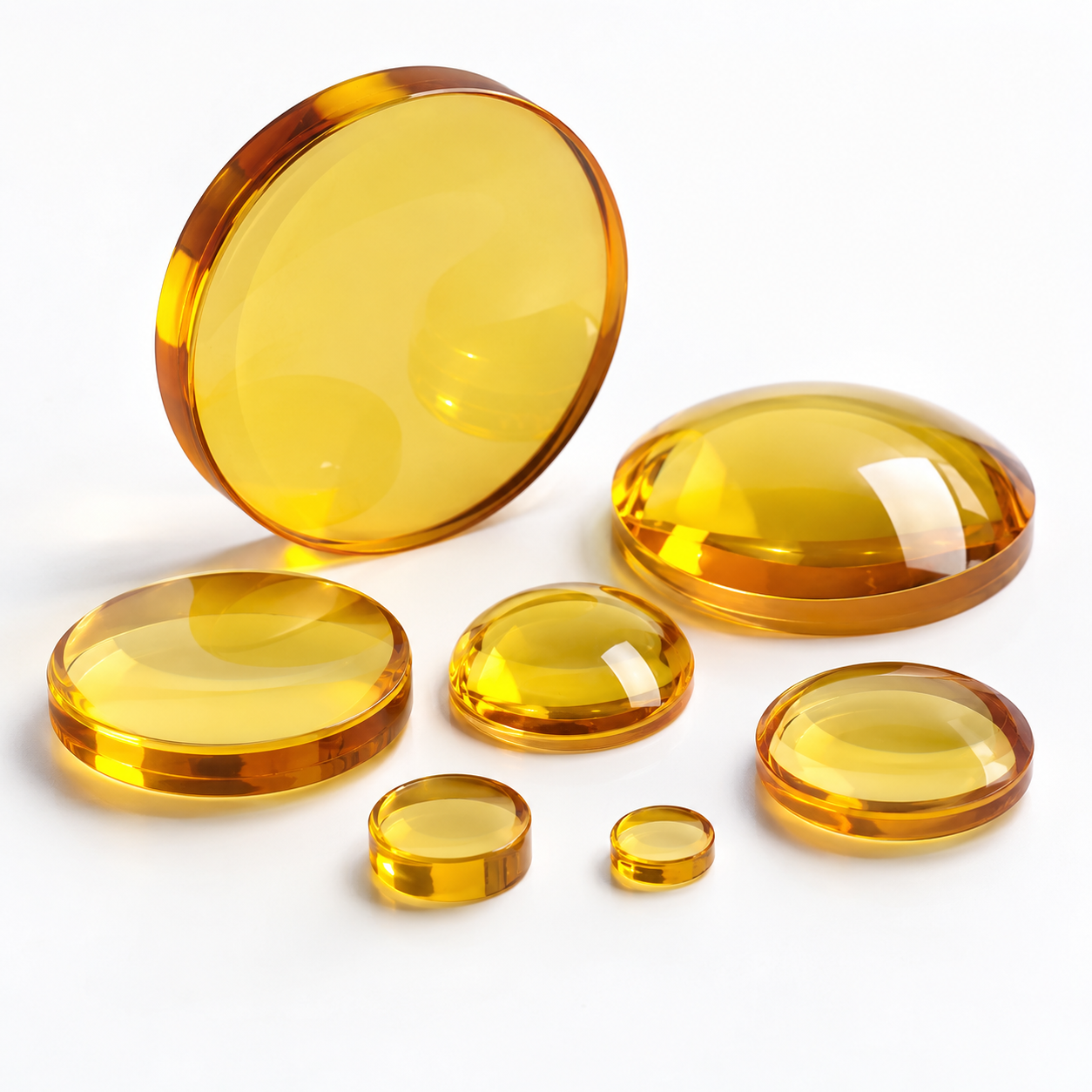
Four dedicated material grades: Multispectral ZnS, Standard FLIR‑Grade ZnS, Laser‑Grade CVD ZnSe, IR‑Grade CVD ZnSe. Custom domes, windows and lenses for thermal imaging, EO/IR gimbal and high‑power CO₂ laser systems.

Core Material Family
Common Pain Points Sourcing ZnS / ZnSe Infrared Optics
Real‑world challenges faced by optical engineers, procurement managers, and project teams working on thermal and laser infrared systems.
Incorrect Material Grade Selection
Receiving laser‑grade ZnSe for thermal cameras or IR‑grade ZnSe for high‑power CO₂ lasers, leading to overheating, image noise or premature component failure.
No Strict Raw‑Material Batch Segregation
Suppliers mix multispectral ZnS, FLIR‑ZnS, laser‑ZnSe and IR‑ZnSe blanks in the same production workflow, causing inconsistent optical performance across batches.
Lack of Clear Grade‑to‑Application Guidance
Confusing datasheets without practical application notes; hard for system designers to decide between ZnS vs ZnSe and which exact grade matches project requirements.
Targeted Engineering Solutions
Each common infrared‑optics sourcing pain point is matched with a verified Felix Glass production capability and measurable buyer benefit.
Four Fully‑Segregated CVD Material Grades
Multispectral ZnS, FLIR‑Grade ZnS, Laser‑Grade CVD ZnSe and IR‑Grade CVD ZnSe are physically separated in stock, polishing stations and inspection workflows to eliminate cross‑grade contamination risk.
Buyer Benefit: predictable, repeatable optical performance batch‑to‑batchGrade‑Specific Product Pages & Technical Blog Resources
Every material grade has its own independent product landing page, selection guide and engineering‑spec blog, with clear application boundaries between thermal‑imaging and laser‑system use‑cases.
Buyer Benefit: engineers quickly identify correct substrate without guessworkApplication‑Driven RFQ Review by Optical Engineers
Our engineering team validates that your drawing requirements match the selected material grade before quotation, flagging potential specification mismatches at inquiry stage.
Buyer Benefit: reduce prototype rework and costly field‑failure risk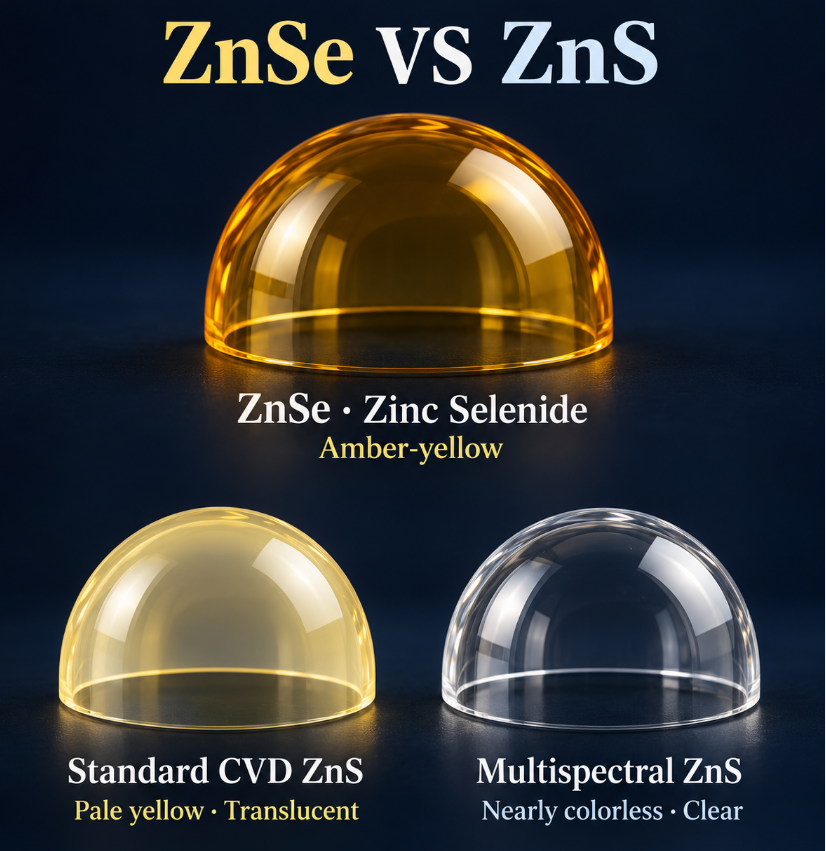
Five‑Part Product Architecture for CVD ZnS / ZnSe
Five core engineering dimensions defining performance and reliability across our four infrared material grades.
Material Grade
CVD growth plus post‑processing (HIP or non‑HIP) defines base optical properties; raw stock strictly segregated per grade.
Optical Polishing
Surface quality, surface‑figure and wavefront specs tuned for either thermal imaging or high‑power laser‑damage‑threshold requirements.
Mechanical Machining
Domes, windows, plano‑convex lenses; flanging, chamfering and tight dimensional tolerances for sensor‑housing integration.
Application‑Specific Coating
LWIR‑AR, multispectral AR, 10.6 µm laser‑AR and DLC hard‑coating, grade‑specific coating formulas not reused across product lines.
Inspection & Certification
Spectral transmission, scratch‑dig, dimensional metrology, material‑grade certificate; batch documentation provided for every shipment.
Four Independent CVD Infrared Material Grades
Each grade has dedicated raw stock, polishing workflows, documentation and independent product landing page for clear SEO and application separation.
Multispectral CVD ZnS (HIP‑Cleartran)
- 0.37‑13.5 µm Vis‑MWIR‑LWIR transmission
- HIP hot‑isostatic‑pressed post‑treatment
- Water‑clear appearance; visible‑light alignment capability
- Domes, windows, lenses for multi‑spectral EO/IR systems
Standard FLIR‑Grade CVD ZnS
- 8‑12 µm LWIR thermal imaging only
- Non‑HIP as‑grown CVD polycrystalline ZnS
- Yellow‑orange tint, opaque in visible spectrum
- Cost‑effective outdoor thermal‑camera protective optics
Laser‑Grade CVD ZnSe
- Ultra‑low bulk‑absorption optimized for 10.6 µm CO₂ laser
- High laser‑induced damage threshold (LIDT)
- Domes, output windows, focusing lenses
- For industrial laser cutting, engraving systems
IR‑Grade CVD ZnSe
- 0.6‑16 µm broadband for LWIR thermal imaging
- Prioritize uniform IR‑transmission; not optimized for high‑power‑laser LIDT
- Domes, windows, lenses for thermal‑camera & EO/IR sensors
Cross‑Grade Technical Comparison Table
Verified production‑confirmed parameters across Multispectral ZnS, FLIR‑Grade ZnS, Laser‑Grade ZnSe, IR‑Grade ZnSe.
| Parameter | Multispectral ZnS | FLIR‑Grade ZnS | Laser‑Grade ZnSe | IR‑Grade ZnSe |
|---|---|---|---|---|
| Material Process | CVD + HIP hot isostatic pressing | As‑grown CVD (non‑HIP) | Low‑absorption CVD ZnSe, laser‑sorted | Broadband‑transmission CVD ZnSe (thermal‑imaging‑sorted) |
| Primary Transmission Band | 0.37‑13.5 µm (Visible‑LWIR) | 8‑12 µm LWIR only | 0.6‑16 µm, optimized for 10.6 µm CO₂ laser | 0.6‑16 µm broadband LWIR thermal imaging |
| Appearance | Water‑clear | Yellow‑orange translucent | Yellow‑orange transparent | Yellow‑orange transparent |
| Refractive Index (@10 µm) | 2.200 | 2.192 | 2.403 | 2.403 |
| Knoop Hardness HK | 160 | 160 | 110 | 110 |
| Key Performance Metric | Multi‑spectral uniform transmission | Mechanical strength for outdoor thermal sensors | Ultra‑low bulk absorption & high LIDT | Uniform LWIR imaging transmission |
| Typical Surface‑Quality | 40‑20 scratch‑dig | 60‑40 scratch‑dig | 40‑20 scratch‑dig (laser‑optics standard) | 40‑20 scratch‑dig (IR‑optics standard) |
| Core Application | Multi‑spectral EO/IR gimbal systems | Uncooled LWIR thermal‑camera protection | High‑power CO₂ laser machines | Thermal‑imaging & EO/IR sensor optics |
Typical Applications for CVD ZnS & ZnSe Optics
Where each of our four CVD infrared material grades delivers proven optical performance and field‑reliability.
Multispectral ZnS: Multi‑Spectral EO/IR Payloads
UAV turret domes, vehicle‑mounted multi‑sensor gimbals requiring simultaneous visible‑band alignment plus LWIR thermal imaging capability.
FLIR‑Grade ZnS: LWIR Thermal‑Imaging Systems
Outdoor surveillance thermal cameras, perimeter security sensors, industrial predictive‑maintenance thermal imager protective windows and domes.
Laser‑Grade ZnSe: High‑Power CO₂ Laser Equipment
Industrial laser‑cutting / engraving output windows, focusing lenses; rangefinder domes for 10.6 µm CO₂ laser optical‑trains.
IR‑Grade ZnSe: Broadband Thermal‑Imaging Optics
General‑purpose LWIR thermal cameras, infrared spectroscopy equipment, EO/IR sensor domes without high‑power‑laser exposure.

Manufacturing Capabilities for CVD ZnS & ZnSe
Full‑chain in‑house production from incoming raw CVD blanks through finished, inspected infrared optics; grade‑segregated workflows.
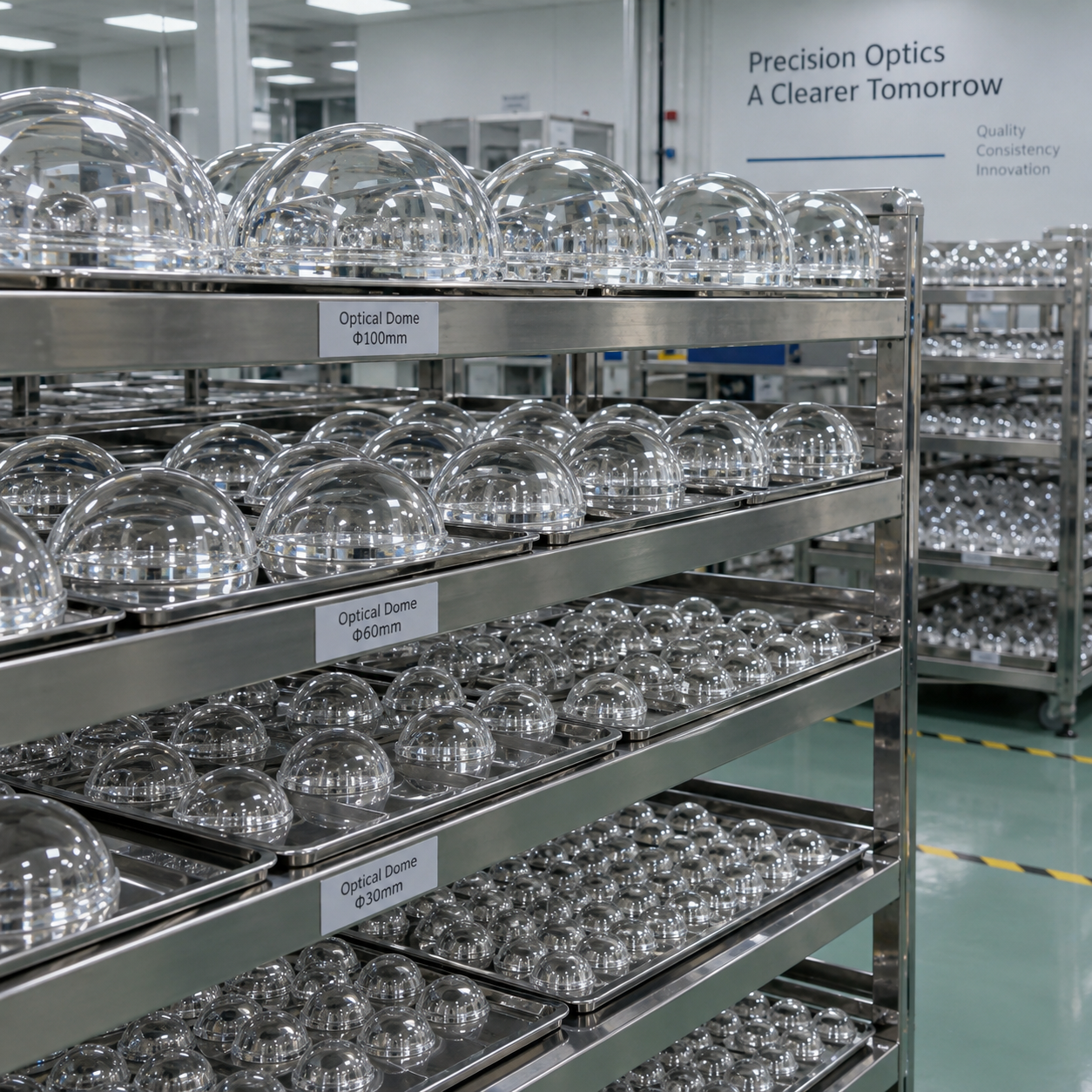
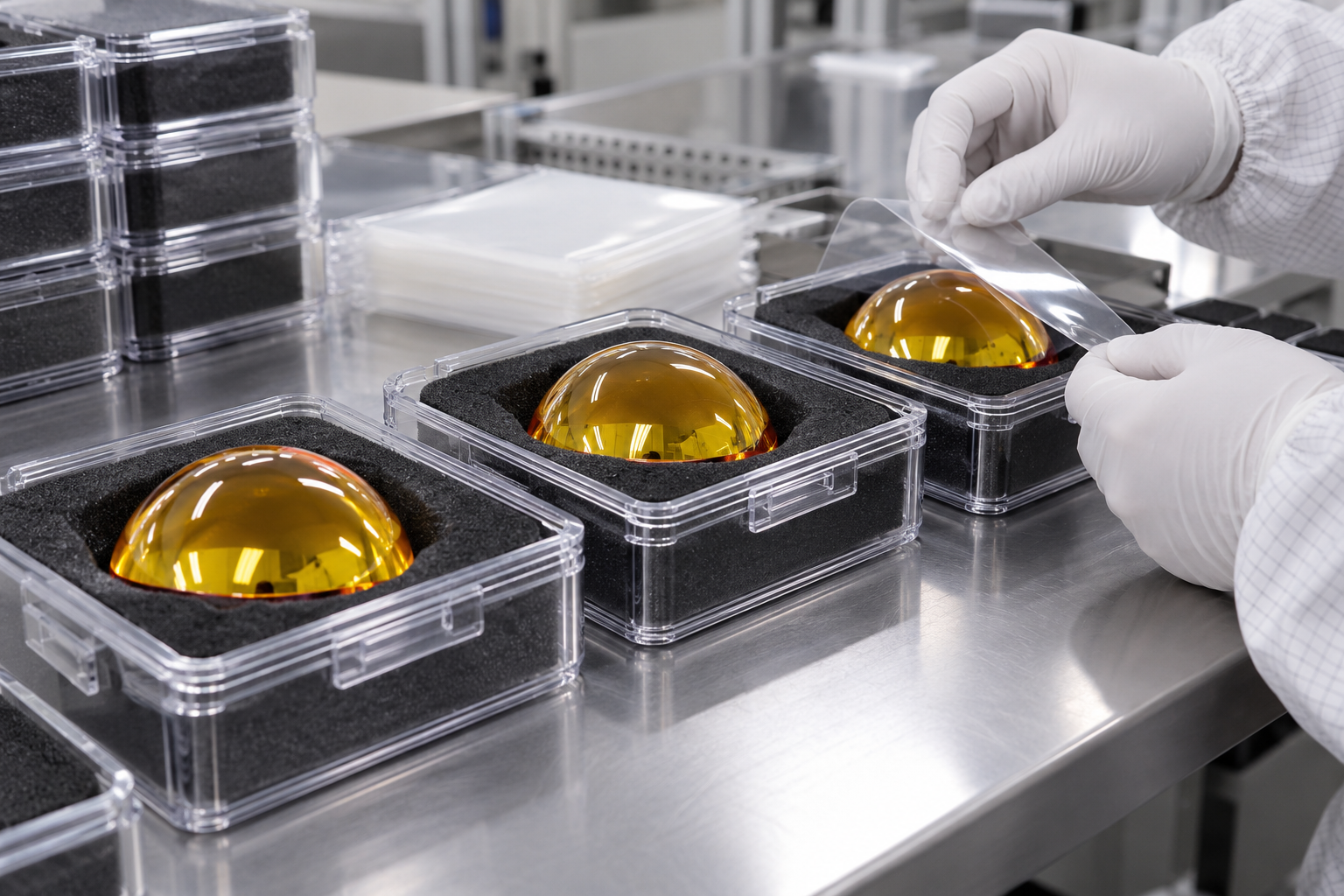
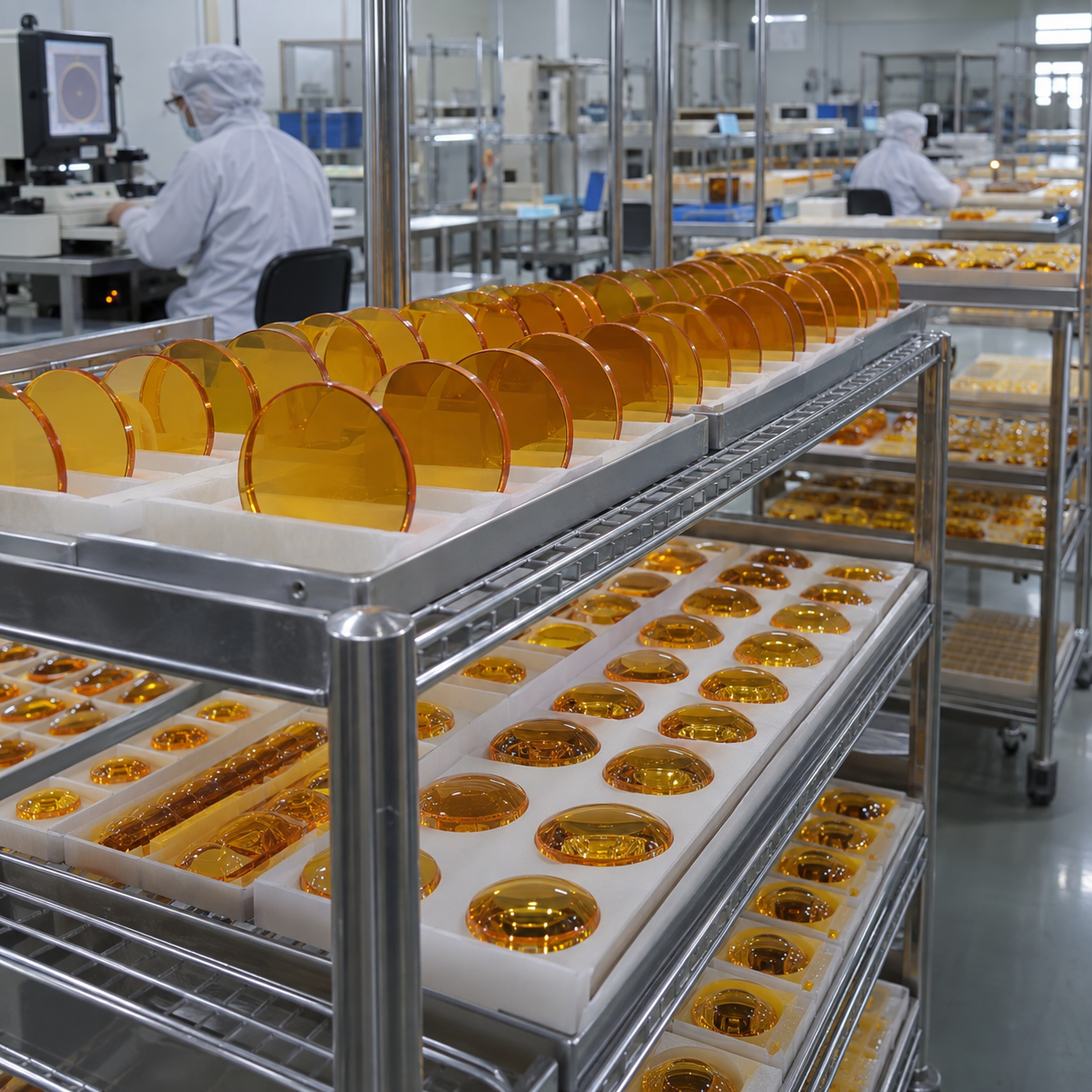
- Strict Grade‑Segregated Production ZonesRaw‑material stock, fixtures and polishing stations physically separated for each of four material grades, preventing cross‑grade mixing.
- Full‑Spectrum Metrology LaboratoryIn‑house spectral‑transmission test, surface‑figure interferometer, scratch‑dig inspection and dimensional CMM metrology for every batch.
- Dedicated Infrared‑Coating Chamber CapacityGrade‑specific coating recipes: multispectral AR, LWIR‑AR, CO₂‑laser‑AR, DLC hard‑coating, not shared between thermal‑imaging and laser‑grade parts.
- Full Traceable Batch DocumentationEach shipment includes raw‑material‑grade certificate, spectral‑curve report, dimensional‑inspection and surface‑quality test records.
- Prototype‑to‑Volume SupportSmall‑batch prototype validation followed by serial‑volume production for OEM infrared‑system integrators.
Delivery Workflow for Custom CVD ZnS / ZnSe Optics
Standard project steps for custom infrared optical orders, from initial RFQ through final shipment, with grade‑validation checkpoints.
RFQ Submission
Submit drawings, specs, target application & quantity.
Grade Validation
Engineer confirms correct ZnS/ZnSe material grade for your system.
Quotation Issue
Formal quote locked with material grade, tolerances & coating specs.
Prototype Manufacture
Grade‑segregated raw blank → machining → polish → coating → inspection.
Sample Approval
Review inspection reports & prototype sample before mass run.
Mass Production & Shipment
Serial production, full‑batch testing and complete document package.
Sample / Prototype
Working days after drawing & grade confirmation
Bulk / Mass Production
Working days after prototype approval
Expedited Service
Available upon request, subject to complexity & stock
Material & Production Workflow For CVD ZnS / ZnSe
Incoming blank handling and manufacturing process applied across our four segregated CVD infrared material grades.
Raw Grade Segregation
Multispectral ZnS, FLIR‑Grade ZnS, Laser‑Grade ZnSe, IR‑Grade ZnSe raw blanks are physically stored in separate inventory zones to eliminate cross‑grade mixing risk.
Grade‑Driven Process Rules
Polishing surface quality, coating recipes and inspection thresholds change according to selected material grade; laser‑grade parts follow stricter absorption testing.
Blank Receiving & QC
Incoming raw CVD blank inspection and grade labeling.
CNC Machining
Rough shaping, OD, thickness, flange & chamfer machining.
Optical Polishing
Fine polish to target scratch‑dig and surface‑figure spec.
Optical Coating
Grade‑matched AR / DLC coating in dedicated coating chamber runs.
Final Batch Inspection
Spectral, dimensional, surface quality test + compile certification documents.
Related Products & Technical Resources
Complementary optical components and supporting technical resources for infrared system designers.
Frequently Asked Questions
Common questions from optical engineers and procurement teams sourcing CVD ZnS and CVD ZnSe infrared optics.
ZnS features higher hardness and better mechanical impact resistance, widely used for outdoor protective domes and windows. ZnSe offers better transmission for CO₂ laser 10.6 µm wavelength; two materials each have multiple internal grades tuned for thermal‑imaging or laser‑use scenarios.
Technically it transmits infrared light, but it is over‑specified and costs significantly higher. IR‑Grade CVD ZnSe is the cost‑effective choice for pure thermal imaging applications without high‑power CO₂‑laser exposure.
Multispectral ZnS receives HIP hot‑isostatic pressing post‑treatment to achieve visible‑light transmission. FLIR‑grade ZnS is non‑HIP as‑grown material optimized only for LWIR thermal imaging; mixing blanks will lead to wrong optical performance.
Yes. Every finished shipment includes raw‑material grade certificate, dimensional metrology report, surface scratch‑dig test and spectral transmission curve data for traceability.
No strict minimum‑order‑quantity. Small prototype sample orders are accepted for R&D and proof‑of‑concept projects before moving to mass serial production.
Still have questions? Our optical engineering team is ready to help you select the correct material grade.
Contact Our TeamREQUEST A CUSTOM QUOTE
Send your specifications, drawing, or sample requirements. Our optical engineering team will validate material‑grade suitability and respond within 24 hours.