Custom Subsea Optical Domes. Pressure-Rated Dome Ports for Underwater Imaging.
- Share
Custom Subsea Optical Domes
Dome Ports for Underwater Imaging
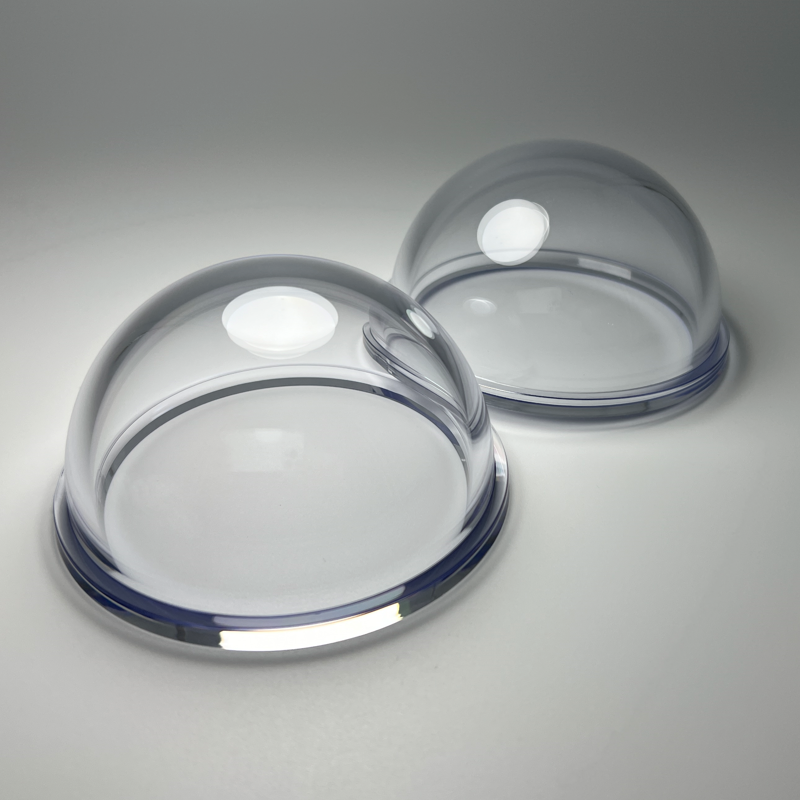
With more than 19 years of precision optical manufacturing experience, Dongguan Felix Glass Co., Ltd. produces custom hemispherical and hyper-hemispherical optical domes for ROVs, AUVs, underwater camera housings and marine optical systems.
Flanges, sealing faces and O-ring interfaces are reviewed against your equipment drawings. Pressure ratings are project-specific and require validation of the dome, mounting and sealing arrangement.
Define Your Dome Port
Common Pain Points of Subsea Optical Domes
Leak risk
Mismatch between the dome, housing and O-ring interface can compromise sealing under pressure. Groove dimensions, seal compression, surface finish and assembly conditions must be reviewed together.
Optical risk
Dome curvature, wall uniformity and lens placement affect underwater imaging. An unsuitable combination may introduce edge blur, distortion or an unexpected field of view.
Pressure-failure risk
Wall thickness alone does not establish a depth rating. Geometry, material quality, mounting support, surface defects and pressure-cycle conditions affect structural performance.
Targeted Subsea Dome Solutions
Drawing-based flange & sealing interfaces
Submit the housing and dome drawings, including any bolt circle, groove, step and sealing-face requirements. Feasibility and suitable inspection methods, such as CMM or height-gauge measurement, are confirmed before quotation. Benefit: defined interface requirements before first assembly.
Curvature & lens-position review
Provide lens model, focal length, sensor format and entrance-pupil position where available. Review inner and outer radii, thickness uniformity, concentricity and mounting position. Benefit: identify optical integration risks before prototyping; final imaging acceptance requires agreed analysis or testing.
Material & pressure-validation planning
Select sapphire, BK7 or fused silica against optical, mechanical and environmental requirements. Confirm operating pressure, mounting conditions and test scope in writing. Benefit: a documented basis for prototype evaluation and depth qualification.
Five Items to Verify When Sourcing Subsea Domes
Comparable project references
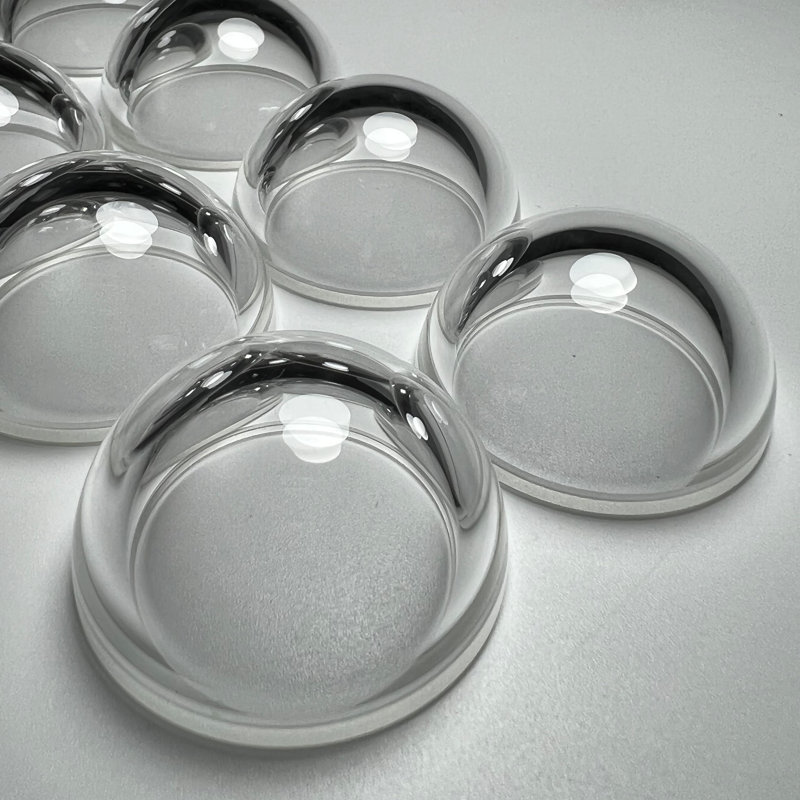
Ask for relevant subsea examples. Reference photographs illustrate geometry or processing; they do not establish pressure qualification or batch acceptance.
Critical sealing dimensions
Identify groove width and depth, step height, sealing-face finish and any bolt-circle or hole dimensions. Confirm whether each feature belongs to the dome or the housing.
Pressure & assembly validation
Define the test article, mounting fixture, pressure, hold time, cycle count and acceptance criteria. An unsupported dome-only test is not equivalent to qualification of a complete housing.
Optical matching
Define radii, thickness uniformity, concentricity and lens position together with the required image-quality checks.
Traceable records
Specify drawing revision, material grade, batch identification and report linkage. Individual serial-number traceability is provided only when agreed for the order.
Material Options for Subsea Domes
Images illustrate a reference dome geometry; material grade, dimensions and pressure qualification are specific to your order.
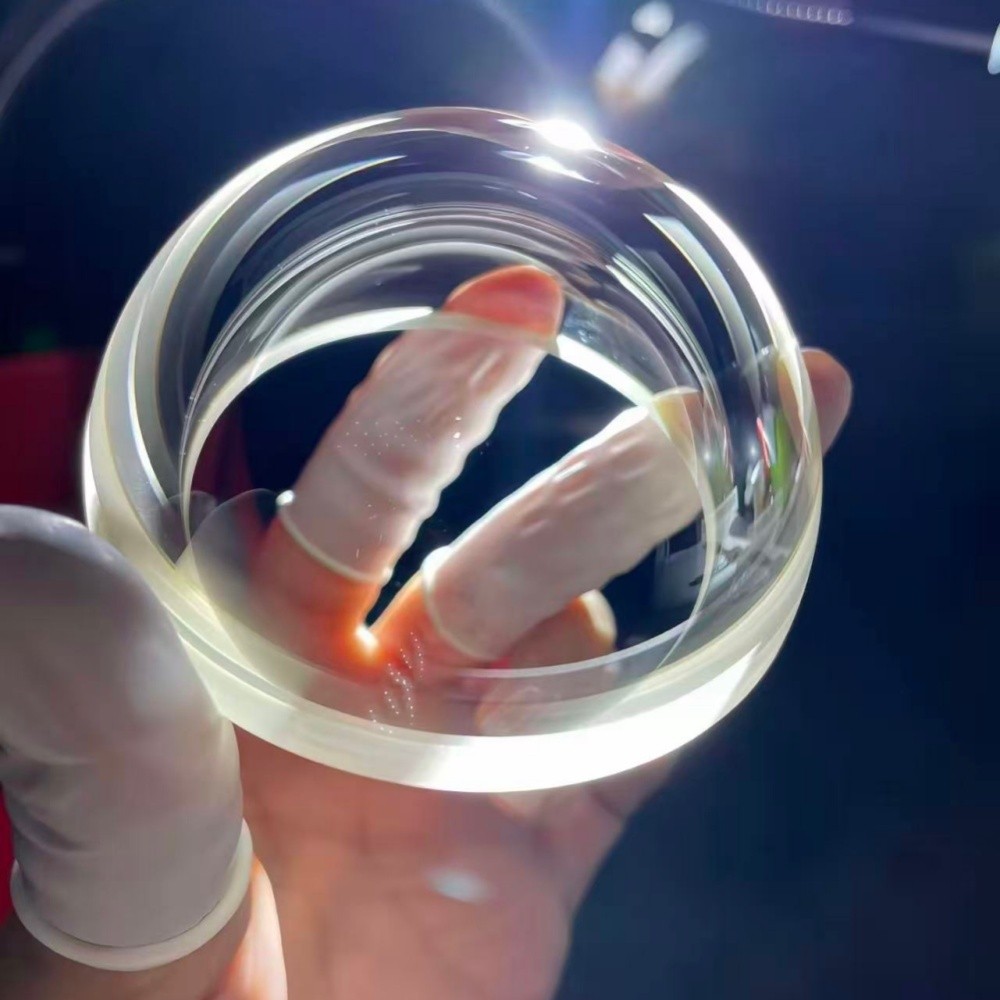
Sapphire Dome
A scratch-resistant option for demanding marine systems. Specify crystal grade, orientation where relevant, geometry and optical band. Suitability for high-pressure service depends on the complete design and validation, not the material name alone.
Discuss This Material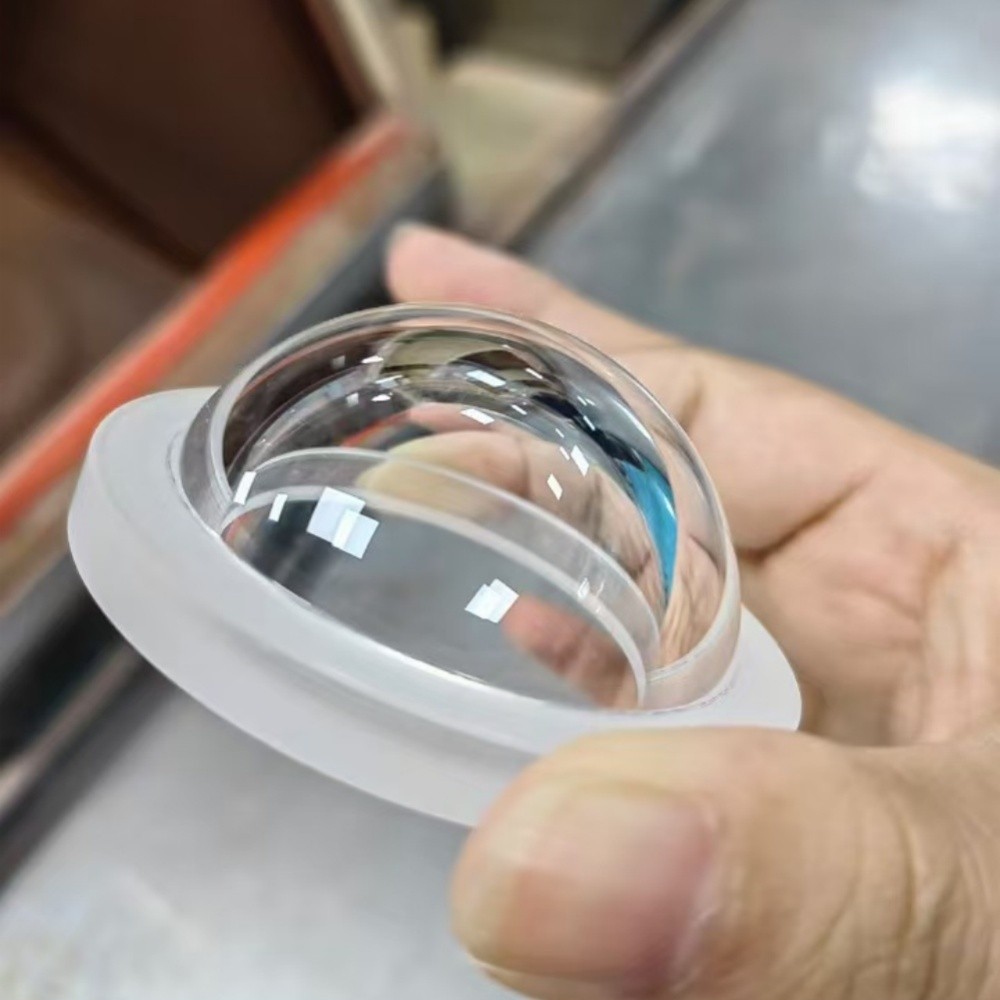
BK7 Optical Glass Dome
An option for visible-light underwater imaging and wide-angle camera ports. Evaluate geometry, surface quality, mounting and coating requirements against the target service conditions. No universal depth limit is assigned by material alone.
Discuss This Material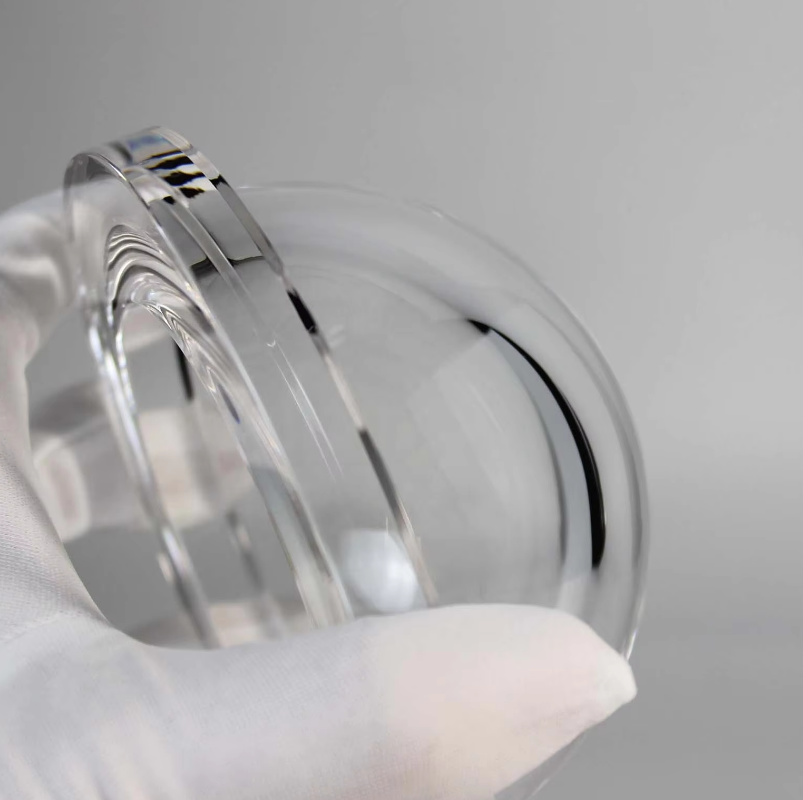
Fused Silica Dome
An option for projects requiring UV transmission or low thermal expansion. Specify the actual grade and wavelength requirements. Mechanical and pressure suitability must be assessed for the proposed dome and mounting design.
Discuss This MaterialPre-Production Written Confirmation Checklist
| Requirement | Confirm Before Production |
|---|---|
| Operating depth & pressure | Target operating depth, differential pressure, seawater conditions and test article: mounted dome fixture or complete housing. |
| Material & grade | Sapphire, BK7 or fused silica; define the supplier grade and any crystal-orientation requirements. Agree material documentation and batch identification. |
| Dome geometry | Explicitly label inner and outer radii on the drawing; specify diameter, center and edge thickness, thickness uniformity and angular coverage. |
| Flange & sealing interface | Groove, step, sealing-face finish, chamfer and housing interface. Identify the part carrying each groove, bolt circle and hole. |
| Optical specifications | Clear aperture, surface quality, surface figure where required, concentricity and coating requirements with wavelength and incidence conditions. |
| Lens matching | Lens model, focal length, sensor format, entrance-pupil position where available, target underwater field of view and image-quality criteria. |
| Pressure-test terms | Test pressure, medium, hold time, ramp conditions, cycle count, acceptance criteria and report scope: qualification sample, batch or individual unit. |
| Environment & surface treatment | Seawater exposure, temperature range, UV exposure, fouling, cleaning chemicals and compatible surface treatments. |
| Sample & tooling charges | Paid prototype, tooling or fixtures, special testing and freight to be identified in the quotation. Any sample credit requires a separate written agreement. |
| Delivery milestones | Drawing approval, material availability, prototype production, validation, pilot run and production schedule; distinguish dispatch from transit time. |
Typical Application Scenarios
Application suitability and acceptance tests are reviewed for the actual equipment configuration.
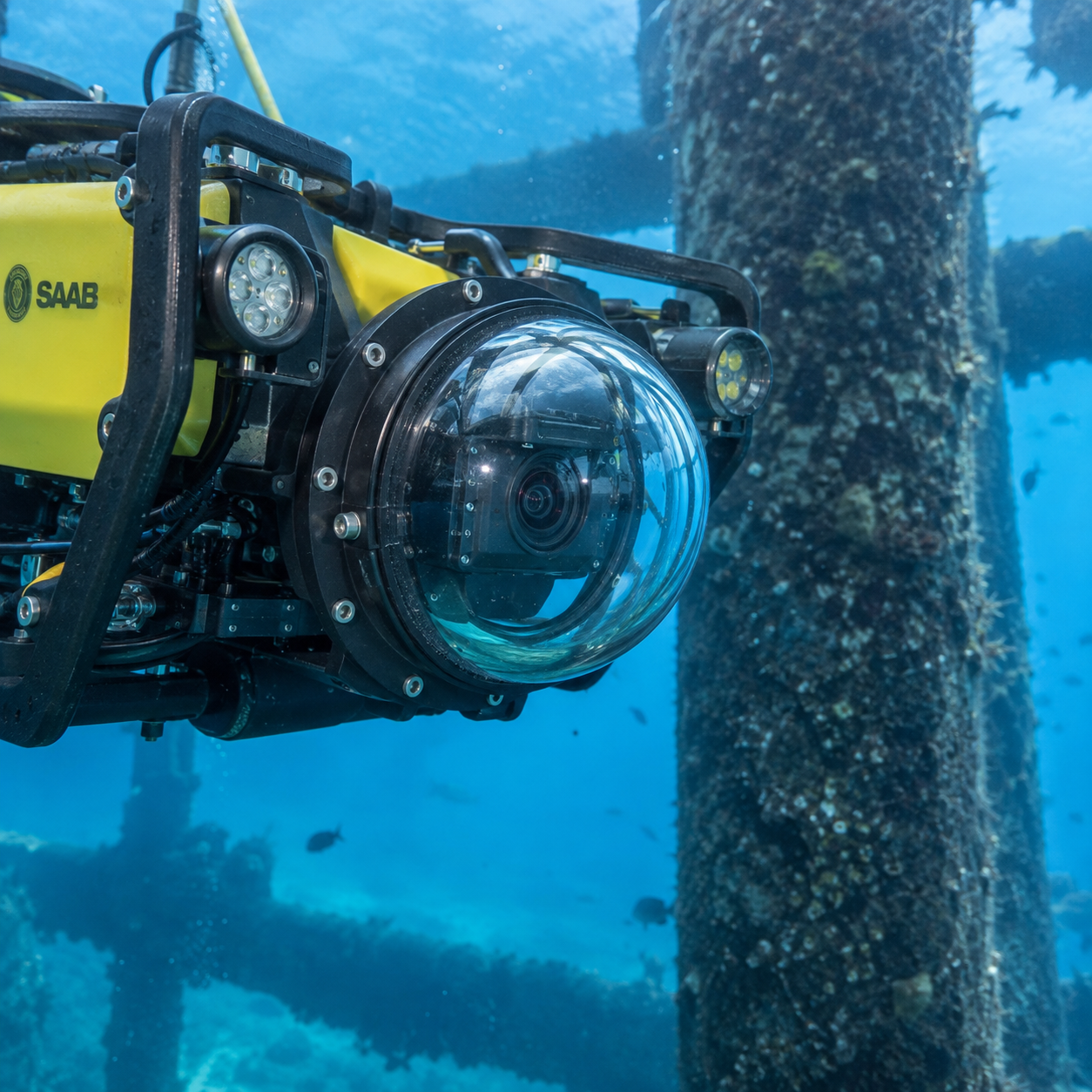
ROV & AUV camera ports
Marine robotics - underwater camera housing - optical protection and imaging - custom dome port with a validated mounting and sealing arrangement.
Diving photography & video
Diving camera systems - wide-angle or fisheye lens port - underwater imaging - dome geometry and lens position reviewed together.
Underwater monitoring
Fixed subsea cameras - long-duration observation - protective dome port with agreed exposure, sealing and cleaning requirements.
Oceanographic research
Scientific instruments - underwater UV fluorescence or optical sensing - material grade and dome configuration selected for the required wavelength and environment.
Manufacturing Capability
Dongguan Felix Glass Co., Ltd. has more than 19 years of experience in precision optical manufacturing, specializing in camera optical hemispherical domes, optical windows, lenses, infrared thermal imaging components and optical lens assemblies.
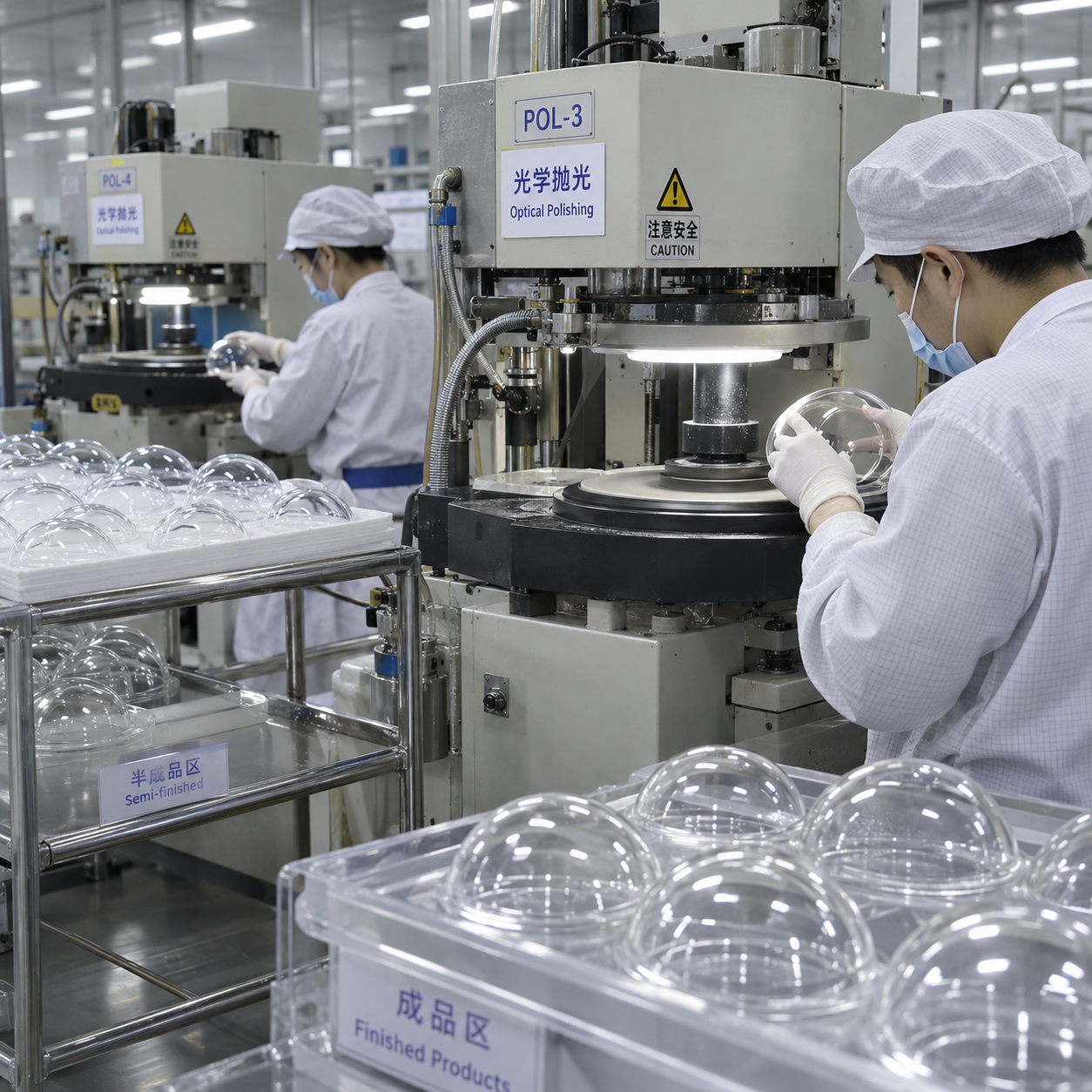
Our manufacturing scope covers optical material selection, CNC machining and laser cutting, precision grinding and finishing, cold working, precision optical polishing and ultrasonic cleaning. Optical coatings and functional surface treatments include AR, AF, AG, infrared and ITO options. The applicable process and inspection plan are selected for each material, geometry and application; not every treatment is suitable for an imaging dome.
Quality control includes optical testing against agreed specifications, 100% visual inspection, protective packaging and export logistics coordination. We have supported more than 2,000 customer projects worldwide with optical hemispherical dome solutions, from engineering evaluation and custom development to prototypes, pilot runs and volume production.

- Inspection documentsRequest dimensional results, surface-quality records and material documentation. Availability, inspection methods and scope are confirmed in the quotation.
- Pressure-test recordsAvailable only where pressure testing is included and completed for the agreed test article and conditions.
- Equipment & capacityRequest information relevant to your material, size and quantity. Confirm production availability during quotation.
- Factory footageAsk for current process footage relevant to your dome project.
Standard Project Delivery Workflow
Drawing review
Confirm depth, sealing interface and lens integration requirements.
Written quotation
Agree scope, exceptions, test items, charges and delivery milestones.
Paid prototype
Manufacture samples to approved drawings and inspection requirements.
Sample validation
Evaluate mechanical fit, sealing, pressure scope and actual imaging performance.
Pilot & production
Scale production against the approved sample and documented baseline.
Inspection & shipment
Complete agreed inspections and supply records with protective packaging.
Prototype & Production
Drawing approval, material availability and testing requirements determine the schedule.
Urgent Projects
Discuss the required delivery date before ordering.
Materials & Production Workflow
Project-specific process route
Choose sapphire, BK7 or fused silica against the approved optical and mechanical requirements. Interface machining may occur before final polishing; the actual route is confirmed for the part.
Material & blank
Confirm material grade, blank quality and traceability requirements.
Generating & CNC grinding
Establish the dome geometry and machining allowances.
Interface machining
Machine approved flange, groove or step features where feasible; the sequence depends on material and design.
Optical polishing & cleaning
Finish the specified optical surfaces, then clean for inspection or coating.
Coating & final verification
Apply approved coatings if required. Complete dimensional, optical and agreed functional testing.
Frequently Asked Questions
What maximum water depth can your domes support?
There is no universal depth rating. Feasibility depends on material, dimensions, geometry, support, seals, defects and operating cycles. Send the target depth and assembly drawings so the design and validation requirements can be reviewed.
Can you machine the O-ring groove to my housing drawing?
Submit the complete interface drawing for feasibility review. Confirm whether the groove is in the dome or the housing. Approved features and inspection requirements are documented before production; changes require written approval.
How do I match dome curvature with my lens?
Provide the lens model, focal length, sensor format, entrance-pupil position where available and existing port configuration. The review identifies integration risks. Formal optical analysis or imaging validation must be separately defined and confirmed.
Which material is most suitable for deep-water use?
Sapphire, BK7 and fused silica should be compared against the complete mechanical, optical and environmental requirements. Material choice alone does not establish an operating depth or pressure rating.
Do you perform pressure testing?
Pressure testing is arranged on a project-specific basis and must be agreed in the quotation. Define the test article, mounting, pressure, hold time, cycles, acceptance criteria and report requirements in advance.
Are custom subsea dome samples free?
Custom prototypes are paid. Sample, fixture, testing and freight charges are identified in the quotation. Any credit against a later production order applies only under separately agreed written terms.
What is the MOQ and lead time?
MOQ and prototype or production lead times depend on the material, geometry, quantity and testing scope. The formal quotation specifies the schedule and prerequisites. Ask about urgent requirements during the initial review.
Can you replace another manufacturer’s dome?
Provide the original drawing, sample or complete dimensions, together with lens and housing information. Geometry and interface compatibility require review. A replacement does not automatically inherit the original assembly’s pressure qualification.
How are subsea domes packed?
Packaging is selected to prevent movement and protect optical surfaces. Where required, custom supports avoid contact with optical surfaces, with an individual container and reinforced outer case. Agree special handling and packaging requirements before shipment.
What if a delivered dome does not fit or the assembly leaks?
Provide the order and batch references, affected quantities, photos, measurements and assembly or test conditions. The cause must be assessed against the agreed scope. Remedies for confirmed manufacturing nonconformities follow the written order terms.
REQUEST A CUSTOM QUOTE
Send your dome and housing drawings, target depth, lens information and required quantity. We will review the scope and confirm the next steps.