Custom Sapphire Dome Manufacturer
- Share
Custom Sapphire Optical Domes | Mohs 9 Hardness for Underwater & EO/IR
With 19+ years of optical manufacturing experience, Felix Glass supplies drawing-based sapphire domes with Mohs 9 substrate hardness and custom flange options — for underwater cameras, EO/IR systems, surveillance sensors and harsh-environment optical protection.
- Ø10mm – Ø200mm custom diameter
- Mohs 9 substrate hardness; coating performance evaluated separately
- Visible / NIR AR coating options
- Paid prototypes and batch production | MOQ subject to drawing review
Dongguan Felix Glass Co., Ltd. · Send your requirements for engineering review
Start Your Sapphire Dome RFQ
Send the information you have; a final drawing is helpful but not required for initial review.
Share application, wavelength, dimensions, quantity and target delivery.
Request Engineering ReviewOr email drawings to james@felixglass.com.
Sapphire Dome Capability & Tolerance Range
Published values are review references, not simultaneous guaranteed limits. Final requirements and the inspection plan must be accepted in the quotation.
| Parameter | Reference and Required Confirmation |
|---|---|
| Material | Optical-grade single-crystal sapphire (Al₂O₃). Specify crystal orientation and its reference to the dome geometry; availability and alignment tolerance confirmed during review. |
| Diameter / Wall Thickness | Reference ranges: Ø10–200 mm; wall 1.5–8.0 mm. Feasibility depends on geometry, orientation, polished area and acceptance requirements. |
| Geometry | Hemispherical, spherical segment and flanged geometry, subject to drawing review. |
| Surface Quality | Reference targets: 60-40 to 20-10 scratch-dig. Agree applicable method, inspected surfaces, zones and acceptance limits. |
| Surface Figure | Reference target: λ/2 to λ/4 at 633 nm. Confirm PV or RMS, tested surface, clear aperture, setup and achievable figure. Surface figure is not transmitted wavefront error. |
| Dimensions / Radius | Reference targets: diameter ±0.02–0.05 mm; thickness ±0.02 mm; radius ±0.1–0.5%. Confirm each feature, datum, sampling and method for the part. |
| Hardness | Mohs 9 for sapphire substrate; not a 9H pencil-hardness rating or proof of coated-surface abrasion durability. |
| Optical Transmission | Specify wavelength band, path length, orientation, incidence angle, polarization and required minimum transmission through the complete dome. A material transmission window is not a uniform performance guarantee. |
| Coating | Visible AR, NIR AR or broadband AR, evaluated against the defined band and incidence range. DLC feasibility and durability require separate confirmation. |
| Temperature / Pressure | Specify operating and storage temperatures, ramps, dwell, medium, pressure, seals and mount. Material melting point is not an assembled dome service-temperature rating. Pressure requires assembly-level validation. |
| Prototype / Production Quantity | One-piece prototype evaluation may be reviewed; production references of 10 and 100+ pieces depend on material, tooling, coating batch and quotation. |
| Lead Time | Planning references: prototype 7–15 and production 20–35 working days after specification approval, subject to stock, tooling, coating and inspection. The accepted quotation controls delivery. |
Need tighter tolerances? Send your drawing for a DFM review — we will confirm achievable tolerances and recommend cost-optimized alternatives.
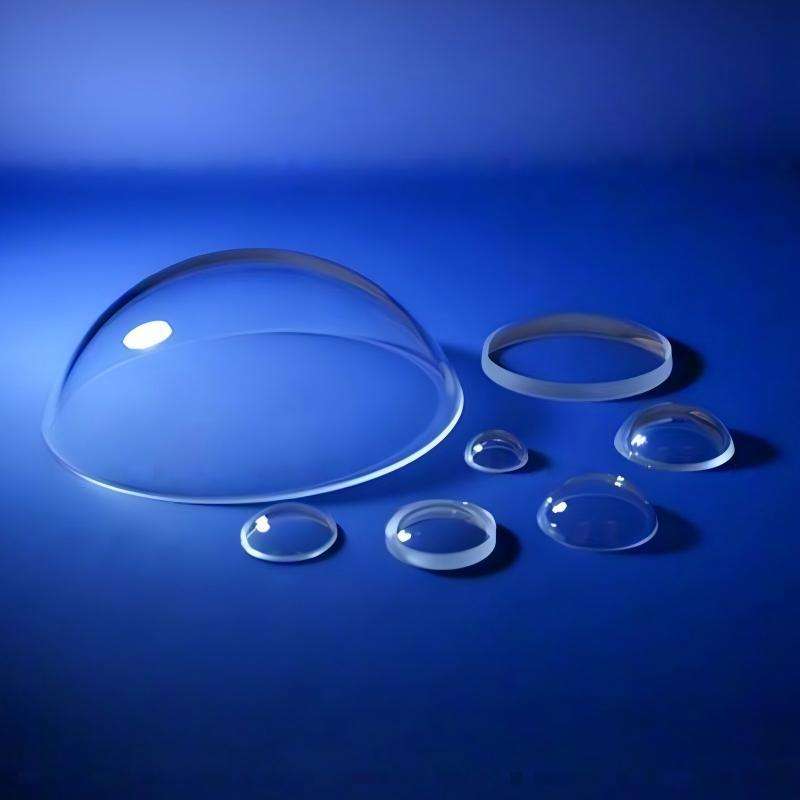
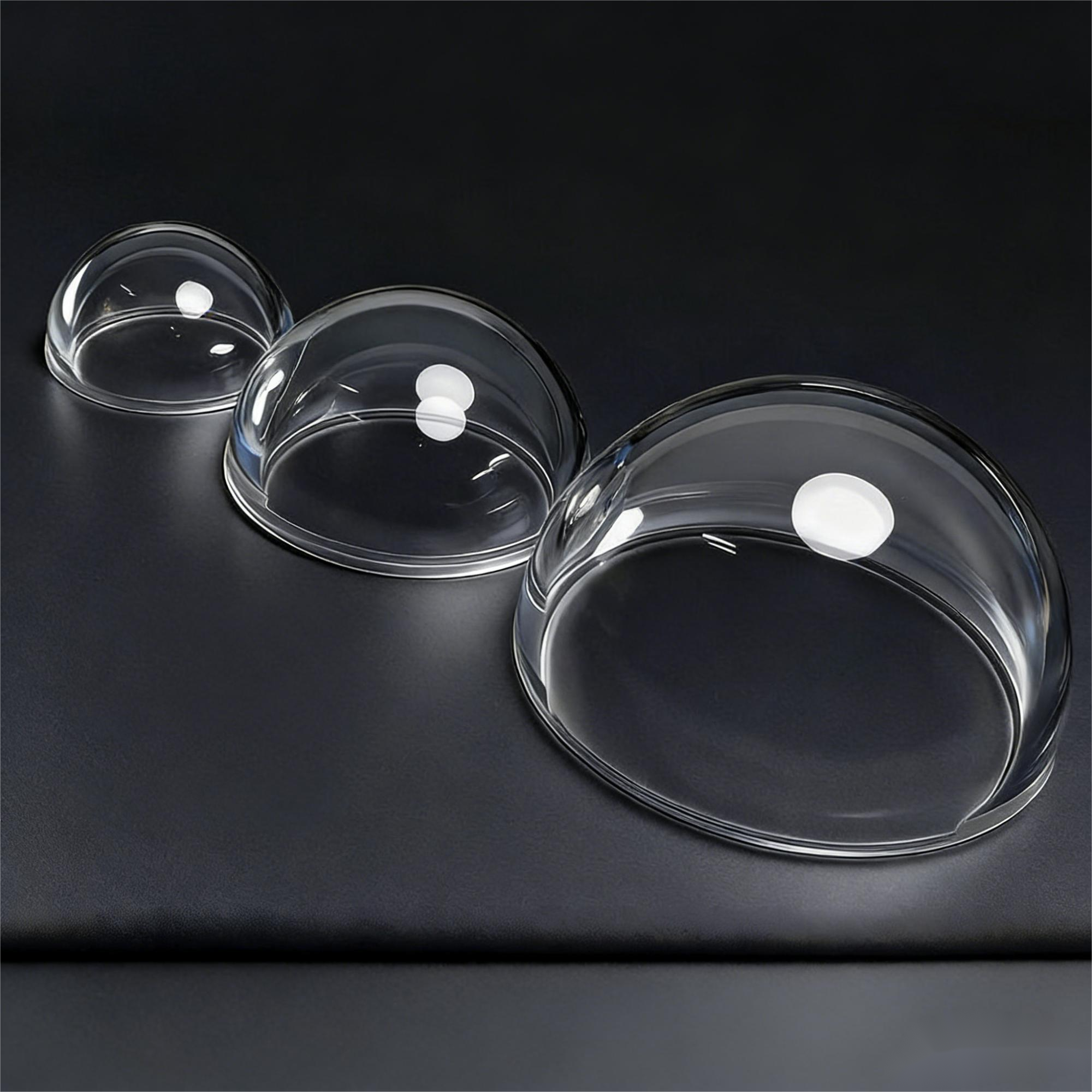
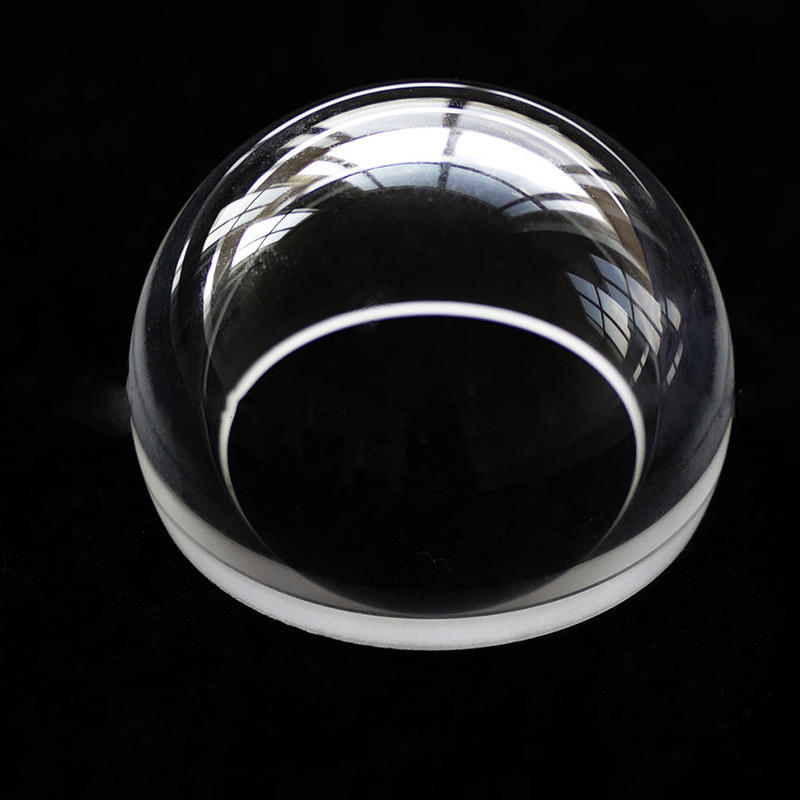
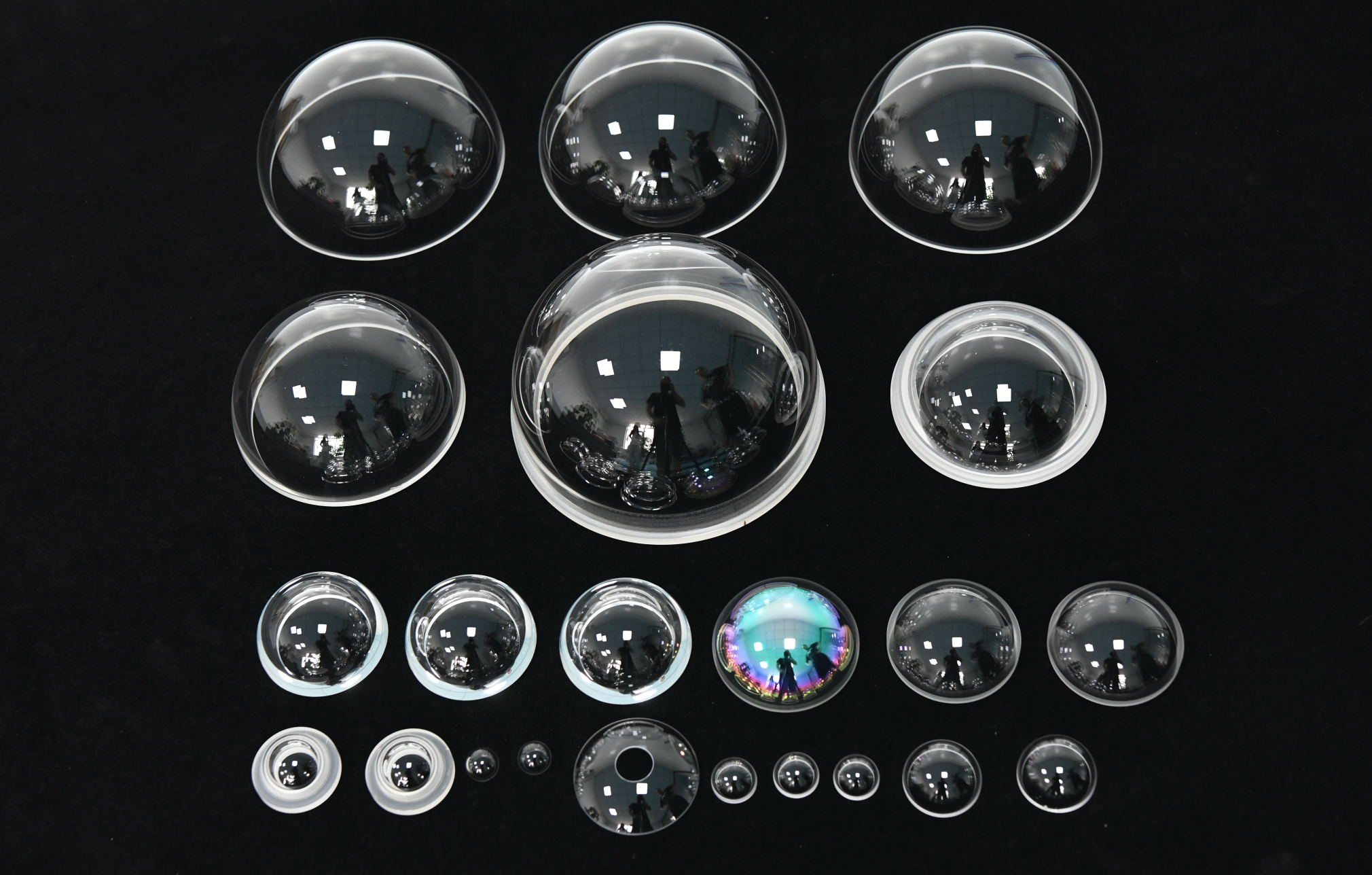
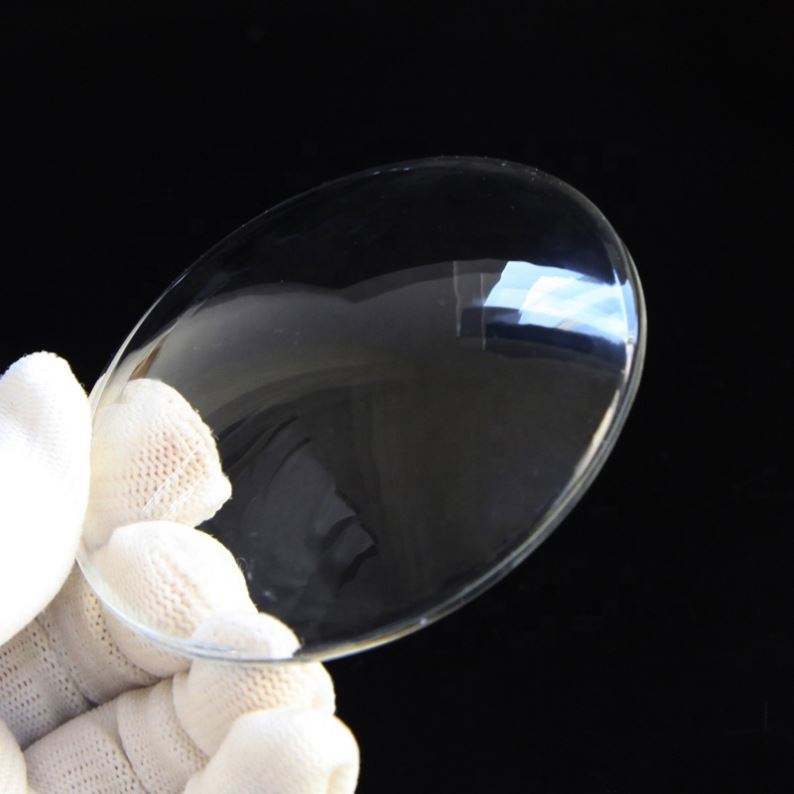
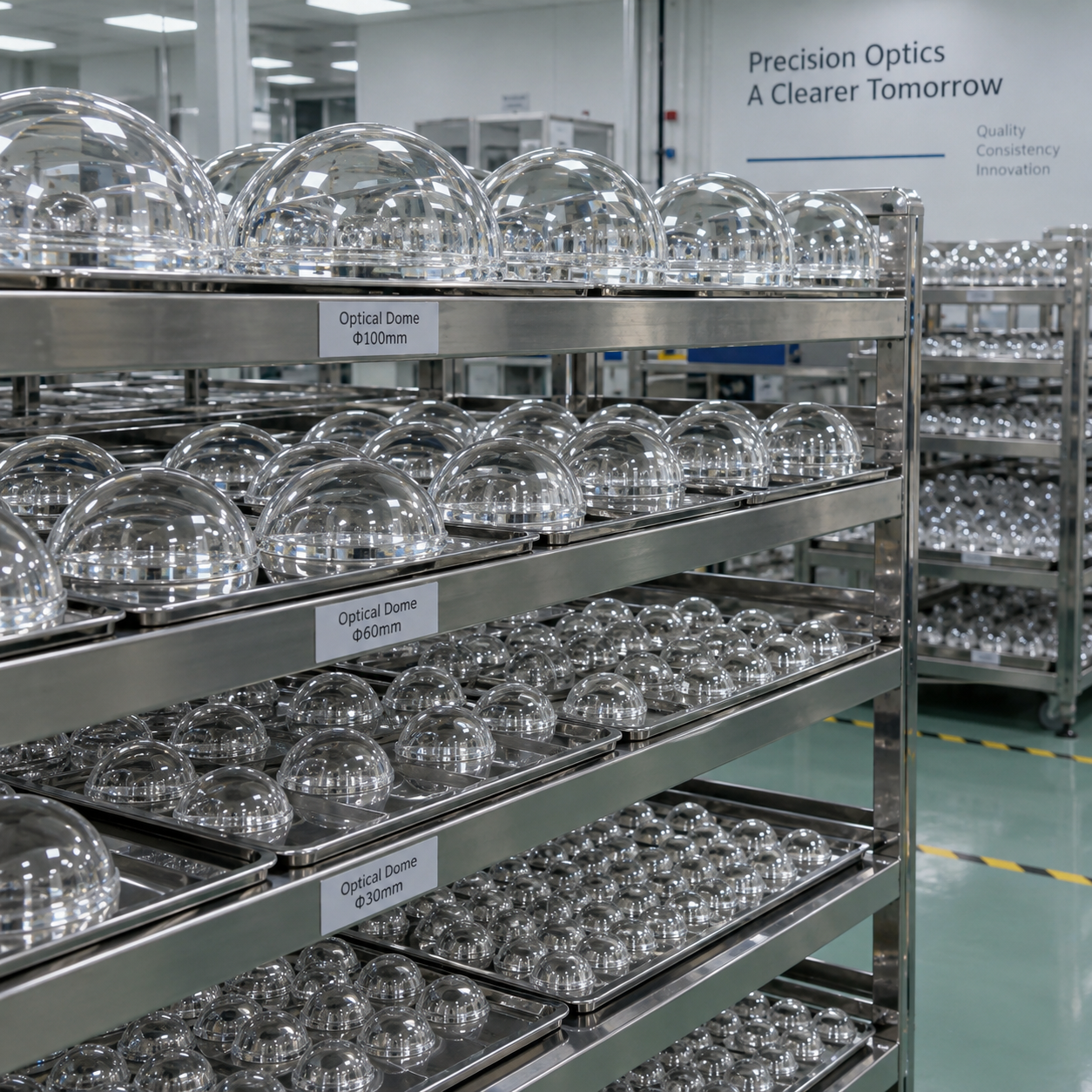
Custom Sapphire Dome Product Views
Representative dome shapes and finished-product views. Final geometry, polished area and edge or flange details follow the approved customer drawing.
Sapphire vs Glass vs Acrylic vs ZnS — Which Dome Material?
Sapphire is not always the best choice. Compare four common dome materials by hardness, transmission, durability and cost.
| Material | Selection Consideration | Confirm Before Selection |
|---|---|---|
| Sapphire | Mohs 9 substrate; candidate for abrasion-exposed optical protection. | Grade, orientation, useful spectral band, coating, mounting and environment. |
| BK7 / Fused Silica | Different optical materials with different spectral and thermal properties. | Select an exact grade; do not use one combined transmission or temperature range. |
| Acrylic | Lightweight polymer option; cleaning, scratching and creep require evaluation. | Optical quality, temperature, chemical exposure and housing design. |
| ZnS | IR material option; standard and multispectral grades differ. | Required wavelength, grade, scatter, coating and durability. |
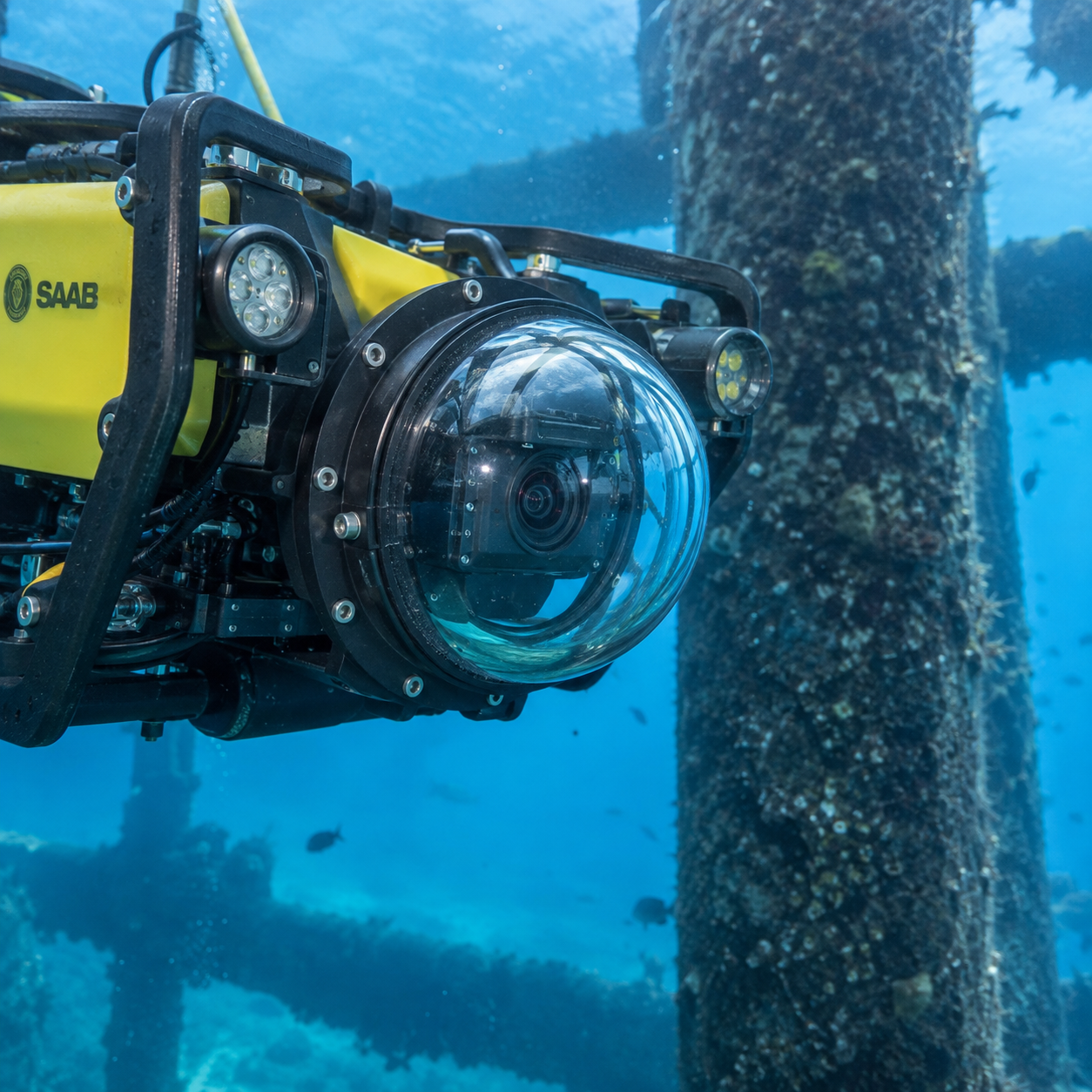
Evaluate Sapphire for These Conditions
- Abrasive sand / dust exposure
- Underwater pressure & corrosion
- High-wear protective optics
- EO/IR sensor protection
- Service life validated for your exposure and cleaning conditions
- High-temperature environment
Not sure? Send your wavelength, environment, impact conditions and budget — our engineering team can review suitable material options and the information needed for quotation.
Sapphire for Subsea Optical Protection
Read our ROV and AUV sapphire viewport application case for a related underwater use. It concerns a viewport; it is not proof of a pressure rating for a new dome or housing.
For your dome, provide design pressure, pressure medium, temperature, duration, cycling, mounting support, seal design and required safety factor. Agree structural review and assembly pressure testing before assigning a depth rating.
Explore the drawing-based sapphire dome product for component-specific options.
Four Proof Points That Matter to Optical Buyers
The images illustrate processing and inspection activities. Request documentation relevant to your dome and its agreed acceptance criteria.
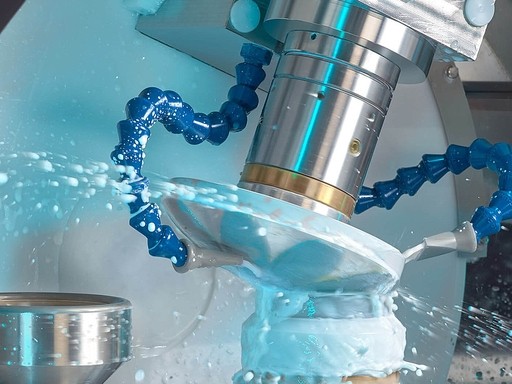
CNC Geometry Processing
5-axis CNC for custom radii, height, edge and flange features against the approved manufacturing plan.

Optical Polishing
Polishing route and achievable surface figure and quality are confirmed for the drawing, aperture and agreed measurement method.
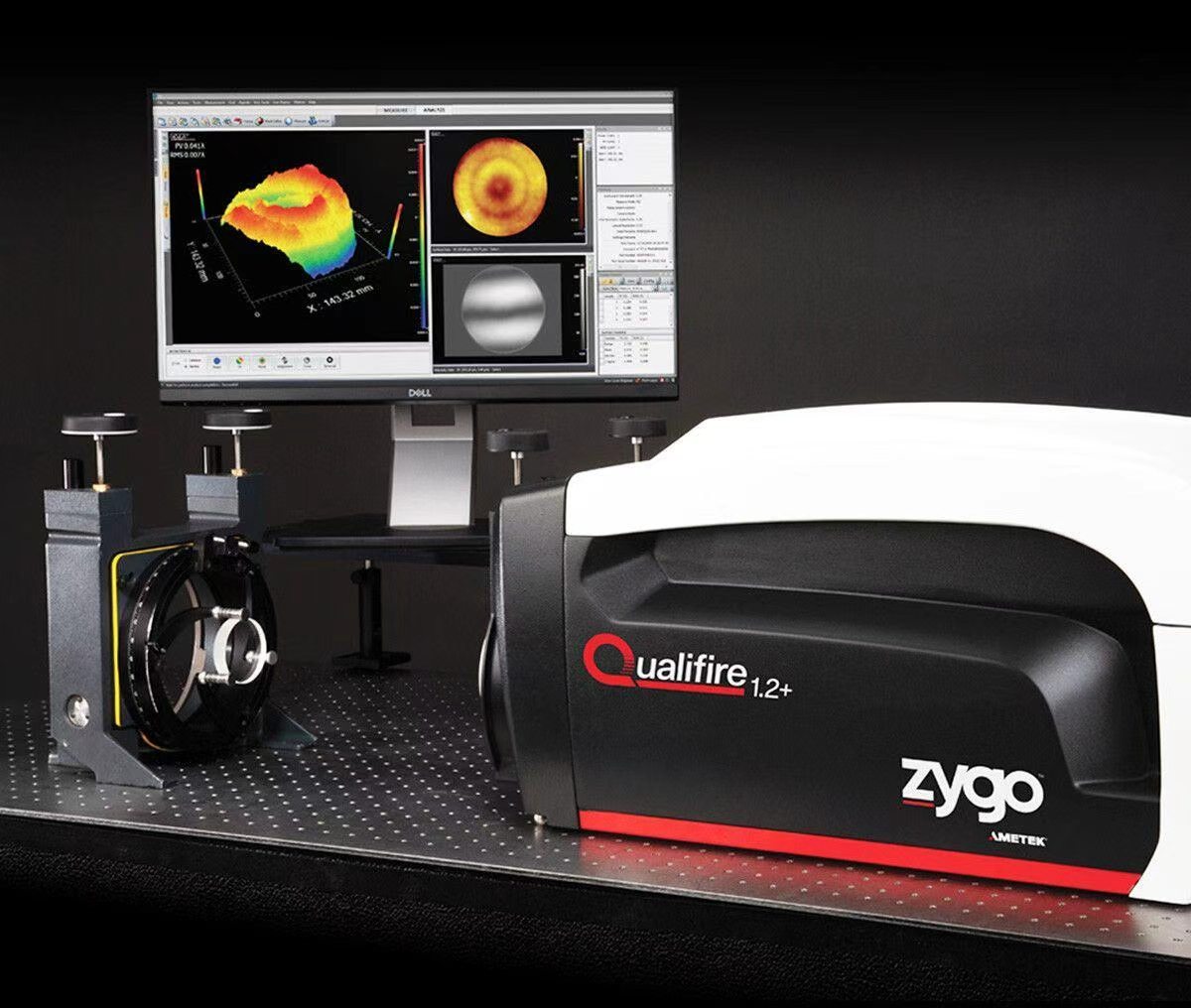
Surface & Figure Inspection
Interferometer for surface figure, microscope for scratch-dig, CMM for dimensional verification.
Coating Verification
Spectrophotometer verification of AR coating transmission and reflection in the specified wavelength band.
Four Steps from Drawing to Approved Part
Send Requirements
Share CAD, drawing, application, wavelength, environment and quantity. Engineering response timing is confirmed after receipt of the available specifications.
Engineering Review
Receive DFM questions covering material, geometry, coating, tolerances and inspection criteria.
Prototype & Inspect
Manufacture the first article against the agreed drawing and inspection plan; reference prototype lead time is 7–15 working days, subject to project confirmation.
Approve & Repeat
Use approved drawing and criteria for pilot and mass production with lot traceability.
What You Receive After Sending Your Project
- Free manufacturability and geometry review
- Material and coating recommendation
- Open tolerance questions identified
- Prototype and production quotation
- Estimated production schedule
- Available inspection documentation list
Materials, Coatings & Drawing Preparation
Review the sapphire substrate and orientation guide and the AR and BBAR coating selection guide for sapphire. Choose a useful spectral band for the actual thickness and optical path; the substrate transmission window is not a coating specification.
Use the drawing tolerances and inspection guide to define surface figure, clear aperture and acceptance methods. Compare alternative substrates in the optical materials knowledge hub.
Explore the custom sapphire dome component options and our optical manufacturing and inspection capabilities. Complete the custom optics RFQ preparation checklist before sending your drawing.
12 Questions Before Requesting a Quote
What information is required for quotation?
Please send available dimensions or drawings, material preference, radii, wall thickness, clear aperture, wavelength, coating, quantity, mounting interface, environment and required inspection documentation. A complete drawing is helpful but not required to start — preliminary dimensions and application details are enough for an initial review.
What is the typical MOQ for sapphire domes?
A one-piece paid prototype can be reviewed for engineering evaluation. Production references of 10 pieces and 100+ pieces depend on blank availability, tooling, coating batch and specification. Confirm the order quantity and price in the quotation.
What is the typical lead time?
Planning references are 7–15 working days for standard prototype geometry and 20–35 for production, after drawing and acceptance-plan approval. Material stock, tooling, coating, quantity and additional tests can extend these periods. The accepted quotation states the delivery date.
Can you manufacture from an existing sample?
Yes. A reference sample can support an initial reverse-engineering review. We will measure geometry, optical parameters and create a manufacturing drawing for your approval before production. Tell us which characteristics must be exactly replicated.
Can I order a prototype before repeat production?
Yes. Agree the prototype drawing and inspection plan first. After sample approval, confirm the production process, revisions, sampling and traceability requirements; prototype approval alone does not prove production repeatability.
Which AR coatings can be applied to sapphire domes?
Visible and NIR AR or BBAR options are reviewed for the required wavelength, incidence range and polarization. Specify coated faces, minimum transmission or maximum reflectance, durability and test method. DLC is subject to separate compatibility and spectral review.
What depth / pressure rating can sapphire domes achieve?
A depth or pressure rating cannot be inferred from sapphire hardness or compressive strength. Define geometry, material orientation, support, sealing, pressure medium, temperature, dwell, cycling and safety factor. The assembled housing requires an agreed structural and pressure-validation plan.
How does sapphire compare to glass or acrylic for domes?
Sapphire has Mohs 9 substrate hardness and is a candidate for abrasion-exposed optical protection. Glass and acrylic offer different optical, weight, cost and handling tradeoffs. Compare exact grades and the complete assembly; material name alone does not establish impact, pressure or service-temperature performance.
Can inspection reports be supplied?
Request the report content before quotation: dimensions and datums, surface quality, surface figure or transmitted wavefront, and coating spectral performance as applicable. Confirm methods, sampling, equipment suitability and traceability. Request an available report example; its values do not qualify a new part.
What if the delivered parts do not meet our specifications?
Acceptance follows the approved drawing, purchase specification and agreed test methods. Send the part identification and inspection evidence so the issue can be reviewed. Corrective action, rework, replacement or other remedy follows the agreed order and warranty terms.
Can sapphire domes be used in EO/IR and aerospace systems?
Sapphire can be evaluated for visible, NIR, SWIR and some mid-infrared optical channels. Useful transmission depends on grade, thickness, orientation, temperature and coating. It is not a general-purpose LWIR 8–12 μm material. An aerospace application description does not establish qualification or certification; specify the required tests and documentation.
Do you provide environmental or reliability testing?
Specify the test standard and revision, method, severity, duration, sample size and pass criteria for temperature, humidity, salt exposure, vibration or pressure. Availability, laboratory responsibility, cost and report scope must be confirmed before order acceptance.
Send Your Sapphire Dome Drawing
Share the information currently available — a final drawing is helpful but preliminary dimensions and application details are welcome.
Submit Your Project Requirements
Include material grade and orientation, radii, wall thickness, clear aperture, wavelength, coating, mounting, environment and quantity.
Send Your Sapphire Dome Inquiry
Prepare your files with the custom optics RFQ preparation checklist, or email james@felixglass.com. Tel: +86 18565032888.