Products · Custom Optical Lenses
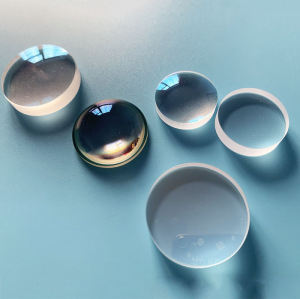
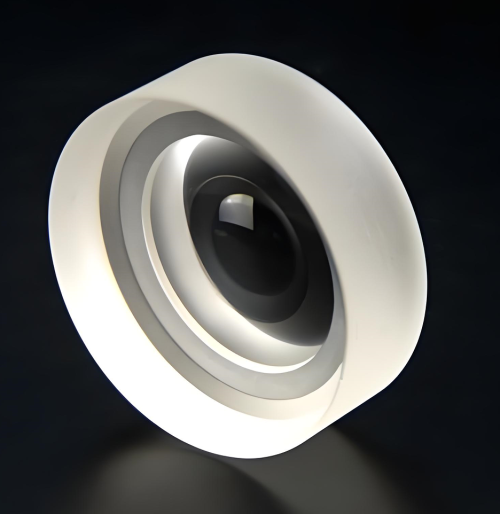
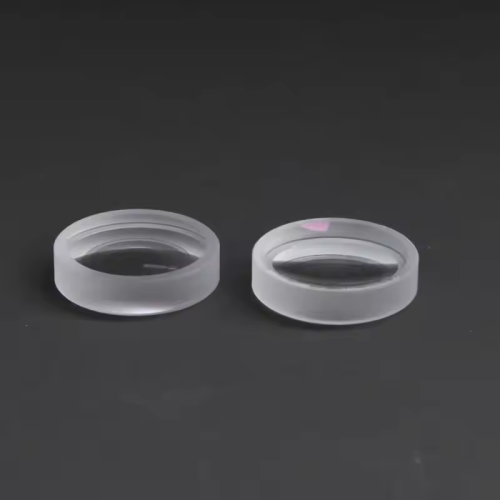
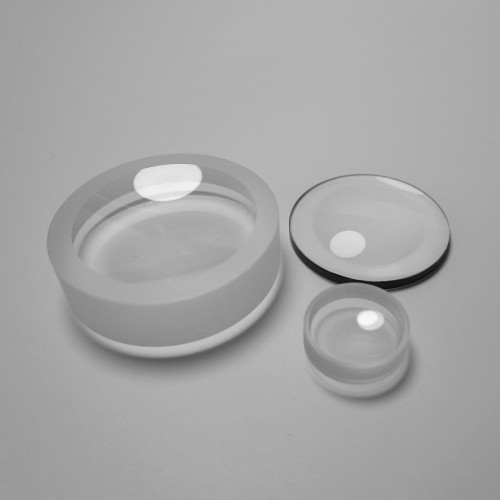
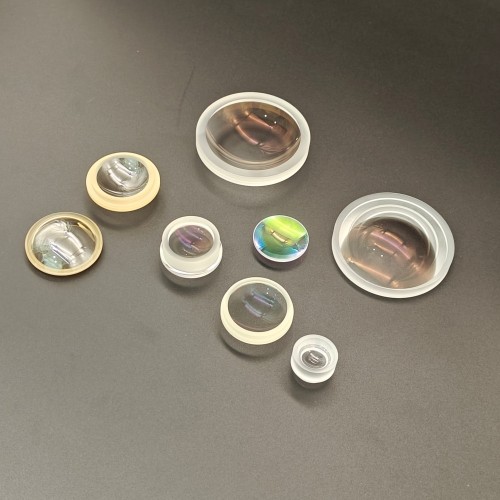
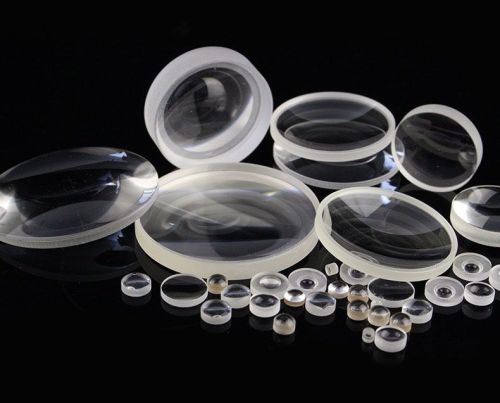
Custom Circular Biconcave Lens
Custom negative focal length lenses for optical system integration
Custom circular biconcave lenses with drawing-based materials, dimensions, optical tolerances and AR coating options for laser, sensing and instrument designs.
View Customization Specifications1. Custom Negative-Power Optics
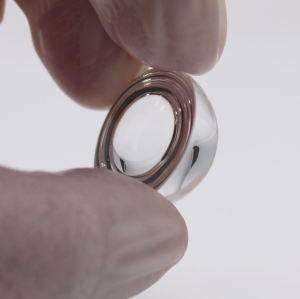
Felix Glass offers custom circular biconcave lenses for optical systems requiring negative optical power. Two inward-curved surfaces provide a negative focal length in air for the usual lens materials with a refractive index higher than the surrounding medium. Surface radii, diameter, thickness and coating are specified for the intended optical layout.
Send your drawing or optical requirements for a project-specific manufacturing review. Material availability and achievable tolerances are confirmed for the selected geometry and quantity.
2. Customization Specifications
| Parameter | Options / specification basis |
|---|---|
| Lens type | Circular biconcave / double-concave lens; BCV or DCV terminology |
| Diameter | 3–100 mm inquiry range; other sizes subject to review |
| Focal length | Negative focal length, specified at the design wavelength |
| Surface radii | R1 and R2 to drawing; symmetric or asymmetric prescription |
| Surface figure | λ/4 or λ/2 target at 632.8 nm, subject to agreed metric, aperture and feasibility |
| Surface quality | 60-40 or 40-20, with inspection system and conditions specified |
| Center / edge thickness | To approved drawing and manufacturing review |
| Centration and clear aperture | To drawing; define datum and measurement convention |
| Coating | Uncoated, AR, BBAR or narrowband V-coat; face assignment to specification |
The listed values are inquiry options rather than a guarantee that every combination is available. Final specifications are established in the approved quotation and drawing.
3. Visible and Near-Infrared Materials
N-BK7, H-K9L and appropriate fused-silica grades are candidates for visible and selected near-infrared designs. Sapphire and borosilicate materials can be reviewed where environmental or material requirements justify them.
Specify the exact grade when material identity is mandatory. Substitution requires review of refractive index, dispersion, transmission and the lens prescription. Sapphire crystal orientation and birefringence should be considered for polarization-sensitive designs.
4. UV Material Selection
Use a UV-qualified fused-silica grade selected for the actual wavelength and exposure. Low hydroxyl content alone does not define UV suitability; low-OH grades are often selected to reduce near-infrared absorption.
CaF₂, MgF₂ and LiF can be considered as special-request materials, subject to availability, optical requirements and manufacturing review. Crystal orientation, handling and environmental compatibility should be checked where relevant.
5. Infrared Material Options
Silicon, ZnSe and ZnS can be evaluated for suitable infrared designs. Specify the exact operating band and component thickness rather than relying on a generic “IR” designation.
For CO₂ laser operation at 10.6 μm, request an appropriate low-absorption laser-grade ZnSe substrate and compatible coating. For ZnS, identify whether standard IR or multispectral material is required. Silicon transmission must be checked for the selected band, grade and operating conditions.
6. Focal Length and Lens Geometry
Provide effective focal length at the design wavelength, the required clear aperture and the permitted lens envelope. If a prescription is available, include both surface radii, center thickness and material grade.
A biconcave lens is thinner at its center than near its edge. Minimum center thickness, edge thickness and curvature must be reviewed together for manufacturability and handling. Do not assume that both surfaces have equal radii unless the drawing specifies symmetry.
7. AR, BBAR and V-Coat Options
Specify single-face or double-face coating, identifying S1 and S2. BBAR targets a continuous band, while a narrowband V-coat targets a selected wavelength. Separate-band requirements need a design that addresses each band.
Example inquiry bands include 400–700 nm, 905 nm, 940 nm, 1550 nm and 10.6 μm. These are design inputs for compatible substrates, not one coating covering every listed wavelength. Include angle of incidence, polarization and minimum transmission or maximum reflection requirements.
8. Laser Beam Expansion and Beam Shaping
A negative lens can serve as the diverging element in a Galilean beam expander when paired with a suitable positive lens. The full design determines expansion ratio, spacing, aberrations and beam quality.
For laser inquiries, provide power or pulse energy, pulse duration, repetition rate, beam size and profile at the lens. Absorption, coating loss and damage qualification must be evaluated under relevant conditions. A lens diameter or material name alone does not establish laser suitability.
9. Imaging, Sensing and Instrument Applications
Custom negative lenses can be considered for optical assemblies used in telescopes, microscopes, LiDAR beam shaping, machine vision illumination, projection systems and spectroscopy. Their role depends on the optical prescription; a biconcave lens is not a complete eyepiece or imaging system by itself.
State whether the part is intended to diverge illumination, alter system power or compensate a defined optical layout. Include field angles and image-quality requirements where the component lies in an imaging path.
10. Surface Quality and Optical Inspection
Define surface figure separately from transmitted wavefront error and surface roughness. For a wavelength-based figure specification, state the reference wavelength, evaluation aperture, metric and permitted data removal.
For scratch-dig requirements such as 60-40 or 40-20, name the inspection system and acceptance conditions. Inspection scope may include dimensions, radius or figure, surface quality, centration and coating performance as agreed for the project.
11. Drawings, Traceability and Documentation
Production requirements are established from the controlled drawing and approved technical clarifications. Provide PDF drawings and supporting 3D models where needed, with matching part numbers and revisions.
Material documentation and surface-quality, figure or coating reports can be requested in the RFQ. Confirm which records are included and whether results apply to individual parts, production lots or witness samples. If ISO 9001 certification is a procurement requirement, request current certification and scope confirmation during supplier qualification.
12. Protective Packaging and Delivery
Individual protective packaging and suitable cushioning can be arranged to reduce surface contact and movement during transport. Specify cleanliness requirements, labels, drawing numbers, neutral packaging and customer shipping marks when required.
Express courier options can be discussed for samples, with air or sea freight considered for suitable production shipments. Manufacturing lead time and transit estimates are quoted separately; delivery depends on destination, service and customs processing. Packaging materials should be compatible with the optical surface and coating.
13. Prototype and Production Support
Request separate quotations for prototype and production quantities. Include your target schedule and any fixed material or coating requirements so feasibility, tooling and inspection needs can be assessed.
Material and coating selection advice can be discussed using your wavelength, aperture, focal length and environment. Quote timing, sample lead time and volume pricing are confirmed for each inquiry rather than assumed from a standard response-time promise.
14. Frequently Asked Questions
What is a biconcave lens?
It has two inward-curved optical surfaces and typically provides negative optical power in air.
Are BCV and DCV different lens shapes?
Both terms can refer to biconcave or double-concave lenses. The drawing and surface prescription define the actual part.
Can both surface radii be customized?
Yes, they can be specified independently for review. Symmetric and asymmetric designs require an approved prescription.
Can I request a 10.6 μm lens?
Yes. Provide the laser conditions and request compatible substrate, absorption and coating requirements for review.
Does low-OH fused silica automatically mean UV grade?
No. Select the grade using wavelength-specific transmission and exposure requirements.
Can the lens have AR on both sides?
Double-face AR can be requested. Identify each face and the required band, angle and polarization.
Are all listed tolerances available in every material?
No. Feasibility depends on material, size, curvature, thickness and inspection requirements.
What information is needed for a quote?
Send material or wavelength, diameter, focal length or radii, thickness, aperture, surface quality, coating, quantities and drawing revision.
15. Request a Custom Biconcave Lens Quotation
Email your drawing and requirements with the subject “RFQ + drawing number + quantity.” Include prototype and production quantities, operating wavelength and requested delivery destination.
Dongguan Felix Glass Co., Ltd.
james@felixglass.com