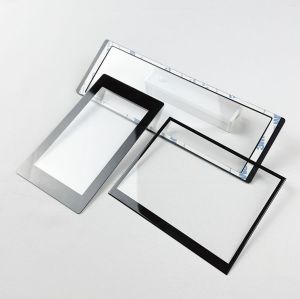
Sapphire optical window · near-eye display stack
Ultra-Thin Sapphire Cover for AR and VR Eyepiece Modules
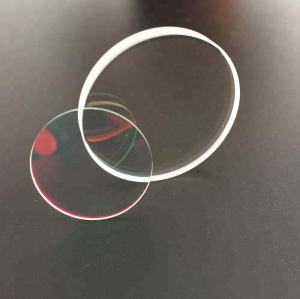
A 0.1 to 0.5 mm single-crystal sapphire window for near-eye display assemblies: Mohs 9 surface hardness, Lambda/10 flatness target at 632.8 nm, +/-0.003 mm thickness control, and a broadband anti-reflection coating for both the visible display channel and the near-infrared sensing channel.
Sapphire is a single crystal. It is not tempered and it is not chemically strengthened — there is no ion-exchange step and no compressive layer. The scratch resistance comes from the crystal itself and does not wear off with handling.
0.1 to 0.5 mm thicknessLambda/10 flatness target+/-0.003 mm toleranceMohs 9 crystal
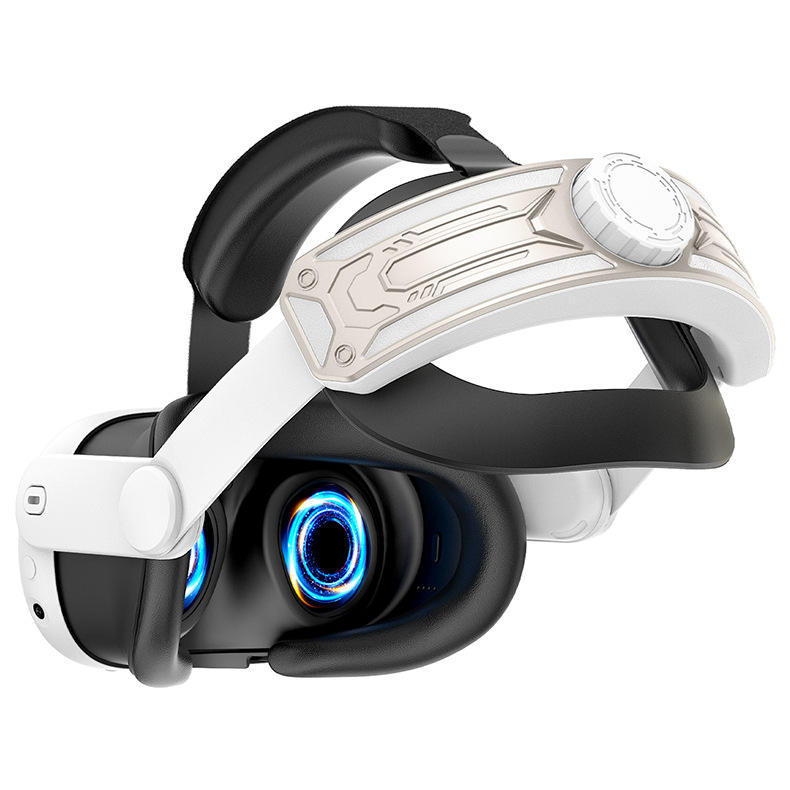
19+ yearsOptical glass and crystal components
In-house growthKyropoulos sapphire boules
Mohs 9Single-crystal sapphire, no tempering
Lambda/10Flatness target at 632.8 nm
1 pcPrototype before production
What You Are Actually Specifying
Three properties drive the design of a near-eye sapphire window, and they are not interchangeable with ordinary cover glass.
Single crystal, not glass
Sapphire is grown as a boule and sliced, so there is no chemical strengthening step and no compressive layer to lose. Hardness comes from the crystal lattice and stays constant through cleaning, assembly and repeated field use.
Birefringence follows orientation
Sapphire is optically anisotropic. The crystal orientation is selected against your optical axis so that polarization-dependent artifacts do not enter the imaging path — this is a drawing decision, not a catalog option.
Thin, and fragile by nature
At 0.1 to 0.5 mm the limits are not cutting limits but handling, fixture support and flatness retention after coating. Those are reviewed before a tolerance is quoted.
Material behaviour under heat and chemical exposure is covered in the sapphire window temperature and corrosion guide.
Sapphire Versus Chemically Strengthened Glass
Both work as optical windows. They fail in different ways and cost very differently, so the choice should be a deliberate one.
| Property |
Sapphire (this product) |
Chemically strengthened glass |
| Surface hardness |
Mohs 9, from the crystal |
Glass body around Mohs 6 to 6.5; coating pencil hardness typically 9H |
| Strengthening step |
None required |
Ion exchange, compressive layer from the edge inward |
| Scratch resistance over life |
Constant, no coating to wear through |
Coating dependent; anti-fingerprint and AR layers can degrade |
| Birefringence |
Anisotropic, controlled by crystal orientation |
Low, but sensitive to forming and strengthening process |
| Usable thickness |
0.1 to 0.5 mm reviewed per outline |
0.3 to 6 mm typical |
| Cost |
Higher material and lapping cost |
Lower material cost |
| Best fit |
High-value near-eye optics, harsh cleaning, long field life |
Large panels, cost-driven programmes, touch surfaces |
Coating and surface-treatment trade-offs across AR, AG, AF and HR are compared in the Felix Glass technical knowledge base.
Optical Performance Targets
The values below are acceptance targets for the coated component. A number without an aperture, an incidence angle and a measurement method is not an acceptance criterion, so each is stated with its condition.
| Parameter |
Target |
Condition |
Verification |
| Visible transmittance |
92% minimum, 400 to 700 nm |
Normal incidence, coated aperture |
Spectrophotometer scan |
| Near-infrared transmittance |
88% minimum, 700 to 1700 nm |
Normal incidence, coated aperture |
Spectrophotometer scan |
| Surface flatness |
Lambda/10 at 632.8 nm |
Over the aperture stated in the drawing |
Interferometric inspection |
| Thickness tolerance |
+/-0.003 mm |
At the measurement points defined in the drawing |
Precision metrology |
| Crystal orientation |
Selected against the optical axis |
Confirmed with the optical design |
Orientation check on incoming material |
| Cosmetic grade |
Per agreed scratch and dig standard |
Under defined inspection illumination |
Visual and CCD inspection |
Flatness, thickness tolerance and cosmetic grade are all aperture-dependent. Send the drawing and the values are confirmed against it rather than assuming the tightest case.
Anti-Reflection Coating for AR/VR Imaging Paths
Note on the abbreviation: on this page AR in "AR coating" means anti-reflection, and AR/VR means augmented and virtual reality. They are unrelated terms that happen to share two letters.
Dual-band stack
The coating can be tuned to carry the visible display channel and the near-infrared sensing channel used by eye tracking, depth sensing or illumination subsystems, in one stack rather than two windows.
Tuned to your system, not a catalog
Wavelength bands, target transmission, angle of incidence, polarization state and environmental exposure are needed before the stack is designed. A generic broadband coating wastes performance on both channels.
Window design for combined visible and sensing channels is discussed in optical window systems for sensor channels.
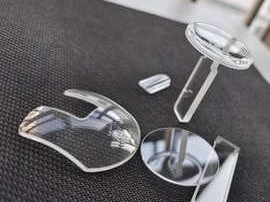
Micro-Size Machining on a Brittle Substrate
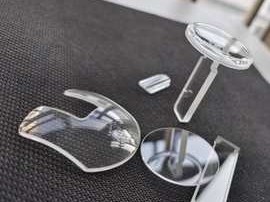
Custom outlines, compact apertures, edge profiles, holes, slots and alignment features are machined for prototype and production assemblies. The manufacturability review centres on minimum edge distance, corner radius, aspect ratio, and the handling risk of a part thinner than the fixture that holds it.
- Drawing-based tolerance review before quotation
- Micro-size cutting, grinding, lapping and edge finishing
- Fixture and carrier planning for sections down to 0.1 mm
- Coating stress checked against flatness after deposition
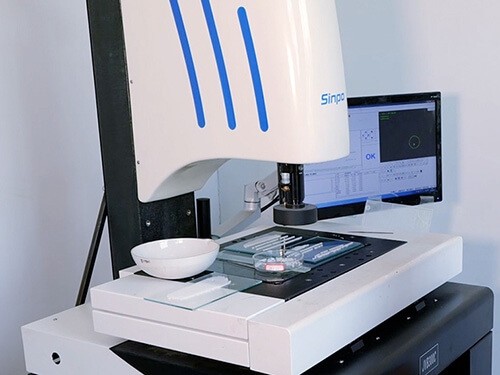
Equipment and plant capability are listed on our Dongguan optical glass factory capability page.
Sapphire Thickness Selection
Thickness is chosen by aperture and exposure, not by preference. The four values below are the standard review points; anything between them is quoted against the drawing.
0.10 mm
Smallest optical envelope. Fixture planning and drawing review mandatory; small apertures only.
0.20 mm
Thin protection for space-limited modules with moderate aperture.
0.30 mm
The balance point between handling, flatness and compact integration.
0.50 mm
Greater stiffness for larger apertures or exposed front windows.
Practical limits depend on outline size, edge geometry, flatness target and coating stress. Intermediate thicknesses are quoted after review, not assumed available.
Production Route for a Coated Sapphire Window
- 01
Incoming crystal control
Orientation, dimensions and visible defects checked before a part enters the route.
- 02
Cutting, grinding and lapping
Ultra-thin sections handled on dedicated carriers to protect edges and hold flatness.
- 03
Polishing and cleaning
Surface finish and cleanliness staged before coating so the stack has a stable base.
- 04
Coating, metrology and packing
Spectral scan, flatness, thickness and cosmetics inspected to the agreed plan, then separated and cushioned for transit.
Prototype to Production
Engineering review
Send a 2D or 3D drawing plus optical and cosmetic requirements. Feasibility, aperture limits and tolerance are answered before a price is given.
Prototype build
One piece or a small trial batch, with no minimum at the prototype stage. Machining, polishing, cleaning and coating run once the specification is frozen.
Scale-up
The approved sample fixes inspection criteria, packaging and process controls, so the production lot matches what you signed off.
Before sending a drawing, run through the custom optics RFQ checklist — most first-round delays are missing fields, not missing capability.
Where This Window Is Used
Consumer headsets
Front and internal eyepiece protection for compact VR and mixed-reality display modules, where a scratched window ends the product's perceived quality.
Industrial smart glasses
Scratch-resistant windows for maintenance, logistics, training and remote-assistance devices that are cleaned far more often than a phone.
Imaging and sensing modules
Coated windows carrying visible and near-infrared channels together in compact wearable and handheld systems. A comparable sapphire cover built for a diagnostic instrument is written up in this medical sapphire cover case study.
FAQ: Sapphire Optics for Near-Eye Displays
Is sapphire tempered or chemically strengthened?
No. Sapphire is a single crystal, so there is no ion-exchange step and no compressive layer. Hardness and scratch resistance come from the crystal structure. If a supplier describes "tempered sapphire", ask what process they mean — the answer is usually that they meant tempered glass.
Which crystal orientation should I specify?
It depends on your optical axis and on how sensitive the imaging path is to polarization. For on-axis viewing through the window, the low-birefringence choice is the orientation whose optical axis is normal to the surface. Confirm it with your optical design and put it on the drawing — orientation is a specification, not a preference.
Can one coating serve the display and the NIR sensing channel?
Yes, when the bands, incidence angles, polarization state and transmission targets are all supplied. Without those, a broadband stack is a guess that costs performance on both channels.
Is +/-0.003 mm available on every geometry?
It is a target for ultra-precision production. Feasibility depends on aperture, thickness, edge features and the measurement method, and the measurement points have to be defined in the drawing. The drawing review establishes the final tolerance — we do not quote it as a blanket figure.
What flatness can you hold, and over what aperture?
Lambda/10 at 632.8 nm is the target for the apertures we routinely produce at this thickness. Flatness is aperture-dependent and coating affects it, so it is quoted over a stated aperture after deposition, not before.
What do you need to quote?
The drawing, quantity, thickness, crystal orientation, wavelength bands, coating targets, flatness and cosmetic standard, and environmental requirements. The custom optics RFQ checklist lists every field.
What about MOQ and lead time?
One piece is accepted at the prototype stage. Production minimum depends on aperture and coating; typical sapphire programmes are quoted per drawing rather than against a fixed catalog MOQ.
Why is sapphire more expensive than strengthened glass?
It is grown as a single crystal, then sawn, lapped and polished rather than formed from sheet. Material yield and lapping time both cost more. It buys scratch resistance that does not wear off and optical stability that glass cannot match at the same thickness.
Other Sapphire Components
Send the Eyepiece Drawing for Review
For a useful engineering reply, include the component drawing, annual demand, prototype quantity, optical bands, angle of incidence, coating target and inspection standard. Felix Glass then reviews manufacturability, sampling and OEM production for your AR/VR eyepiece window.
james@felixglass.com · +86 185 6503 2888