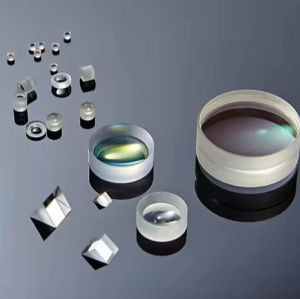
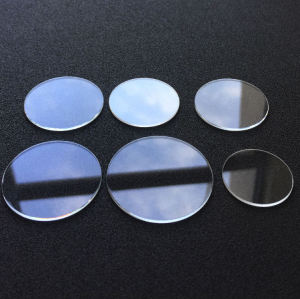
Single crystal, not glass
Sapphire is grown as a boule and sliced. There is no ion-exchange step and no compressive layer, so there is nothing to lose after assembly or cleaning. Scratch resistance comes from the crystal and stays constant.



Send your drawing or sample requirement for a fast quotation. MOQ, lead time and coating options are confirmed within one business day.
Single-crystal sapphire · broadband AR · HMD eyepiece
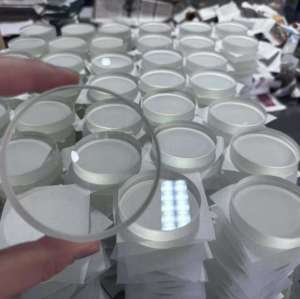
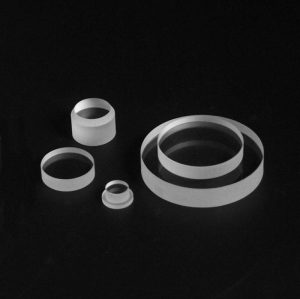
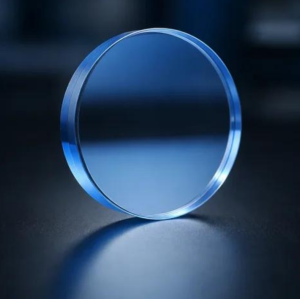
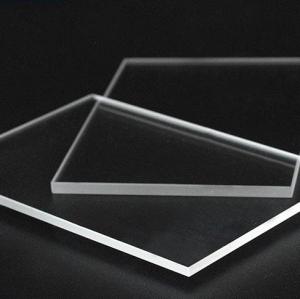
Custom ultra-thin single-crystal sapphire protective covers for head-mounted display eyepiece stacks. Low-birefringence grade, Mohs 9 surface, broadband anti-reflection coating tuned to your spectral band, 0.1 to 0.5 mm, machined from your DXF or DWG drawing.
Two abbreviations, two meanings: on this page AR coating means anti-reflection coating; AR/VR means augmented and virtual reality. Sapphire is a single crystal and is neither tempered nor chemically strengthened.

What the part is
An eyepiece cover is judged by three things that ordinary protective glass does not solve. Each is a drawing decision, not a catalog option.
Sapphire is grown as a boule and sliced. There is no ion-exchange step and no compressive layer, so there is nothing to lose after assembly or cleaning. Scratch resistance comes from the crystal and stays constant.
Sapphire is optically anisotropic. In an HMD the display light is polarized, so an uncontrolled fast axis turns into uneven brightness and ghosting across the field. Orientation and grade are fixed on the drawing.
At 0.1 to 0.5 mm the constraint is not cutting. It is fixture support, coating stress and whether the part is still flat after deposition, without breaking in the tweezers.
Birefringence
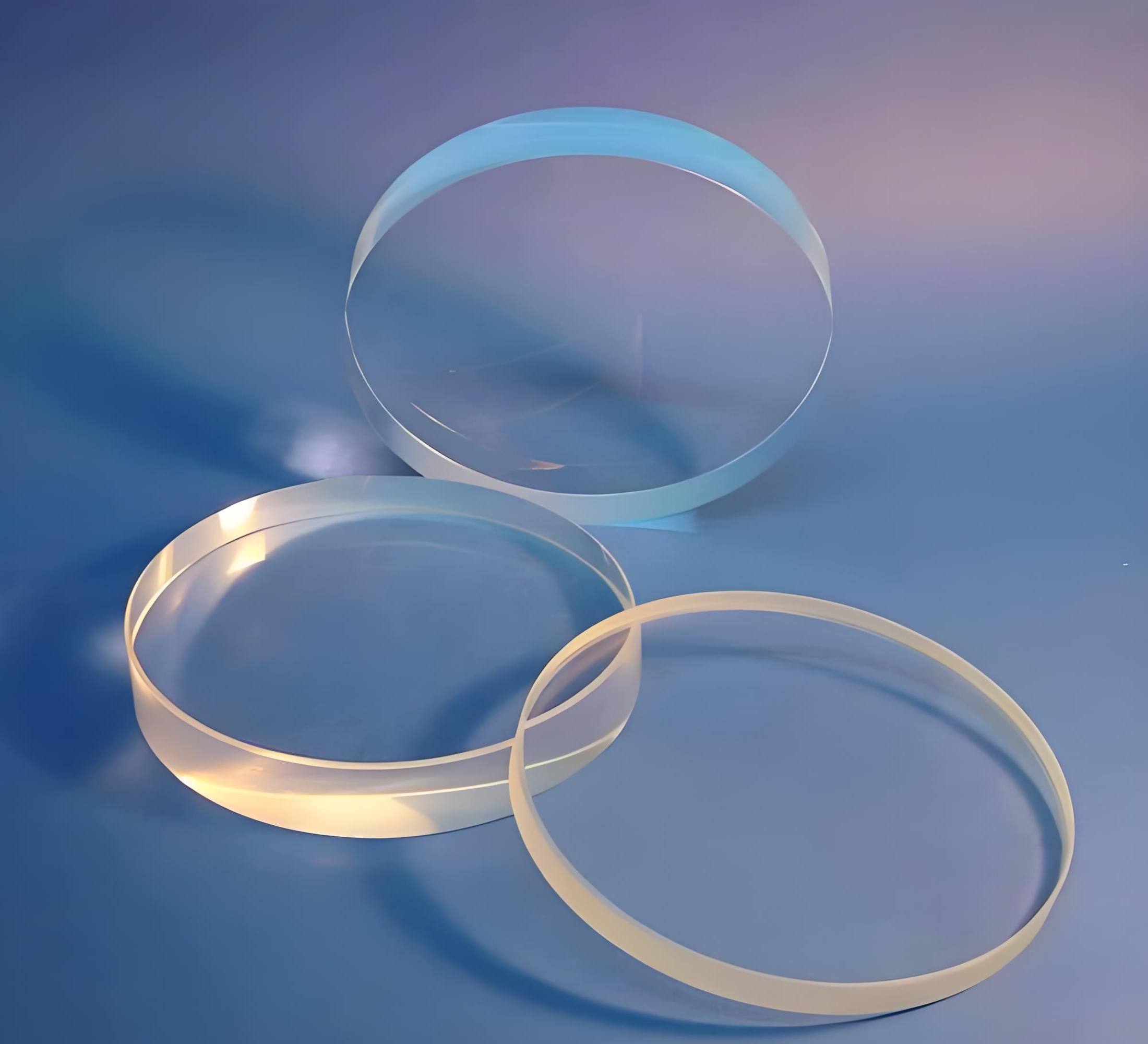
Sapphire has a refractive index around 1.76 with a birefringence of roughly 0.008 between its ordinary and extraordinary axes. In a window, that split retards one polarization against the other, and in a near-eye path it shows up as colour fringing, reduced contrast and uneven brightness.
Reducing it starts with crystal orientation relative to your optical axis, then with grade selection and stress control through lapping and coating. None of that can be described by the word "low".
Tell us the retardation limit your design can tolerate, in nm or in nm/cm, and it becomes an inspected value instead of a marketing adjective.
Coating
Bare sapphire reflects about 7% at each surface because of its high index. An uncoated sapphire window throws away roughly 14% of the display light. A broadband stack designed for the band is the whole difference.
The coating can be tuned to carry the visible display channel and the near-infrared channel used by eye tracking or depth sensing together, so the module needs one window rather than two.
Reflectance target, band edges, angle of incidence and polarization state all go into the stack design. A generic broadband coating spends performance on wavelengths your system does not use.
How AR, HR, AG and AF families differ, and what each surface treatment does, is compared in the AR, HR and surface treatment guide, inside the Felix Glass technical knowledge base.
Ultra-thin handling
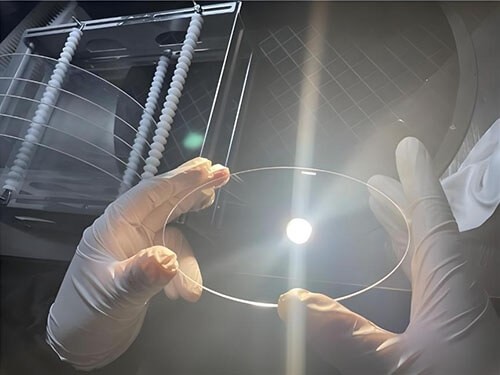
A 0.1 mm sapphire window is thinner than the carrier it sits on. Every step that touches it - slicing, lapping, polishing, cleaning, coating, packing - is a breakage risk, and breakage shows up as yield cost long before it shows up as a dimensional failure.
What makes thin parts repeatable is dedicated carriers, edge support during polishing, and a stated minimum edge distance on the drawing. Those are reviewed before a price is given.

Substrate supply
Orientation control, grade consistency and lead time all start at the boule. Growing in house is the reason a substrate question can be answered with a date instead of a hope.
Crystal is grown, oriented, sliced, lapped, polished and coated inside one organisation, so a substrate question never has to travel through a trader.
Shape and format
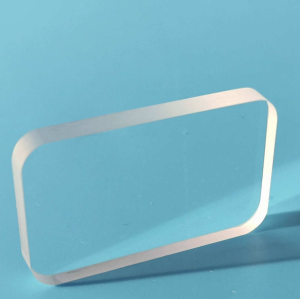
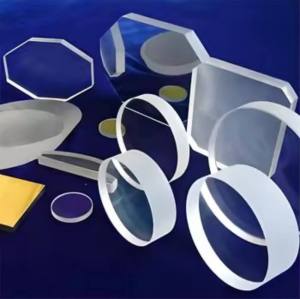
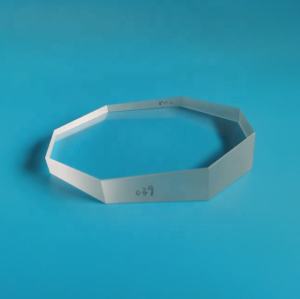
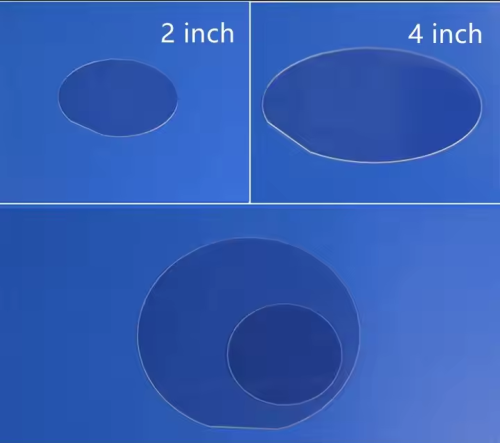
The drawing decides the shape. Micro contour cutting and chamfering handle the outlines that an eyepiece housing actually needs, including asymmetric apertures and mounting tabs.
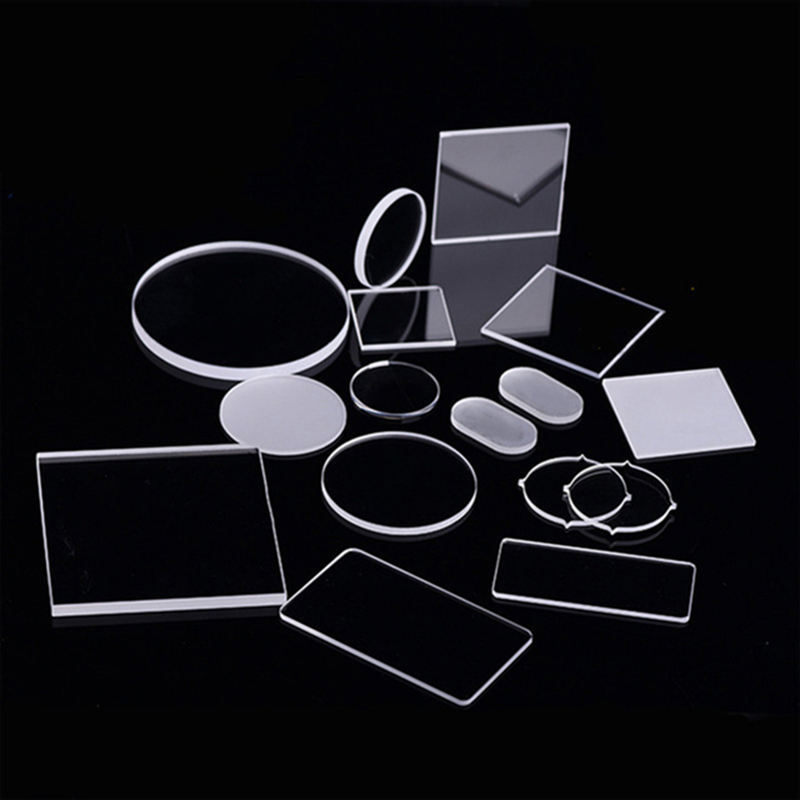
Outline cut from DXF or DWG, with tabs, flats and asymmetric apertures included.
Chamfer or fire-polished edge selected for handling and housing clearance.
Black printing available as an option where stray light has to be blocked at the rim.
Mounting features reviewed against thickness, because thin sapphire has little tolerance for stress.
Technical data
Targets below are the production window for this product. Band edges, reflectance, retardation limit and cosmetic grade are confirmed against your drawing and coating specification.
| Property | Specification |
|---|---|
| Base material | Single-crystal sapphire (Al2O3), optical grade |
| Crystal growth | In-house Kyropoulos, 80 kg and 120 kg boules |
| Crystal orientation | Selected against your optical axis, stated on the drawing |
| Birefringence | Low-birefringence grade; retardation reported per lot against your limit |
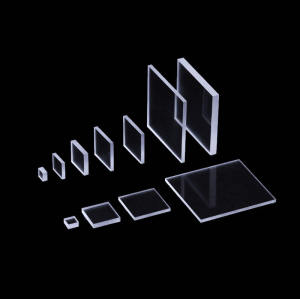
| Thickness | 0.1, 0.2, 0.3 and 0.5 mm standard; 0.1 to 0.5 mm continuous range on review |
| Thickness tolerance | Per drawing, with measurement points defined before quotation |
| Coating | Broadband AR, single or double side, band tuned to your spectrum |
| Reflectance | 0.5% or better per surface average across the specified band |
| Transmittance | 97% or better average across 400 to 700 nm with double-side AR |
| Surface quality | 40/20 scratch-dig typical; tighter grade on review |
| Edge | CNC contour, chamfer; black light-shielding print optional |
| Hardness | Mohs 9 crystal body; not tempered, no ion exchange |
| Temperature | Sapphire substrate usable above 1000 °C; AR coating qualified -40 to +85 °C |
| Cleaning and packing | Ultrasonic cleaning, Class 100 inspection and clean packing |
| Prototype | 1 pc or small trial batch, no minimum at prototype stage |
| Sample lead time | 8 to 13 working days once drawing and coating specification are frozen |
| Production MOQ | Quoted per drawing; coating setup rather than part count usually decides it |
| Drawing formats | DXF, DWG, STEP, PDF |
Thickness, tolerance and cosmetic grade are all coupled to aperture. Send the drawing and the values are confirmed against it rather than assumed at the tightest case.
Production route
Crystal axis, boule position and visible defects checked before slicing.
Target thickness reached on carriers built for thin parts, then polished both faces.
Outline, apertures and edge geometry cut from the drawing.
Vacuum coating to the agreed band, with stress and flatness checked after the run.
Retardation, transmittance, dimensions and cosmetics inspected, then separated and packed.
Who buys it
Lightweight head-mounted displays where eyepiece protection and optical uniformity both matter.
Machine vision, remote assistance and wearable inspection devices cleaned far more often than a phone.
Low-birefringence samples for imaging verification before a tooling commitment.
Windows carrying visible display and near-infrared sensing channels together. A comparable sapphire cover built for a diagnostic instrument is written up in this medical sapphire cover case study.
Buyer questions
No. Sapphire is a single crystal, so there is no ion-exchange step and no compressive layer. Hardness and scratch resistance come from the crystal structure. If a supplier offers "tempered sapphire", ask what process they mean.
It means the retardation across the aperture stays under the limit your design allows. We report that value per lot rather than printing the word "low" on a datasheet. Give us the limit in nm and it becomes an inspected figure.
Near-eye displays emit polarized light. A window with uncontrolled retardation rotates part of that polarization, and the result is colour fringing, contrast loss and brightness unevenness across the field - defects that are obvious to the user and hard to attribute afterwards.
The stack is designed to the band you specify. Consumer display channels usually sit in the visible range; modules with eye tracking or depth sensing need the near-infrared as well. Send the band edges, the reflectance target and the angle of incidence.
0.1 mm is produced on dedicated carriers and is reviewed against aperture and edge distance before quotation. Small apertures with adequate edge support are routine; large thin parts with narrow edges are reviewed honestly rather than quoted to win the order.
We grow it. In-house Kyropoulos growth on 80 kg and 120 kg boules means orientation, grade and substrate lead time are controlled inside the company rather than negotiated with a trader.
Deposition adds stress, and on a thin part that can move the figure. Flatness is checked after the coating run, not only after polishing, and the acceptable deviation is agreed against your bonding requirement.
The drawing, thickness, crystal orientation, retardation limit, band edges, reflectance target, angle of incidence, cosmetic grade, quantity and the inspection standard you will apply at incoming. The custom optics RFQ checklist lists every field.
Related products
Browse the full Felix Glass product catalog. Sapphire behaviour under heat and chemical exposure is covered in the sapphire window temperature and corrosion guide, and combined visible plus sensing windows in optical window systems for sensor channels.
Next step
Attach the drawing with thickness, crystal orientation and retardation limit, plus the band edges and reflectance target for the coating. An engineer reviews feasibility, then confirms tolerance and price against that drawing.
james@felixglass.com · +86 185 6503 2888