Services · Optical Glass Manufacturing
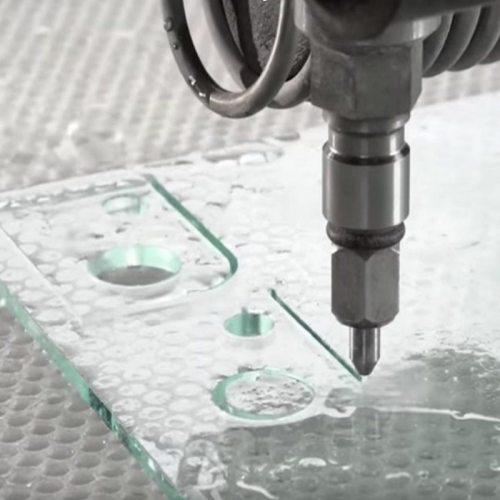
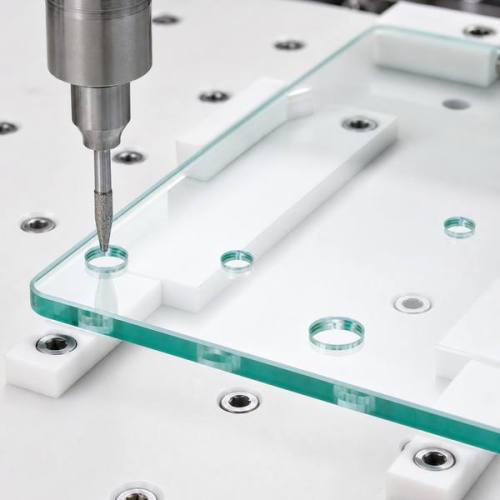
CNC Optical Machining Services
Precision geometry, optical finishing and functional glass surfaces
Explore seven service categories for custom optical and display glass, from grinding and polishing to coatings and screen printing.
Explore Our Services1. Custom Optical Glass Processing from Drawing to Finished Part
Dongguan Felix Glass Co., Ltd. supports custom optical and display glass projects through machining, grinding, polishing and application-specific surface finishing. Send a controlled drawing to review the material, functional surfaces, processing route and inspection requirements together.
CNC machining defines geometry; optical finishing and functional coatings establish additional performance. The appropriate combination depends on the part rather than on a fixed sequence applied to every glass component.
2. Explore Machining and Surface-Finishing Services
| Service | Purpose |
|---|---|
| Optical Polishing Services | Polish functional surfaces to agreed figure, roughness and surface-quality requirements. |
| Precision Grinding Services | Generate and refine dimensions, contours and surface geometry before final finishing. |
| Lapping / Fine Grinding / Tempering | Review abrasive finishing and a separate substrate-dependent strengthening requirement. |
| AR Coating (Anti-Reflective) | Reduce reflection within a specified optical band and angular range. |
| AG Surface Treatment (Anti-Glare) | Diffuse glare using an appropriate etched texture or coating process. |
| AF Coating (Anti-Fingerprint) | Apply an appropriate easy-clean surface treatment with agreed durability criteria. |
| Screen Printing | Add markings, scales, masks or decorative features with controlled registration. |
The seven categories cover different operations. Lapping, fine grinding and tempering are not synonyms; strengthening is a separate design decision. Coating and printing sequences require compatibility review.
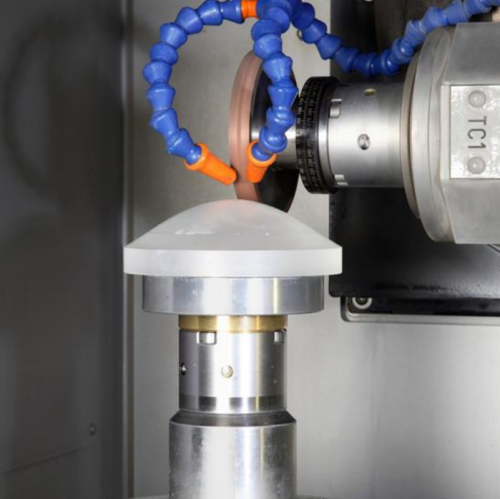
3. Optical Polishing Services
Polishing prepares optical surfaces for the required transmission, reflection or imaging function. Specify surface figure, roughness and surface defects separately: a visually glossy surface does not demonstrate compliance with all three.
Provide the clear aperture, measurement wavelength for interferometric requirements, roughness metric and measurement basis, and the applicable surface-quality grading method. Required finish depends on the material, geometry and application; numerical limits are confirmed after drawing review.
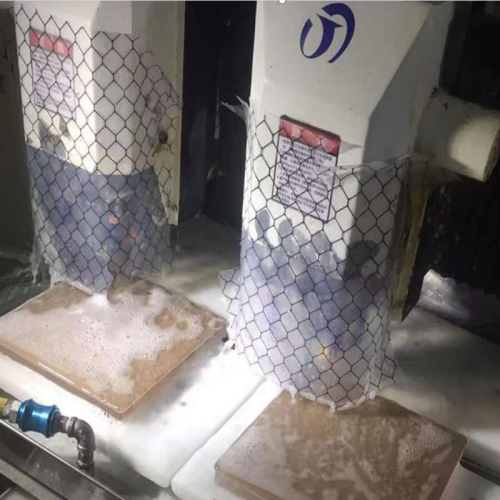
4. Precision Grinding Services
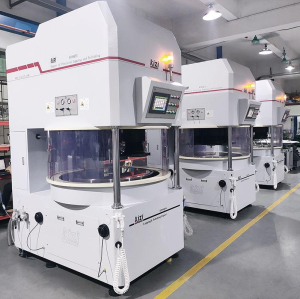
Grinding establishes or refines glass geometry and prepares surfaces for subsequent finishing. Include diameter or outline, thickness, radii, holes, slots, chamfers and datums in the drawing. Identify which faces need polishing and which may retain an agreed ground finish.
The process must account for brittle-material behavior, edge integrity and finishing allowance. Tight dimensional limits should be assigned where they support assembly or optical function. A ground surface should not be assumed to have the optical performance of a polished surface.
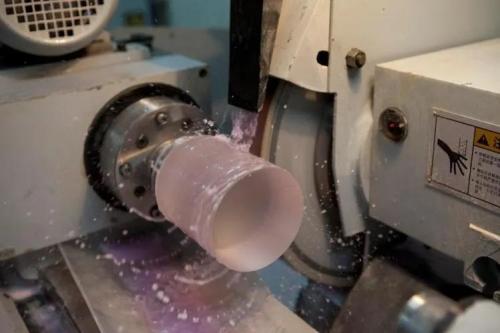
5. Lapping, Fine Grinding and Tempering
Lapping and fine grinding use controlled abrasive removal to refine geometry and surface condition. The selected method depends on the substrate and part. They may precede polishing when the final surface must meet an optical finish requirement.
Tempering is a separate thermal strengthening process for suitable glasses and geometries. Chemical strengthening is another route based on ion exchange in compatible glass compositions. These routes are not universally interchangeable and should not be described as mandatory steps after every grinding process.
Specify the required strengthening outcome and relevant test evidence. Assess compatibility with optical figure, stress birefringence, holes, edges and later coatings. Machining and strengthening order must be agreed for the selected material.
6. AR Coating: Anti-Reflective Optical Finishing
AR coatings reduce surface reflection within their designed wavelength and angular conditions. State the wavelength band, minimum or average transmission, reflection limit, incidence angles and polarization where relevant.
Identify the coated face and adjacent medium, including air, adhesive or liquid. An AR design for an air interface is not automatically suitable after bonding or immersion. The finished component must be evaluated with the substrate absorption and other layers included.
7. AG Surface Treatment: Anti-Glare Processing
AG treatment reduces the prominence of reflected glare by scattering light. It may use an etched glass texture or an applied coating; name the required route when it matters to wear, appearance or assembly.
For display covers, specify gloss, haze, clarity, sparkle and appearance under representative lighting. AG is different from AR: softening a reflection does not necessarily mean reducing total reflection. Define camera and sensor apertures separately where scattering could degrade their optical function.
8. AF Coating: Anti-Fingerprint Surface Treatment
AF treatments are used to improve fingerprint removal and surface cleanability. Define whether water repellency, oil repellency or cleaning performance is the principal requirement. The surface will still need appropriate cleaning during service.
Agree on initial performance and retention after a defined wear or cleaning test. A contact-angle value alone does not establish service life. Review the underlying AG or AR surface and the complete treatment stack before approving a combined finish.
9. Screen Printing on Glass
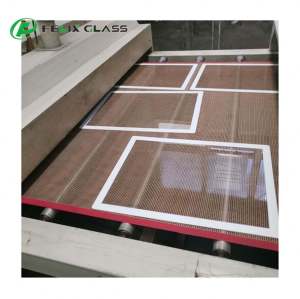
Screen printing can add alignment marks, scales, logos, black borders and light-blocking regions. Supply dimensioned artwork, viewing direction, print face, color requirements and registration datums.
Specify opacity where relevant, permitted pinholes, clear-aperture boundaries and adhesion requirements. Identify backlighting, adhesive contact and cleaning exposure. Ink selection and curing must be compatible with the substrate, strengthening route and other coatings.
10. Materials and Part Geometry
Projects may involve suitable optical glass, fused silica, borosilicate, sapphire or display-cover substrates, depending on the component and processing route. Specify an approved grade when optical properties, strengthening or thermal behavior are critical.
Include a model for complex shapes and a controlled drawing for dimensions and tolerances. Windows, domes, cover panels and other components can require different fixturing and inspection. Feasibility and achievable limits are confirmed for the actual design rather than inferred from a material name.
11. Plan the Manufacturing Sequence
A project review identifies the operations needed to meet the drawing: blank preparation, geometry generation, abrasive finishing, optical polishing, strengthening where applicable, functional treatments, printing and inspection. Not every part needs every operation.
Define final acceptance after the processes that can change the measured property. Coating stress, strengthening, curing or assembly may affect optical figure or appearance. Review the whole sequence before treating an intermediate measurement as proof of finished-part performance.
12. Inspection and Quality Requirements
Match each critical requirement to a measurement method, test area and acceptance limit. Depending on the project, inspection may include dimensions, curvature, surface figure, roughness, surface defects, spectral performance, appearance or print registration.
Agree on sampling, reports and traceability before production. Environmental or wear qualification must define exposure conditions and the permitted change afterward. A named test method does not by itself mean the company or finished product holds a certification.
13. Prepare a Complete Service RFQ
Send the drawing revision, material grade, dimensions, optical aperture and functional surfaces. Add wavelength requirements, strengthening needs, coating faces, print artwork, operating environment and required reports.
Separate prototype and production quantities. Identify whether you need complete finished parts or processing of customer-supplied blanks; acceptance of supplied material and responsibility for incoming condition require agreement. Paid prototypes, tooling, minimum order and lead time are confirmed in the quotation.
Packaging should protect finished surfaces and edges, prevent movement and support any vulnerable features. Include special cleanliness, labeling or noncontact packaging requirements when they affect the component.
14. Frequently Asked Questions
Does CNC machining alone produce an optical finish?
Not necessarily. The required geometry and optical finish may involve separate grinding and polishing operations.
Are mirror appearance and optical surface quality the same?
No. Surface figure, roughness and defect requirements need separate definitions and suitable inspection.
Must every part be tempered after fine grinding?
No. Strengthening is substrate- and application-dependent, and its process sequence needs review.
Is AG always a coating?
No. Anti-glare surfaces can be produced by etching or an applied coating. Specify the intended process where relevant.
Can AR, AG and AF be combined?
A compatible combination can be reviewed against optical, appearance, durability and contact requirements.
Can printed borders be aligned to a clear aperture?
Provide artwork, datums, registration tolerance and aperture requirements so the design can be reviewed.
Can you guarantee the same tolerances for every material?
No universal limit applies. Material, size, geometry and inspection requirements determine feasibility.
What do you need to quote a machining project?
Send a controlled drawing, material, optical and surface-treatment requirements, quantities and acceptance criteria.
15. Request a CNC Optical Machining Review
Discuss the required geometry, optical finish and surface functions with Felix Glass. A complete specification helps define the manufacturing route, prototype evaluation and production acceptance before ordering.
Dongguan Felix Glass Co., Ltd.
Email: james@felixglass.com
Phone: +86-18565032888