Custom CVD ZnSe Infrared Window | LWIR AR Coated Protective Window
- Model
- FG-LASER-COLL-LENS
Item specifics
- Material:
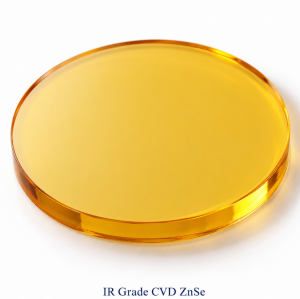
- CVD polycrystalline zinc selenide (ZnSe); exact grade confirmed per order
- Core Spec
- LWIR AR coating reviewed for required band, thickness, angle and coated faces
- Application
- LWIR camera protection, infrared sensing and spectroscopy
- Shape
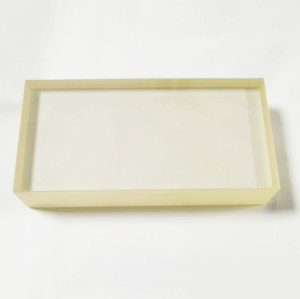
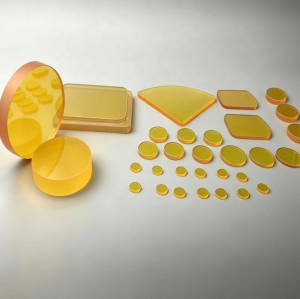
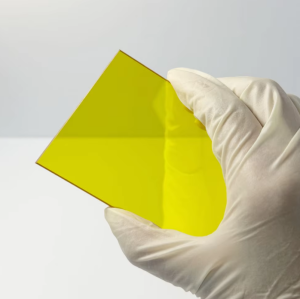
- Flat round, square or rectangular window; dimensions reviewed per drawing
Review
Description
Send your drawing or sample requirement for a fast quotation. MOQ, lead time and coating options are confirmed within one business day.
Custom CVD ZnSe Infrared Protective Windows
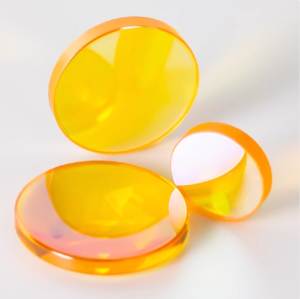
With 19+ years of optical manufacturing experience, Dongguan Felix Glass Co., Ltd. supports drawing-based ZnSe window projects for thermal imaging, infrared sensing and spectroscopy. This listing covers a flat protective optical window. Curvature for focusing, beam shaping or collimation requires a separate optical design.
Specify your required LWIR band, such as 8–14 µm, then confirm material grade, optical path length, coating, incidence angles and acceptance requirements. A substrate transmission range is not a guarantee for a finished coated window.
Define the Supplied Component
The proposed substrate is CVD polycrystalline zinc selenide (ZnSe). Nominally flat optical faces, the permitted wedge or parallelism, clear aperture and edge geometry are defined on the drawing. Do not use this listing's window specification as a focusing-lens prescription.
| Item | Quotation and acceptance requirement |
|---|---|
| Material | CVD ZnSe; exact grade, supplier documentation and traceability agreed per order. |
| Form | Flat optical window; round, square, rectangular or drawing-defined outline. |
| Dimensions | Outline, thickness, aperture and edge details per drawing; blank availability and manufacturing feasibility reviewed before quotation. |
| Spectrum | Specify required passband, thickness, angle, polarization and temperature conditions. |
| AR coating | LWIR AR design requests, including 8–14 µm, reviewed for the substrate and finished geometry. Identify coated faces and durability tests. |
| Optical quality | Surface quality standard, inspected zone, surface form, transmitted performance and test method agreed for the application. |
| Assembly | Mounting, sealing, pressure differential, temperature and cleaning conditions reviewed separately. |
| Supply | Prototype and production quantities, cost, report scope and delivery confirmed after drawing review. |
Separate Imaging and Laser Requirements
A window for passive LWIR imaging is evaluated for the camera's useful band and assembled optical path. For quantitative thermography, the integrator must validate external-window compensation and temperature accuracy with the window installed.
A high-power CO₂ laser project requires a separate review of material absorption, coating absorption, operating wavelength, power or pulse conditions, beam size, cooling and damage-test requirements. An imaging AR coating or a generic ZnSe material label does not establish suitability for that laser.
For material background, see our ZnSe grade and application introduction. Match the actual supplier data to the proposed part.
Agree the Optical and Environmental Test Plan
- Define spectral acceptance for the finished window, or agree the relationship between coating witness measurements and finished-part acceptance.
- Specify the measured aperture, wavelength, mounting condition and PV/RMS convention for optical-form or wavefront requirements.
- Identify dimensional and surface checks performed per piece versus sampled or qualification tests.
- Evaluate cleaning, coating adhesion, abrasion and environmental durability under defined conditions. AR coating alone is not a scratch-proof guarantee.
- Validate a pressure or vacuum viewport with its support and seal; material choice alone does not establish an assembly rating.
No universal transmission percentage, absorption coefficient, maximum diameter or laser-damage threshold is claimed for every custom configuration. The released drawing, coating specification and inspection plan define acceptance.
From Drawing to Approved Prototype
- Submit the drawing, grade, spectrum, mounting conditions and required reports.
- Confirm material availability, manufacturing scope and technical exceptions.
- Agree the prototype quantity, quotation and acceptance test plan.
- Evaluate the sample in the intended optical assembly before releasing repeat production.
For a curved protective component, use the infrared dome manufacturing route. For system-level camera integration, read the thermal imaging dome integration guide.
Prepare Your ZnSe Window RFQ
Include dimensions, material grade, clear aperture, surface requirements, working band, coating faces, incidence angles, environment, quantity and report requirements. Identify imaging, spectroscopy or laser use explicitly.
Use the custom optics RFQ preparation checklist. Upload PDF drawings directly; compress STEP, IGES or DXF files into ZIP within the form's 20 MB limit.
Request a ZnSe Window Quotation | james@felixglass.com