Custom Infrared Optical Dome Manufacturer
- Share
Custom Infrared Optical Domes for MWIR & LWIR Systems
Precision infrared domes for thermal imaging, EO/IR systems and infrared sensor protection — from prototype evaluation to repeat production.
With 19+ years of optical manufacturing experience, Felix Glass supplies drawing-based Ge, Si, ZnSe and ZnS infrared optical domes with CNC machining, precision grinding, optical polishing and IR AR coating — built to your wavelength, geometry and environmental requirements.
MWIR 3-5μm•LWIR 8-12μm•Hemispherical / Custom Geometry•IR AR Coating
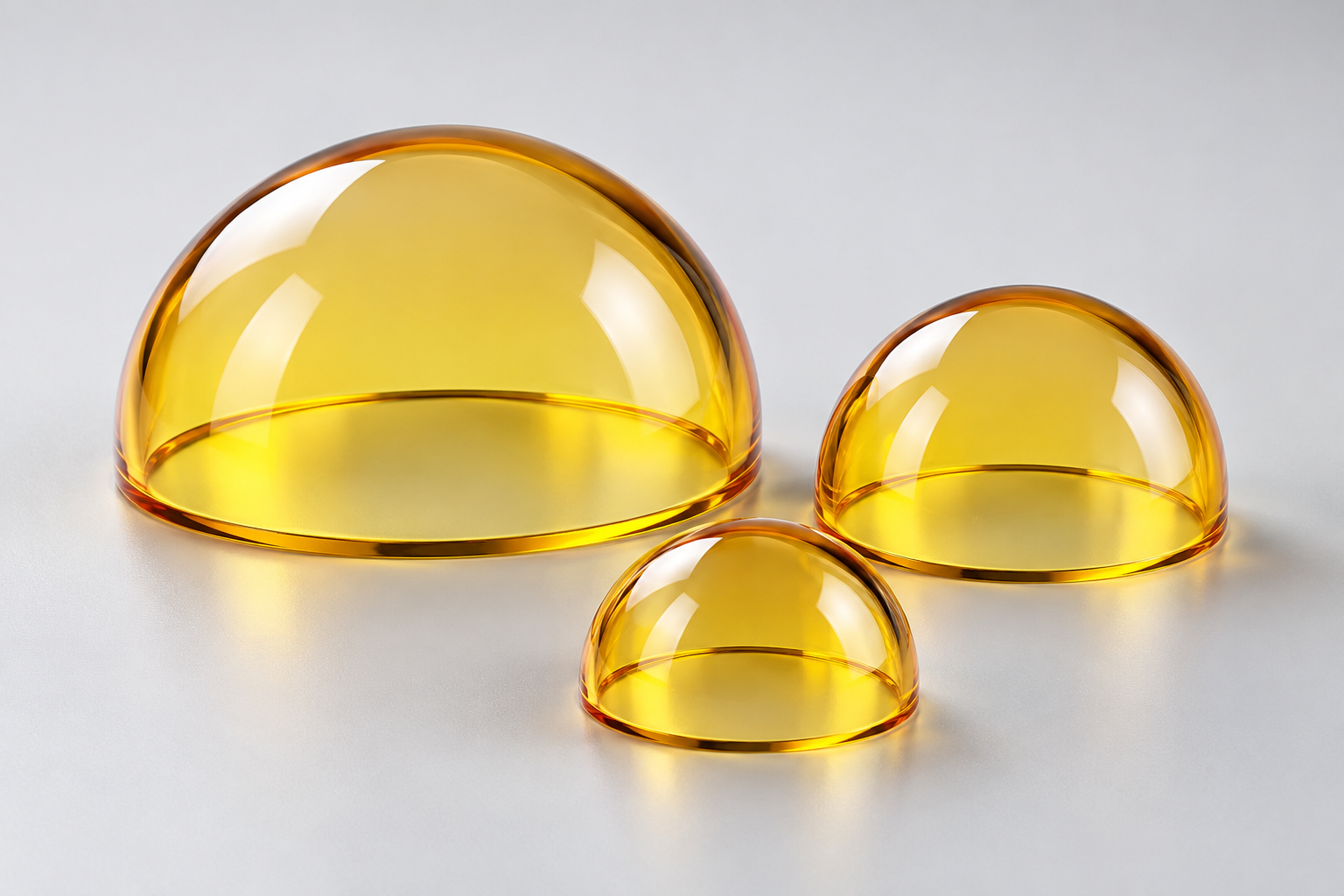 Custom IR Dome Geometry
Compare IR Substrates and ZnS Grades
Choose the right substrate for your wavelength, environment and budget. Not sure? Send your wavelength and application — engineering will recommend.
| Material | Potential Application | Selection Conditions |
|---|---|---|
| Germanium (Ge) | Candidate for MWIR/LWIR optical systems. | Confirm grade, temperature-dependent transmission, coating, path length and mounting stress. |
| Silicon (Si) | Often evaluated for SWIR/MWIR systems; other bands need grade-specific review. | Specify grade, resistivity, thickness and measured transmission at the operating band. |
| ZnSe | Broadband IR and 10.6 μm laser optics, subject to application review. | Confirm grade, absorption, coating, laser exposure if applicable, cleaning and chemical compatibility. Do not infer moisture failure from its material name. |
| Standard CVD ZnS | Candidate for LWIR thermal imaging. | Confirm scatter, useful spectral band, surface quality and coating. Standard ZnS is not equivalent to HIP multispectral ZnS. |
| HIP Multispectral ZnS | Candidate for common-aperture visible and IR systems. | Confirm exact grade, supplier transmission and scatter data, thickness and required bands. Branded material requires approved sourcing. |
Reference application bands: MWIR 3–5 μm and LWIR 8–12 μm. These are system bands, not a guarantee that every listed substrate or coating covers both.
Need help choosing? Send your operating wavelength, environment (temperature, moisture, vibration) and budget — our engineering team can review material options and the information needed for quotation.
6 Common IR Dome Project Failures
Wrong IR Material
Temperature-dependent absorption and refractive index affect Ge. Silicon suitability depends on band, grade, resistivity and thickness; evaluate measured transmission rather than assuming all silicon is identical.
Coating Mismatch
An AR design optimized for one band does not establish performance in another. Match substrate, band, angle of incidence and polarization.
Poor Surface Figure
A mechanically accurate dome with poor optical figure degrades image resolution. Surface quality and figure must be specified.
Mounting Interface Error
Edge thickness, flange geometry and mounting features must match your housing. Drawing review prevents assembly failure.Environmental Degradation
Evaluate material, coating, cleaning, mounting stress and thermal gradients together. ZnSe should not be described as generically hygroscopic; exposure and chemical compatibility still need review.
Prototype-to-Production Drift
A good prototype does not guarantee consistent production. Process controls and inspection records are essential.
Technical Specifications
Published values are review references, not simultaneous guaranteed limits. Confirm feasibility, measurement and acceptance requirements before ordering.
| Parameter | Review Reference and Required Confirmation |
|---|---|
| Material / Operating Band | Ge, Si, ZnSe or specified ZnS grade, selected against the operating band. Define MWIR 3–5 μm, LWIR 8–12 μm or the actual custom band. |
| Diameter / Wall | Reference ranges: Ø10–300 mm and wall 1–10 mm; feasibility depends on substrate, radius, optical area and inspection. |
| Geometry / Clear Aperture | Hemispherical, spherical segment or custom geometry. Define inner/outer radii, height, wall map, usable angular field and aperture; no universal percentage applies to every dome. |
| Dimensional / Radius Tolerance | Review references: diameter ±0.01–0.05 mm, thickness ±0.02 mm and radius ±0.1–0.5%. Agree each feature, datum, measurement and quantity before order. |
| Surface Quality | Reference targets 60-40 to 20-10 scratch-dig; define standard, inspected surface, aperture zones and agreed acceptance method. |
| Surface Figure / Wavefront | Former λ/2–λ/10 at 10.6 μm values are review targets only. Specify PV or RMS, reference wavelength, tested surface, clear aperture and setup. Transmitted wavefront error is a separate requirement. |
| Alignment | Define concentricity, axis tilt or optical centration with datums and methods; confirm feasibility rather than using one angular range for all geometries. |
| Coating / Optical Performance | Specify band, incidence range, polarization, coated faces and minimum whole-dome transmission or reflectance target. Distinguish average from maximum values. No blanket ≥95% transmission or <2% reflectance applies to every dome. |
| Mounting / Environment | Define edge, flange, support and seal features, operating/storage temperature, ramps, pressure and exposure. Confirm DLC separately and agree environmental test protocol and responsibility. |
| Inspection / Reports | Agree dimensional, surface, figure or transmitted-wavefront and spectral checks, methods, sampling, equipment suitability and report content before quotation. |
| Quantity | One-piece paid prototype evaluation may be reviewed; 10-piece and 100+ production references depend on tooling, material and coating batch. Confirm MOQ in the quotation. |
| Lead Time | Planning references: prototype 18–25 working days once drawing and coating specification are frozen; production 15–25, after specification approval. Stock, tooling, coating and inspection can extend timing; accepted quotation controls delivery. |
Final specifications are confirmed against the approved drawing and engineering requirements. Send your drawing so achievable tolerances and inspection methods can be confirmed.
Infrared Optical Dome Applications
Thermal Imaging Cameras
MWIR/LWIR domes for handheld, vehicle-mounted and fixed thermal cameras requiring durable optical protection.
EO/IR Sensor Systems
Multi-sensor electro-optical/infrared gimbals for surveillance, targeting and reconnaissance platforms.
IR Surveillance & Security
Long-range infrared surveillance domes for perimeter security, border monitoring and critical infrastructure.
Industrial Thermal Monitoring
High-temperature furnace monitoring, power line inspection and predictive maintenance thermal systems.
Infrared Laser Windows
ZnSe and Ge domes/windows for CO₂ laser systems, laser rangefinders and laser designators.
Aerospace & UAV Payloads
Lightweight, vibration-resistant IR domes for drone EO/IR payloads and aerospace optical systems.
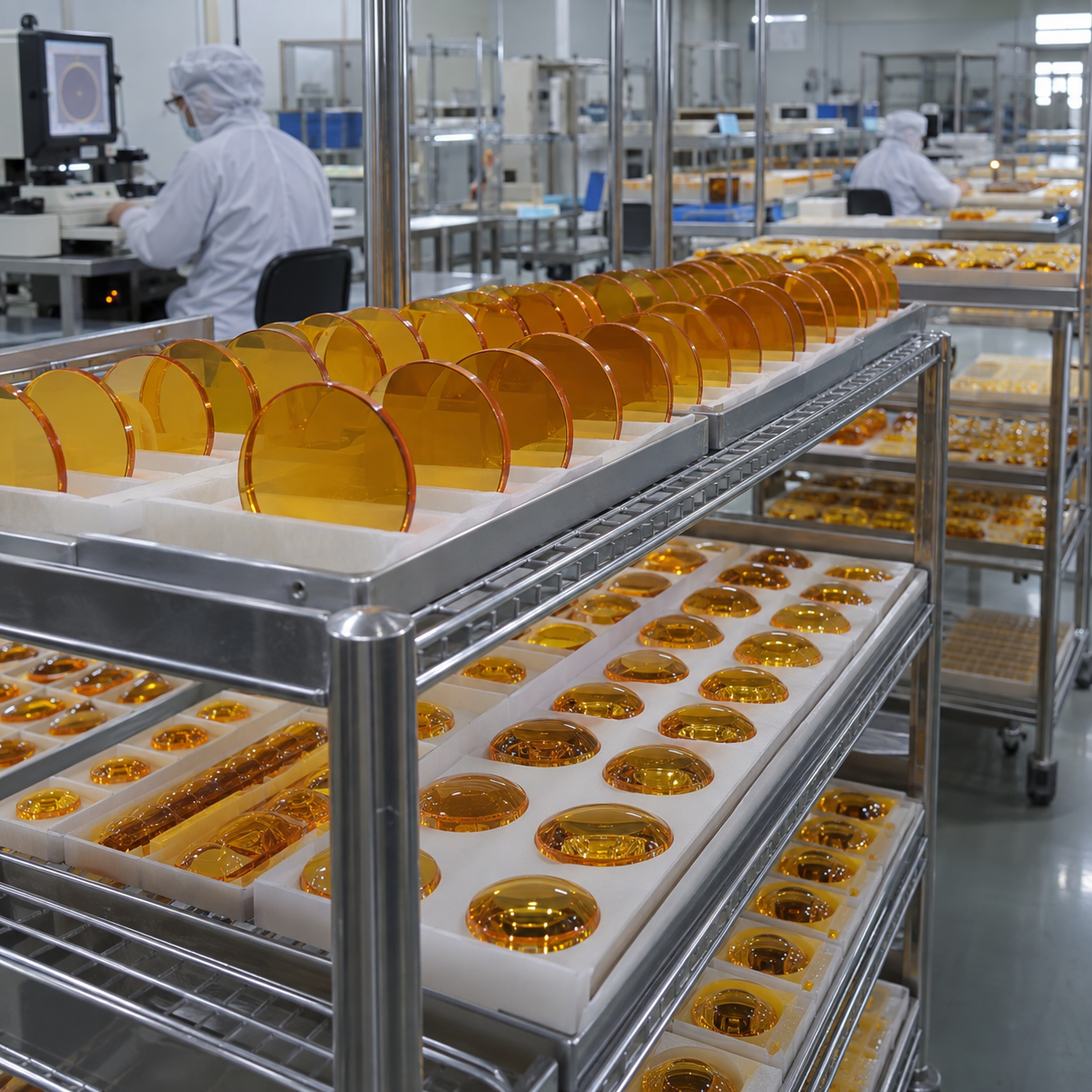
Felix Glass Manufacturing Capability
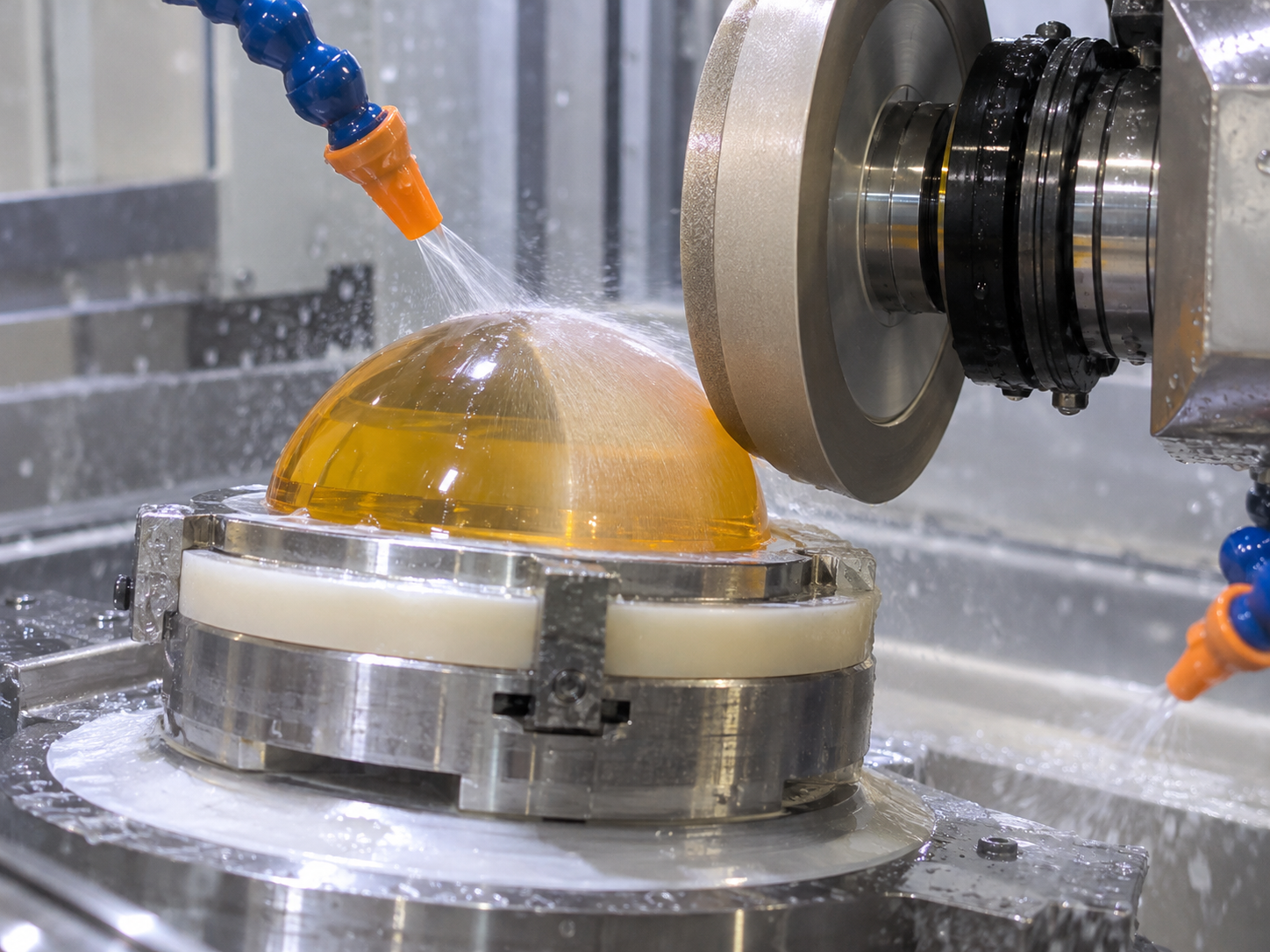
CNC Machining
5-axis CNC for custom dome geometry, flanges and mounting features.
Precision Grinding
Diamond grinding for radius control and optical surface preparation.
Optical Polishing
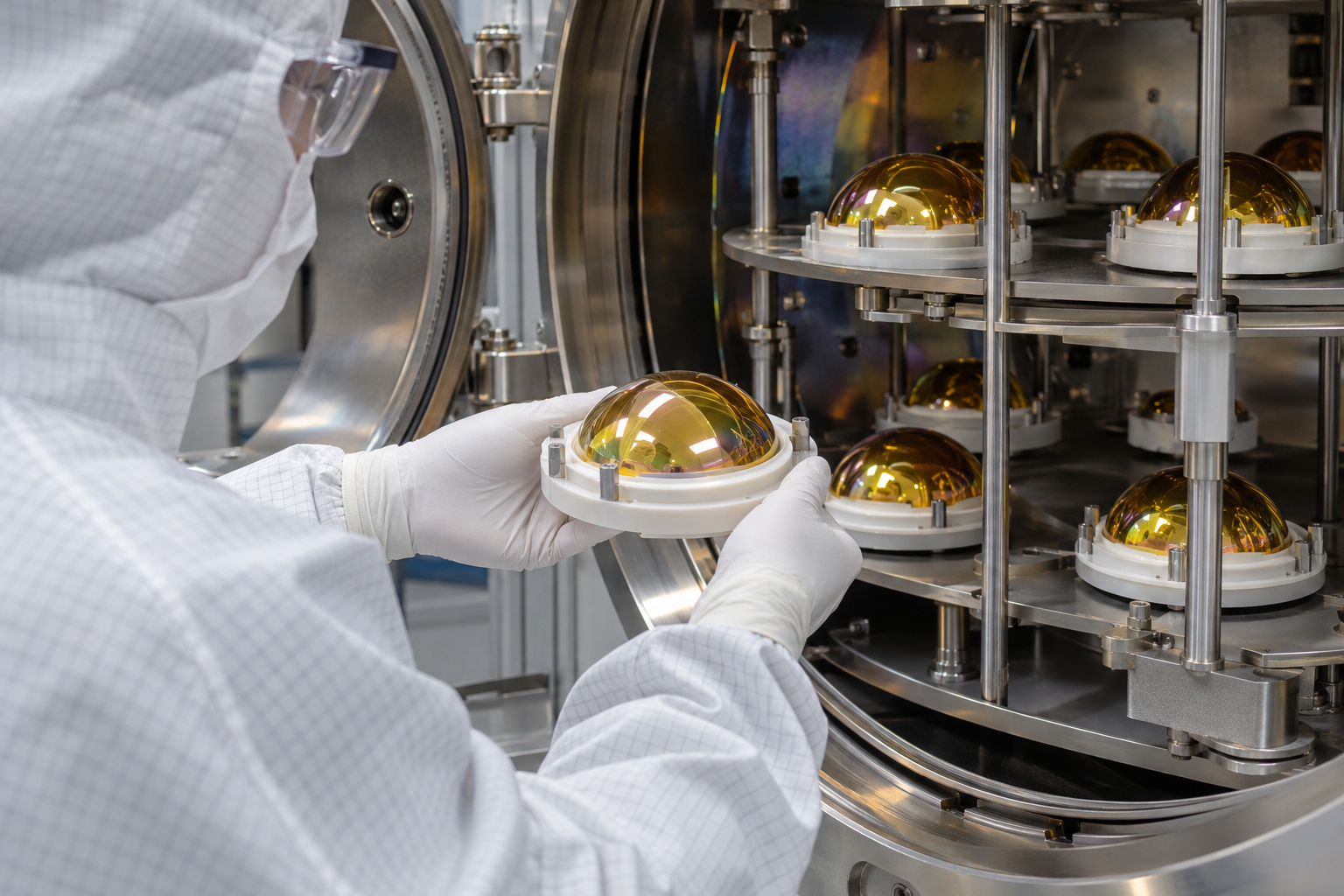
Polishing and achievable surface figure and quality confirmed for the material, geometry, aperture and accepted test method.IR AR Coating
Substrate-specific MWIR/LWIR AR coating review; DLC process, spectral compatibility and durability confirmed separately.
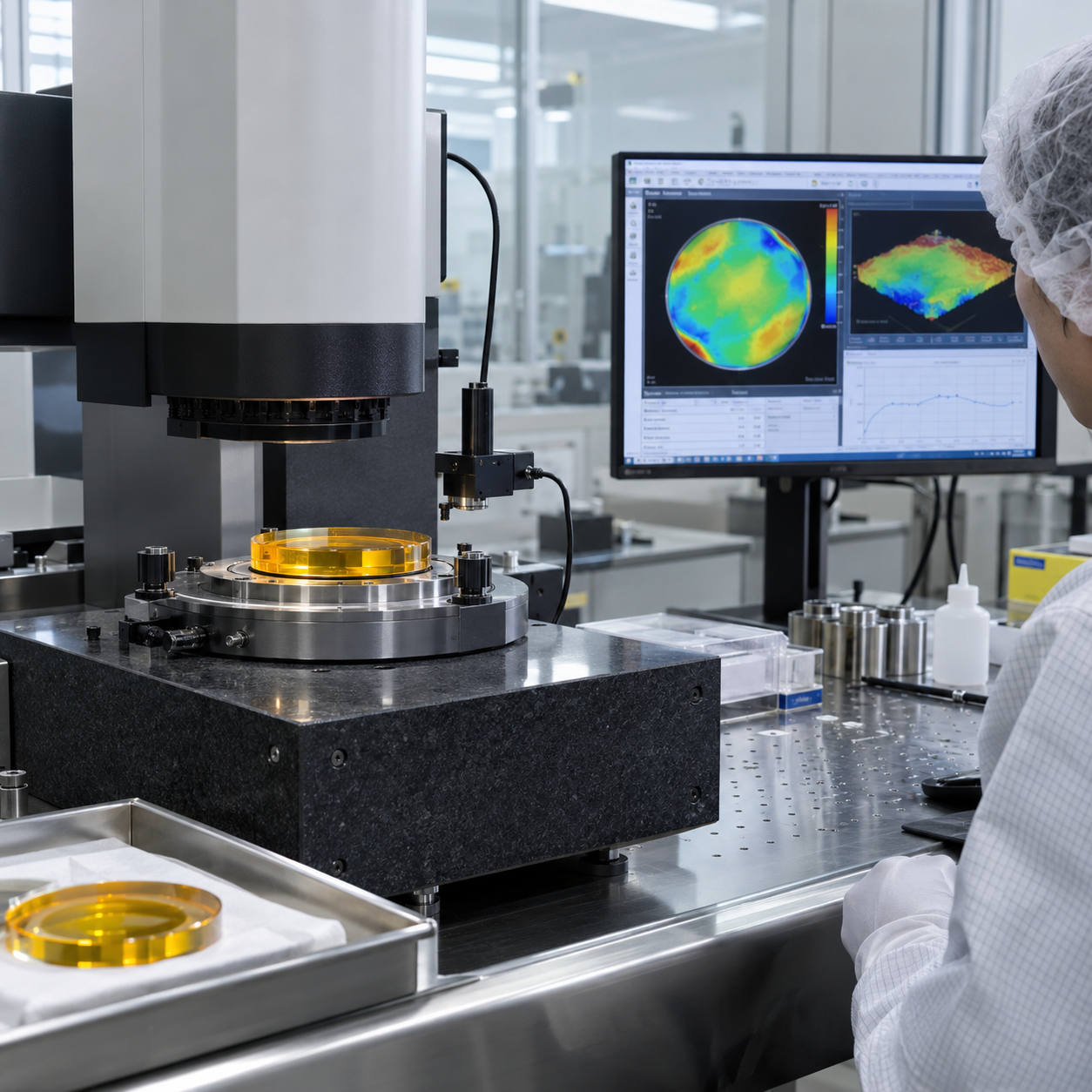
Full Inspection
CMM, interferometer, spectrophotometer and microscope verification.

Manufacturing & Delivery Process
Engineering Review
Send drawing, dimensions, wavelength, application or reference sample. Review timing is confirmed after receiving available requirements.
Material & Spec Confirmation
Confirm substrate, geometry, optical requirements, coating and inspection criteria.
Prototype
Manufacture first article for engineering validation. Reference: 18–25 working days once drawing and coating specification are frozen.
Validation & Pilot
Confirm dimensions, optical surface and coating. Pilot scheduling follows material, coating and inspection review.
Mass Production
Repeatable manufacturing with lot traceability. Reference production timing: 15–25 working days, subject to quotation.
Final lead time depends on material, geometry, coating, inspection requirements and quantity. Expedited feasibility requires confirmation.
Choose the Substrate Before Finalizing the Dome
Compare the ZnSe, standard ZnS and multispectral ZnS material options and consult the optical materials knowledge hub. Use the drawing tolerances and inspection guide to separate surface figure, transmitted wavefront and coating requirements.
Related Thermal Surveillance Application
Read the IR dome perimeter-security application case for a related use. Its requirements and results do not establish the performance or environmental rating of another dome.
Dome Geometry and Light Collection
Read how a curved dome differs from a flat window in field of view and aberration, and what surface protection and coating principles apply to a dome. For shell and fairing geometries rather than flat discs, see the IR optical dome geometry range.
Compare Specific Product Routes
Explore the standard CVD ZnS dome for LWIR evaluation and HIP multispectral ZnS material option. Confirm grade, required visible/IR bands, scatter and coating before choosing between them.
Review our optical manufacturing and inspection capabilities, then complete the custom optics RFQ preparation checklist before sending your drawings.
Frequently Asked Questions
What materials can you use for infrared domes?
Ge, Si, ZnSe and specified ZnS grades can be reviewed for a drawing-based project. Standard CVD ZnS and HIP multispectral ZnS are different options. Other substrates require separate availability and spectral review. The material list does not imply that every material works in every IR band.
Can you manufacture both MWIR and LWIR domes?
MWIR 3–5 μm and LWIR 8–12 μm projects can be evaluated with a suitable substrate and coating. For dual-band or common-aperture systems, specify each required band, transmission, scatter and field-of-view requirement. Confirm feasibility for the complete dome.
Can you manufacture hemispherical and custom-shaped domes?
Hemispherical, partial and drawing-defined geometries can be reviewed. The published Ø10–300 mm diameter and 1–10 mm wall ranges are reference envelopes, not limits guaranteed for every material, radius or optical specification.
What AR coating options do you provide?
MWIR, LWIR and custom-band AR options require the substrate grade, coated faces, incidence range, polarization, average or maximum reflectance, and minimum transmission. Agree measurement on a witness sample versus the actual dome. DLC compatibility, spectral effect and durability are confirmed separately.
Can you help me select the right IR material?
Send the operating bands, detector requirements, temperature, humidity, chemical exposure, mount, geometry and budget. Material selection uses grade-specific transmission and scatter data; engineering review can identify the information still needed before quotation.
What is the minimum order quantity (MOQ)?
A one-piece paid prototype can be reviewed for engineering evaluation. References of 10 pieces for a small batch and 100+ for production depend on blank availability, tooling, coating batch and specification. The quotation confirms MOQ and pricing.
What is the typical lead time?
Planning references after drawing and acceptance-plan approval: prototype 18–25 working days once drawing and coating specification are frozen, and production 15–25. Material stock, tooling, batch scheduling and tests may extend timing. The accepted quotation defines delivery; expedited availability requires confirmation.
Do I need a complete engineering drawing to start?
No. You can start with approximate dimensions, wavelength, application description or a reference sample. We will provide a DFM (Design for Manufacturing) review and recommend tolerances. A formal drawing is required before prototype production begins.
How do you control quality and what inspection reports are provided?
Agree dimensional, surface quality, figure or transmitted-wavefront and coating spectral checks before production. Define methods, sampling, traceability and report content. Request a relevant report example; a report for another part is not proof of your dome specification.
What if the delivered parts do not meet our specifications?
Acceptance follows the approved drawing, purchase specification and agreed test methods. Provide part identification and measurement evidence for review. Corrective action and any rework, replacement or other remedy follow the agreed order and warranty terms.
Can you manufacture from our existing sample or competitor part?
A reference sample can support feasibility and measurement review. Confirm which geometry and optical characteristics must be replicated and what can be measured. Approve the manufacturing drawing and acceptance plan before production.
Do you provide environmental or reliability testing?
Provide the standard and revision, method, severity, duration, sample size, mounting condition and pass criteria for thermal, humidity, salt, vibration or adhesion tests. Laboratory responsibility, availability, cost and report scope must be agreed before order acceptance.
Request a Custom IR Dome Quote
Share the available specifications for material, coating and manufacturing review.
- Not sure about the material? Send your wavelength and application — we recommend.
- No complete drawing? Send dimensions or a reference sample.
- Need it fast? Tell us your required date; expedited feasibility depends on material and capacity.
- 1-piece prototype can be reviewed, subject to material, tooling and coating batch.
Dongguan Felix Glass Co., Ltd.
Custom precision optical components with 19+ years of experience
Send Your IR Dome Requirements
Include wavelength band, substrate grade, geometry, clear aperture, coating, environment, quantity and inspection requirements.
Prepare your drawings with the custom optics RFQ preparation checklist. You can also email james@felixglass.com or call +86 18565032888.
Still comparing substrates? Return to our multi-material optical dome manufacturing overview to compare optical glass, fused silica, sapphire and infrared material routes.